Cacti's Camouflage: Arid Survival Secrets Revealed
By Crime Pays But Botany Doesn't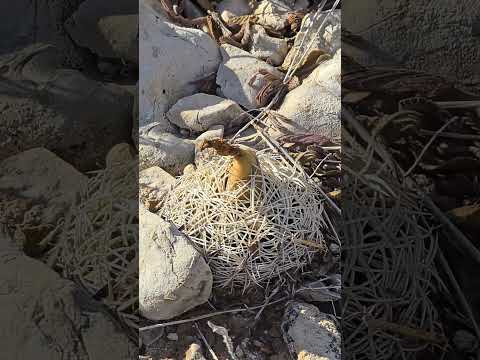
TL;DR: Cacti in arid environments have evolved remarkable camouflage strategies, utilizing color, texture, and growth patterns to avoid herbivores.
- Cacti adapt color to local soil and rock mineral composition.
- Some cacti grow prostrate, blending into the ground.
- Thick, crusty layers on epidermis mimic rocky terrain.
- Mimicry is a passive defense against herbivores.
- Adaptations allow cacti to thrive in harsh conditions.
Why it matters: Understanding cactus camouflage offers insights into natural defense mechanisms and resilience in extreme environments, informing biomimicry and conservation.
Do this next: Explore local arid plant species to identify their unique camouflage strategies.
Recommended for: Anyone interested in plant adaptations, desert ecology, or biomimicry.
In arid and semi-arid environments, cacti have evolved remarkable adaptations to thrive under challenging conditions, particularly in the face of herbivory. One of the most fascinating of these adaptations is their ability to camouflage themselves, blending seamlessly into their surroundings to avoid being eaten by animals. This strategy is not merely about being green; it involves a complex interplay of color, texture, and growth patterns that mimic the rocks, soil, and other vegetation in their habitat.
Many cactus species exhibit a coloration that closely matches the rocks and substrate where they grow. This can range from dull grays and browns to reddish hues, depending on the mineral composition of the local soil and rocks. For instance, some species found in volcanic regions might have a dark, almost black epidermis, while those in sandy, iron-rich areas could display a rusty red. This chromatic mimicry makes it incredibly difficult for herbivores, such as rodents, birds, and larger mammals, to distinguish the cacti from their inanimate surroundings. The effectiveness of this camouflage is further enhanced by the often irregular and rough texture of the cactus surface, which can resemble weathered stone or dry, cracked earth.
Beyond simple color matching, some cacti employ more sophisticated forms of camouflage. Certain species grow in a prostrate or flattened manner, hugging the ground so closely that they appear to be part of the soil itself. This low-profile growth habit reduces their visibility from a distance and makes them less conspicuous to foraging animals. Others develop a thick, crusty layer on their epidermis, often composed of lichen or mineral deposits, which further breaks up their outline and makes them indistinguishable from the rocky terrain. This "cryptic coloration" is a passive defense mechanism that relies on deception rather than direct confrontation.
Another ingenious camouflage technique involves mimicking other, less palatable plants or objects. Some cacti have evolved to resemble clumps of dry grass or dead wood, which are generally ignored by herbivores. This form of mimicry, known as Batesian mimicry when a harmless species imitates a harmful one, or simply a form of general mimicry in this context, allows the cactus to benefit from the unappetizing appearance of its surroundings. The spines themselves, while serving as a direct deterrent, can also contribute to camouflage by breaking up the plant's silhouette and creating shadows that obscure its form.
The effectiveness of cactus camouflage is a testament to the power of natural selection. Over countless generations, individuals with better camouflage were more likely to survive and reproduce, passing on their advantageous traits. This continuous selective pressure has led to the incredible diversity of cryptic forms observed in cacti today. The ability to remain hidden is particularly crucial for young cacti, which are more vulnerable to herbivory due to their smaller size and softer tissues. By blending in, they increase their chances of reaching maturity and reproducing.
In summary, the camouflaged cacti of arid landscapes represent a remarkable example of evolutionary adaptation. Through a combination of color matching, textural mimicry, growth habit modification, and even mimicry of other objects, these plants have developed sophisticated strategies to avoid detection by herbivores. This intricate defense mechanism highlights the constant evolutionary arms race between plants and the animals that consume them, showcasing nature's ingenuity in ensuring survival in harsh environments.
Source: youtube.com
Related Analysis
- Farmers Convert Six Weeks of Rhubarb Into 25-Year Supply — Initial signals suggest a rhubarb preservation technique can extend a brief seasonal harvest into 25 years of storage—a …
- Compost Builds Soil Microbiomes—But Human Waste Divides Practitioners — A small but consistent set of signals indicates composting's soil benefits are well-documented, while human-waste compos…
Related on PermaNews
Explore more in Food Systems & Growing — the full hub for this knowledge area.