Cloud Forest Sages: 12ft Salvia & Lever Mechanisms
By Crime Pays But Botany Doesn't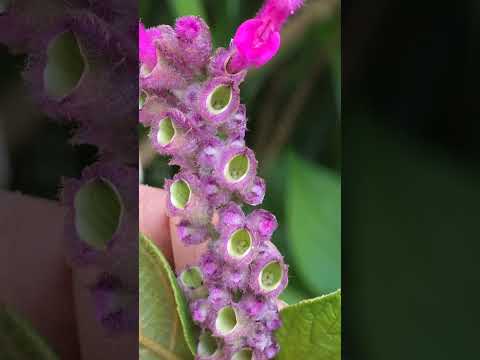
In the neotropical cloud forests, a remarkable genus of plants, *Salvia*, showcases an impressive diversity, including species that can reach heights of up to 12 feet. These towering sages are not just visually striking; they also exhibit fascinating adaptations, particularly in their reproductive mechanisms. The cloud forest environment, characterized by high humidity, frequent fog, and moderate temperatures, provides a unique ecological niche that has fostered the evolution of these specialized traits.
One of the most notable features of many *Salvia* species, especially those found in these cloud forest ecosystems, is their intricate lever mechanism. This mechanism is a sophisticated adaptation for pollination, primarily by hummingbirds, which are abundant in these regions. The flower's structure is designed to ensure efficient pollen transfer when a pollinator visits. Typically, the flower has two stamens, which are the pollen-producing organs. These stamens are connected by a lever-like structure. When a hummingbird, attracted by the nectar, probes deep into the flower, its beak or head presses against the lower arm of this lever. This action causes the upper arm of the lever, which carries the anthers (the parts of the stamen containing pollen), to pivot downwards. As a result, the anthers dust the pollinator's back or head with pollen.
This precise pollen delivery system is highly effective. As the hummingbird then visits another *Salvia* flower of the same species, the pollen it carries is deposited onto the stigma, the receptive part of the pistil, thus facilitating cross-pollination. This mechanism minimizes pollen waste and maximizes the chances of successful fertilization, contributing to the reproductive success of these plants in a competitive environment. The co-evolutionary relationship between *Salvia* and its hummingbird pollinators is a classic example of mutualism, where both organisms benefit. The hummingbirds gain a reliable source of nectar, and the plants achieve efficient reproduction.
The sheer size of some of these cloud forest *Salvia* species, reaching up to 12 feet, is also significant. Taller plants can potentially access more sunlight in the often-dense cloud forest understory or canopy gaps. Their height might also make their flowers more conspicuous to flying pollinators, increasing the likelihood of visits. The robust structure required to support such height, along with the energy investment in producing large flowers and nectar, suggests a successful strategy for survival and reproduction in their specific habitat.
The neotropical cloud forests themselves are biodiversity hotspots, facing various environmental pressures. Understanding the intricate ecological relationships, such as those between *Salvia* and its pollinators, is crucial for conservation efforts. The specialized adaptations of these plants highlight the delicate balance within these ecosystems and the importance of preserving their unique flora and fauna. The presence of such diverse and highly evolved species like the 12-foot tall *Salvia* with their lever mechanisms underscores the ecological richness and complexity of these vital forest environments.
Source: youtube.com
Related Analysis
- Farmers Convert Six Weeks of Rhubarb Into 25-Year Supply — Initial signals suggest a rhubarb preservation technique can extend a brief seasonal harvest into 25 years of storage—a …
- Compost Builds Soil Microbiomes—But Human Waste Divides Practitioners — A small but consistent set of signals indicates composting's soil benefits are well-documented, while human-waste compos…
Related on PermaNews
- Ernst Götsch's Cacao Syntropy: Master Agroforestry Now (How-To Guide)
- Finnish Off-Grid: Rocket Mass Heater Performance in Greenhouse (Case Study)
- Berlins schwimmende Gärten: Permakultur auf dem Wasser (Case Study)
- Rodale Report 2025: Thermal Mass Boost in Solar Greenhouses (Case Study)
- AUTarcaMatricultura La Palma: Permakultur & Energieautarkie (How-To Guide)
- Earthaven Ecovillage: 30 Years Off-Grid with Hydro & Solar (Video)
Explore more in Food Systems & Growing — the full hub for this knowledge area.