Cacti Thrive in Unexpected "Boring" Habitats!
By Crime Pays But Botany Doesn't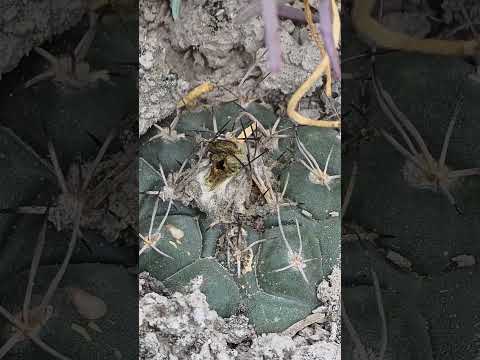
TL;DR: Cacti thrive in unexpected temperate regions globally, challenging their traditional desert-only association.
- Many cacti adapt to temperate zones beyond deserts.
- Diverse soil types support various cactus species.
- Cactus adaptability shows broad genetic plasticity.
- Historical bias overlooked cacti in less extreme settings.
- Morphological adaptations suit cacti to mesic conditions.
Why it matters: Understanding cactus adaptability expands cultivation possibilities and conservation strategies beyond arid environments.
Do this next: Explore local nurseries for temperate-climate cactus varieties suitable for your region.
Recommended for: Gardeners, ecologists, and permaculture designers interested in expanding plant palettes and challenging conventional botanical wisdom.
The article discusses a recent scientific discovery concerning the unexpected habitats of certain cactus species. Traditionally, cacti are associated with arid, desert environments, characterized by extreme heat, minimal rainfall, and sandy or rocky soils. This conventional understanding has shaped both scientific research and public perception of these plants. However, new research indicates that a significant number of cactus species are thriving in environments previously considered unsuitable or "boring" from a botanical perspective.
The study highlights that these overlooked habitats are often temperate regions, including grasslands, woodlands, and even some subtropical areas. These environments typically experience more moderate temperatures, higher humidity, and more consistent rainfall compared to classic desert landscapes. The researchers suggest that the historical focus on desert cacti might have led to a bias in botanical surveys and conservation efforts, causing scientists to overlook populations in less extreme settings.
One key finding is the adaptability of these cacti to different soil compositions. While desert cacti are known for their ability to survive in nutrient-poor, well-drained soils, the newly identified populations are found in a wider range of soil types, including those with higher organic matter content and greater water retention. This suggests a broader genetic plasticity within the cactus family than previously understood, allowing them to colonize diverse ecological niches.
The article also touches upon the morphological adaptations observed in these "non-desert" cacti. Unlike their spiny, water-storing desert counterparts, some of these species exhibit less pronounced spines, different stem structures, and even variations in their photosynthetic pathways, potentially optimizing their resource utilization in more mesic conditions. These adaptations allow them to compete with other plant life in denser vegetation and to cope with different light and moisture regimes.
The implications of this discovery are significant for conservation. By expanding the known range of cactus habitats, scientists can develop more comprehensive conservation strategies that protect these species across their full ecological spectrum. Previously, conservation efforts might have been narrowly focused on desert ecosystems, potentially leaving vulnerable populations in other habitats unprotected. Understanding the full extent of their distribution is crucial for identifying and preserving critical habitats and genetic diversity.
Furthermore, this research challenges existing classifications and evolutionary theories within the Cactaceae family. It suggests that the evolutionary history of cacti might be more complex than previously thought, with multiple lineages adapting to various environmental pressures over time. This could lead to a re-evaluation of phylogenetic relationships and the development of new models for understanding cactus evolution and diversification.
The study also has implications for horticulture and permaculture. If cacti can thrive in a wider range of climates and soil conditions, it opens up possibilities for their cultivation in areas where they were previously not considered viable. This could include using certain cactus species for drought-tolerant landscaping in temperate zones, or even exploring their potential as food or fodder crops in regions with moderate rainfall. Their ability to adapt to different conditions could make them valuable components of resilient agricultural systems.
In essence, the research underscores the importance of challenging preconceived notions in scientific inquiry. By looking beyond the obvious and exploring seemingly "boring" or unconventional habitats, scientists have uncovered a hidden diversity and adaptability within the cactus family, with far-reaching implications for ecology, evolution, and conservation.
Source: youtube.com
Related Analysis
- Farmers Convert Six Weeks of Rhubarb Into 25-Year Supply — Initial signals suggest a rhubarb preservation technique can extend a brief seasonal harvest into 25 years of storage—a …
- Compost Builds Soil Microbiomes—But Human Waste Divides Practitioners — A small but consistent set of signals indicates composting's soil benefits are well-documented, while human-waste compos…
Related on PermaNews
- Ernst Götsch's Cacao Syntropy: Master Agroforestry Now (How-To Guide)
- Finnish Off-Grid: Rocket Mass Heater Performance in Greenhouse (Case Study)
- Berlins schwimmende Gärten: Permakultur auf dem Wasser (Case Study)
- Rodale Report 2025: Thermal Mass Boost in Solar Greenhouses (Case Study)
- AUTarcaMatricultura La Palma: Permakultur & Energieautarkie (How-To Guide)
- Earthaven Ecovillage: 30 Years Off-Grid with Hydro & Solar (Video)
Explore more in Food Systems & Growing — the full hub for this knowledge area.