PermaCards: Game-Changing Permaculture Design Tool
By paul wheaton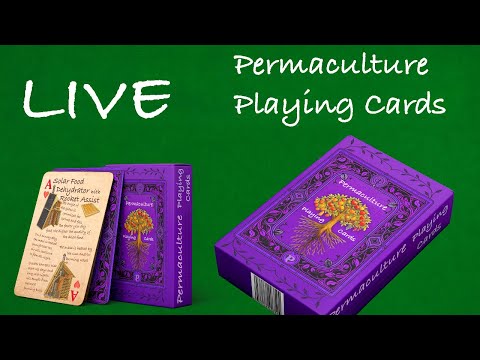
PermaNews Brief
Key Takeaways
A new deck of permaculture playing cards offers an interactive and accessible way to learn and apply permaculture principles beyond traditional textbooks.
- Complex permaculture ideas distilled into actionable prompts.
- Each card details principles, design elements, or techniques.
- Versatile for beginners, experienced practitioners, and educators.
- Encourages creative thinking and problem-solving.
- Supports diverse learning styles and applications.
Why It Matters
This innovative tool democratizes permaculture education, making it less intimidating and more engaging for a wider audience, fostering practical application in daily life and design projects.
What to Do Next
Explore the Permaculture Playing Cards to see how they can enhance your learning or design process.
Recommended for: Anyone interested in simplifying complex permaculture concepts and applying them in practical, engaging ways.
A unique deck of playing cards has been developed, designed to serve as a practical tool for individuals interested in permaculture principles. This innovative deck aims to make learning and applying permaculture concepts more accessible and engaging, moving beyond traditional textbook formats.
The core idea behind these cards is to distill complex permaculture ideas into easily digestible, actionable prompts. Each card in the deck represents a specific permaculture principle, design element, or practical technique. The creators recognized that permaculture, while incredibly beneficial, can sometimes feel overwhelming due to its breadth and depth. By breaking it down into individual card-sized concepts, they sought to create a more approachable learning experience.
The deck is structured to facilitate various learning styles and applications. For instance, some cards might present a core permaculture ethic, such as "Care for the Earth," and then offer concrete examples of how to embody that ethic in a garden or landscape design. Other cards might focus on specific design patterns, like "stacking functions" or "edge effect," explaining their utility and providing prompts for their implementation. There are also cards dedicated to practical skills, such as composting methods, water harvesting techniques, or plant guilds, offering step-by-step guidance or considerations.
One of the key benefits highlighted by the creators is the deck's versatility. It can be used in numerous ways, catering to different levels of permaculture knowledge. Beginners might use the cards as a guided introduction, drawing a few cards each day to learn new concepts and consider their application. More experienced practitioners could use them as a brainstorming tool for new projects, a way to troubleshoot existing designs, or even as a teaching aid for workshops and community gatherings. The random element of drawing cards can also spark creativity and encourage users to think outside their usual patterns.
The visual design of the cards is also a significant aspect. Each card features clear, concise text accompanied by illustrative graphics or symbols. These visuals are intended to reinforce the concepts and make them more memorable, catering to visual learners. The aesthetic aims to be both informative and inspiring, reflecting the natural and holistic ethos of permaculture.
The development process involved a collaborative effort, drawing upon the expertise of experienced permaculture designers and educators. This ensured that the content was accurate, relevant, and practical. The creators also emphasized the iterative nature of permaculture itself, suggesting that the card deck is not a static product but a living tool that can evolve with user feedback and new insights.
Beyond individual learning, the cards are envisioned as a tool for fostering community and discussion. They can be used in group settings to facilitate design charettes, problem-solving sessions, or simply as a way to share knowledge and ideas among permaculture enthusiasts. The act of discussing a card's principle or application can lead to deeper understanding and innovative solutions.
Ultimately, the permaculture playing cards represent an innovative approach to education and practical application within the permaculture movement. By transforming abstract principles into tangible, interactive elements, they aim to empower individuals to integrate permaculture into their lives and landscapes more effectively and enjoyably. The initiative underscores a commitment to making permaculture knowledge accessible and actionable for a wider audience, moving beyond theoretical understanding to practical implementation.
Source: youtube.com
Related Analysis
- Compost Researchers Pivot From Soil Mass to Microbial Precision — Several sources suggest compost is being repositioned from a soil amendment to a targeted microbial intervention — with …
- Regenerative Farmers Push Soil Biology Metrics Beyond Yield Data — Several sources suggest regenerative practitioners are moving toward microbial soil metrics as practical management tool…
Related on PermaNews
- Permaculture Visions: Online Training & Mentorship Since 1993 (How-To Guide)
- Permaculture Homes: Why Aren't All Built This Way? (Video)
- Modular Root Cellar: Year-Round Food Security Design (How-To Guide)
- 20 Rainwater Harvesting Design Tips for Permaculture (Video)
- Designing Your Tropical Permaculture Homestead for Self-Sufficiency (How-To Guide)
- Permaculture Homes: Why Aren't All Houses This Sustainable? (Video)
Explore more in Food Systems & Growing — the full hub for this knowledge area.