Permaculture Homes: Why Aren't All Houses This Sustainable?
By Morag Gamble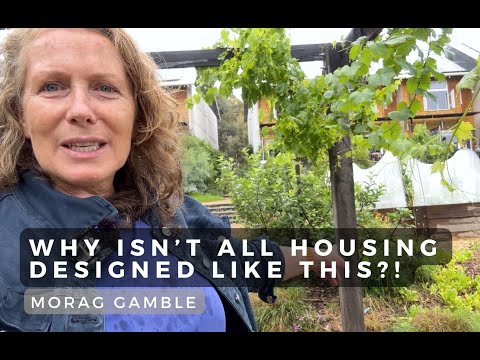
PermaNews Brief
Key Takeaways
Permaculture principles offer a blueprint for housing that is sustainable, resilient, and harmoniously integrated with natural systems, moving beyond conventional designs.
- Design homes as active participants in regenerative ecosystems.
- Prioritize local, renewable, or recycled building materials.
- Optimize for passive solar to heat and cool naturally.
- Integrate renewable energy sources like solar panels.
- Implement rainwater harvesting and greywater recycling.
Why It Matters
Adopting permaculture in housing reduces environmental impact, lowers energy and water bills, and fosters self-sufficiency in living spaces.
What to Do Next
Explore local government incentives for sustainable building materials and renewable energy installations.
Recommended for: Homeowners, aspiring builders, and community planners interested in creating ecologically sound and resource-efficient living spaces.
The article explores the concept of designing homes and communities to be more sustainable, resilient, and integrated with natural systems, drawing inspiration from permaculture principles. It questions why conventional housing often falls short in these areas, highlighting the benefits of a more thoughtful approach to living spaces.
A central theme is the idea of creating homes that are not just shelters, but active participants in a regenerative ecosystem. This involves considering the entire lifecycle of a building, from its construction materials to its energy consumption and waste production. The article advocates for designs that minimize environmental impact, such as utilizing locally sourced, renewable, or recycled materials. This reduces the carbon footprint associated with transportation and manufacturing, and often supports local economies.
Energy efficiency is another key aspect discussed. The article emphasizes passive solar design, where a building's orientation, window placement, and thermal mass are optimized to harness sunlight for heating in winter and minimize heat gain in summer. This reduces reliance on artificial heating and cooling systems, leading to lower energy bills and a smaller environmental footprint. Beyond passive strategies, the integration of renewable energy sources like solar panels is also encouraged, aiming for homes that can generate some or all of their own power.
Water management is presented as a critical element of sustainable housing. The article suggests incorporating rainwater harvesting systems to collect and store precipitation for various uses, such as irrigation or even potable water after appropriate filtration. Greywater recycling, where water from sinks and showers is treated and reused for non-potable purposes like toilet flushing or garden watering, is also highlighted as a way to conserve this precious resource. This holistic approach to water aims to reduce demand on municipal supplies and minimize wastewater discharge.
The article also delves into the concept of food production within the home and community. It promotes the integration of edible landscapes, such as food forests, vegetable gardens, and herb spirals, directly into the residential environment. This not only provides fresh, healthy food but also fosters a connection to nature and reduces reliance on industrial food systems. The idea extends to community gardens and shared food-producing spaces, encouraging collaboration and local food security.
Beyond the physical structure, the article touches upon the social and community aspects of sustainable housing. It suggests that well-designed communities can foster stronger social connections and a sense of shared responsibility. This can involve shared common spaces, community composting initiatives, or even co-housing models where residents share resources and responsibilities. The goal is to create environments that support both individual well-being and collective resilience.
Waste reduction and resource cycling are also integral to the proposed design philosophy. The article advocates for composting organic waste, reducing landfill contributions, and creating nutrient-rich soil for gardens. It also encourages thoughtful consumption and the reuse or repurposing of materials whenever possible, moving away from a linear "take, make, dispose" model towards a more circular economy.
In essence, the article argues for a paradigm shift in how we conceive and construct our living spaces. It proposes that by integrating permaculture principles into housing design, we can create homes and communities that are not only comfortable and aesthetically pleasing but also environmentally responsible, resource-efficient, and socially enriching. The underlying question is why these holistic and beneficial approaches are not more widely adopted in mainstream housing development.
Source: youtube.com
Related Analysis
- What Climate-Adapted Natural Building Actually Costs in Germany — Climate-adapted natural building in Germany — spanning straw bale, rammed earth, hempcrete, and Passive House-certified …
- Natural Builders Swap Whole-Structure Cob for Hybrid Wall Systems — Several sources suggest natural builders are dividing straw bale and cob by solar orientation within single homes—a func…
Related on PermaNews
- Permaculture Visions: Online Training & Mentorship Since 1993 (How-To Guide)
- Permaculture Homes: Why Aren't All Built This Way? (Video)
- Modular Root Cellar: Year-Round Food Security Design (How-To Guide)
- 20 Rainwater Harvesting Design Tips for Permaculture (Video)
- Designing Your Tropical Permaculture Homestead for Self-Sufficiency (How-To Guide)
- Observing Nature: Greenhouse B&B Permaculture Design (Case Study)
Explore more in Shelter, Energy & Infrastructure — the full hub for this knowledge area.