Dr. Ingham's Compost Tea Masterclass: Grow Amazing Plants (Part 5)
By Diego Footer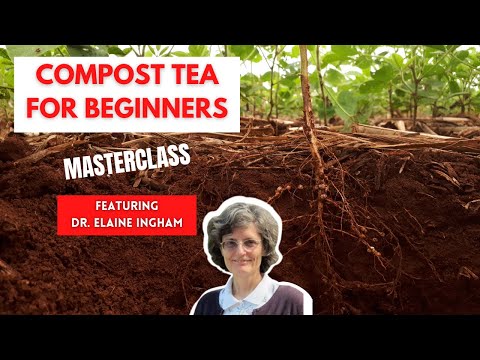
PermaNews Brief
Key Takeaways
Compost tea, when brewed and applied correctly to match plant needs, significantly boosts plant health and productivity by enhancing soil and plant microbiomes.
- Tailor compost tea to specific plant types.
- Bacteria-dominant for annuals, fungi-rich for trees.
- Brewing process influences microbial balance.
- High-quality compost is crucial for efficacy.
- Chlorine-free water is essential for brewing.
Why It Matters
Understanding compost tea’s nuances allows gardeners to optimize its benefits, fostering robust plant growth and reducing reliance on synthetic inputs.
What to Do Next
Watch Dr. Elaine Ingham’s masterclass series for a deeper dive into compost tea preparation and application.
Recommended for: Gardeners and growers seeking to enhance plant vitality and soil health through organic, biologically-driven methods.
This article, the fifth in a series, delves into the practical application and benefits of compost tea, drawing insights from Dr. Elaine Ingham's expertise. The core message revolves around the idea that compost tea, when properly prepared and applied, can significantly enhance plant health and productivity by introducing beneficial microorganisms to the soil and plant surfaces.
A key aspect highlighted is the importance of understanding the specific needs of different plants. The article emphasizes that not all compost teas are created equal, and the ideal microbial composition varies depending on whether you are growing annual vegetables, perennial shrubs, or trees. For instance, annuals generally thrive with a more bacteria-dominant tea, while trees benefit from a fungal-rich brew. This differentiation is crucial for maximizing the effectiveness of the application. The article explains that the brewing process itself can be manipulated to favor either bacterial or fungal growth. Factors like the type of compost used, the aeration levels during brewing, and the addition of specific food sources (e.g., humic acids for fungi, molasses for bacteria) all play a role in shaping the final microbial community.
The article also stresses the importance of using high-quality compost as the foundation for any effective compost tea. It cautions against using compost that has been exposed to harmful chemicals or that contains pathogens, as these can be amplified in the brewing process and do more harm than good. The quality of the water used for brewing is another critical factor; chlorinated water can kill beneficial microbes, so it's recommended to either use filtered water or let tap water sit for a period to allow chlorine to dissipate.
Application methods are thoroughly discussed. The article suggests that compost tea can be applied as a foliar spray, directly to the soil, or even as a seed soak. Foliar application is particularly effective for delivering beneficial microbes directly to plant leaves, where they can compete with pathogens and enhance nutrient uptake. Soil drenching helps to inoculate the soil with a diverse microbial community, improving soil structure, nutrient cycling, and water retention. The frequency of application is also addressed, with the recommendation to apply compost tea regularly, especially during periods of plant stress or active growth, to maintain a healthy microbial balance.
Furthermore, the article touches upon the concept of "active" versus "passive" compost tea. Active compost tea, which is brewed with aeration, is generally preferred due to its higher microbial diversity and concentration. Passive tea, made by simply steeping compost in water, can still offer some benefits but is typically less potent. The article also provides guidance on how to assess the quality of compost tea, suggesting that a healthy tea should have a pleasant earthy smell and a cloudy appearance, indicating a thriving microbial population.
In essence, the article serves as a comprehensive guide to understanding and utilizing compost tea as a powerful tool in permaculture and organic gardening. It underscores the scientific principles behind its efficacy, emphasizing the critical role of microbial life in soil health and plant vitality. By carefully considering the type of compost, brewing methods, and application techniques, growers can leverage compost tea to cultivate robust, healthy plants and foster a thriving ecosystem in their gardens.
Source: youtube.com
Related Analysis
- Food Forest Courses Shift From Theory to Build-Ready Skills — Several food forest courses now open with site assessment and guild-building rather than design theory, suggesting a dev…
- Practitioners Build Silvopasture Playbook Before Researchers Catch Up — A small but consistent set of signals from the Northeast U.S. shows farmers actively piloting silvopasture while formal …
Related on PermaNews
- Elaine Ingham on Mycorrhizal Fungi: To Add or Not to Add? (Podcast)
- Seed Starting Success: Inoculation & Soil Biology Techniques (Video)
- Boost Soil & Plants Fast: Hay & Compost Tea Method (Video)
- Dr. Ingham's Compost Tea Masterclass: Grow Amazing Plants (Part 4) (Video)
- Dr. Ingham's Compost Tea Masterclass: Grow Amazing Plants (3/5) (Video)
- Dr. Ingham's Compost Tea Masterclass: Grow Amazing Plants (Part 2) (Video)
Explore more in Food Systems & Growing — the full hub for this knowledge area.