Dr. Ingham's Compost Tea Masterclass: Grow Amazing Plants (3/5)
By Diego Footer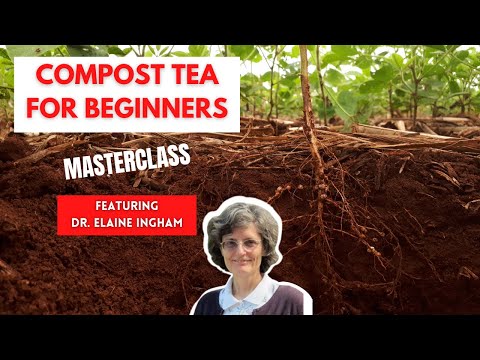
PermaNews Brief
Key Takeaways
Compost tea boosts plant health by introducing beneficial microorganisms, with specific brews tailored for different plant needs like bacterial-dependent vegetables or fungal-dependent trees.
- Compost tea enhances plant health through beneficial microbes.
- Microorganisms aid nutrient cycling and disease suppression.
- Tailor tea composition for bacterial or fungal-dependent plants.
- High-quality, diverse compost is crucial for effective tea.
- Anaerobic compost can harm plants.
Why It Matters
Applying compost tea can transform soil vitality and plant resilience, reducing the need for chemical inputs and fostering a thriving ecosystem.
What to Do Next
Learn more about Dr. Elaine Ingham's methods for brewing effective compost tea by watching the video.
Recommended for: Gardeners, farmers, and permaculture enthusiasts interested in advanced, natural strategies for soil health and plant resilience.
This article, part three of a five-part series featuring Dr. Elaine Ingham, delves into the practical application and benefits of compost tea in enhancing plant health and soil vitality. The discussion emphasizes that compost tea is not merely a fertilizer but a living solution designed to introduce beneficial microorganisms into the soil and onto plant surfaces. These microorganisms play a crucial role in nutrient cycling, disease suppression, and overall plant resilience.
The core principle behind compost tea is to extract and multiply the diverse microbial communities found in high-quality compost. This process involves steeping compost in water, often with the addition of food sources like molasses or humic acids, to encourage microbial growth. The resulting liquid, when applied to plants or soil, acts as a biological inoculant, populating the environment with bacteria, fungi, protozoa, and nematodes that contribute to a healthy ecosystem.
A significant focus of the masterclass is on understanding the specific needs of different plants. Dr. Ingham highlights that the ideal microbial composition of compost tea varies depending on whether the target plants are predominantly bacterial-dependent, like most annual vegetables, or fungal-dependent, such as trees and shrubs. For instance, a tea brewed for a vegetable garden might prioritize bacterial growth, while a tea for an orchard would aim for a higher fungal component. This tailored approach ensures that the applied microorganisms are best suited to support the specific plant's growth and nutrient uptake mechanisms.
The article details the importance of using high-quality compost as the foundation for brewing effective tea. Compost made from a diverse range of organic materials, properly aerated and matured, will contain a broader spectrum of beneficial microbes. Conversely, compost that is anaerobic or contains undesirable pathogens will produce a tea that could be detrimental to plant health. The quality of the water used is also critical; chlorinated water can kill beneficial microbes, so it's often recommended to aerate tap water or use rainwater.
Application methods for compost tea are also discussed. It can be applied as a foliar spray, directly to the leaves of plants, where the microbes can colonize the leaf surface and offer protection against pathogens, improve nutrient absorption, and even deter pests. Alternatively, it can be drenched into the soil, where the microorganisms work to improve soil structure, break down organic matter, and make nutrients more available to plant roots. The timing and frequency of application depend on various factors, including plant growth stage, soil conditions, and specific plant needs.
The benefits of using compost tea extend beyond just nutrient provision. The introduced microbial communities enhance the plant's natural defenses, making them more resistant to diseases and insect infestations. They also improve soil aggregation, leading to better water infiltration and retention, and increased oxygen availability for roots. This holistic approach to plant care reduces the reliance on synthetic fertilizers and pesticides, aligning with permaculture principles of working with nature rather than against it.
In essence, Dr. Ingham's masterclass emphasizes that compost tea is a powerful tool for cultivating thriving ecosystems, not just individual plants. By understanding the intricate relationships between soil, microbes, and plants, growers can leverage compost tea to create resilient, productive, and healthy gardens and agricultural systems. The article underscores the importance of a scientific approach to compost tea brewing, ensuring that the microbial solution is optimized for the specific needs of the plants and the environment.
Source: youtube.com
Related Analysis
- Food Forest Courses Shift From Theory to Build-Ready Skills — Several food forest courses now open with site assessment and guild-building rather than design theory, suggesting a dev…
- Practitioners Build Silvopasture Playbook Before Researchers Catch Up — A small but consistent set of signals from the Northeast U.S. shows farmers actively piloting silvopasture while formal …
Related on PermaNews
- Elaine Ingham on Mycorrhizal Fungi: To Add or Not to Add? (Podcast)
- Seed Starting Success: Inoculation & Soil Biology Techniques (Video)
- Matt Powers: 4-Year-Old Compost Still Viable? Shocking Results! (Video)
- Boost Soil & Plants Fast: Hay & Compost Tea Method (Video)
- Dr. Ingham's Compost Tea Masterclass: Grow Amazing Plants (Part 5) (Video)
- Dr. Ingham's Compost Tea Masterclass: Grow Amazing Plants (Part 4) (Video)
Explore more in Food Systems & Growing — the full hub for this knowledge area.