Boost Soil & Plants Fast: Hay & Compost Tea Method
By MBOTR - Sustainable Permaculture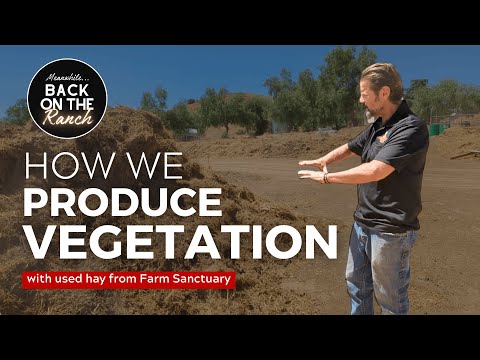
PermaNews Brief
Key Takeaways
Rapidly build soil and grow vegetation in degraded areas using a permaculture-inspired method of layered hay and compost tea application.
- Used hay provides structure, suppresses weeds, and conserves moisture.
- Compost tea inoculates with diverse beneficial microorganisms.
- Microbes break down hay, cycle nutrients, and improve soil structure.
- The method kickstarts ecological succession for healthy soil food web.
- Builds soil rapidly in degraded or barren landscapes.
Why It Matters
This method offers an efficient way to rejuvenate unproductive land, enhancing soil health and biodiversity with readily available materials.
What to Do Next
Consider applying used hay and compost tea to a small, degraded area in your garden or property.
Recommended for: Anyone looking for an accessible and effective method to improve soil health and establish vegetation on degraded land.
This article details a method for rapidly establishing soil and vegetation in degraded or barren landscapes, drawing on principles of permaculture. The core strategy involves the strategic application of used hay and compost tea, aiming to kickstart ecological succession and build a healthy soil food web.
The process begins with the acquisition of used hay, which is often readily available from agricultural operations. This hay, while no longer suitable for animal feed, retains significant organic matter and a diverse microbial population. It serves as a foundational layer, providing both physical structure and a slow-release source of nutrients. The hay is spread across the target area, forming a thick mulch. This layer immediately offers several benefits: it suppresses existing weeds by blocking sunlight, conserves soil moisture by reducing evaporation, and moderates soil temperature fluctuations.
Following the application of hay, the next crucial step involves the introduction of compost tea. Compost tea is a liquid extract made by steeping mature compost in water, often with aeration to encourage aerobic microbial growth. This tea is a concentrated solution of beneficial microorganisms, including bacteria, fungi, protozoa, and nematodes, along with soluble nutrients. When sprayed onto the hay and the underlying ground, these microorganisms begin to colonize the organic matter. They initiate the decomposition process, breaking down the hay into simpler compounds that can be utilized by plants.
The article emphasizes the importance of a diverse microbial community. The compost tea acts as an inoculant, introducing a wide array of life forms that are essential for healthy soil function. These microbes perform numerous vital roles: they cycle nutrients, improve soil structure by creating aggregates, suppress plant pathogens, and enhance water infiltration. The hay provides the initial food source and habitat for these newly introduced organisms.
As the hay decomposes, it gradually transforms into humus, a stable form of organic matter that is critical for long-term soil fertility. This process is accelerated by the microbial activity from the compost tea. The developing soil structure becomes more porous, allowing for better air and water movement, which further supports microbial life and root growth.
Once the initial soil-building process is underway, the area becomes more conducive to plant growth. Seeds, either naturally occurring in the hay or intentionally sown, can then germinate and establish themselves. The article suggests that the improved soil environment, rich in organic matter and microbial life, significantly enhances the success rate of plant establishment. The plants, in turn, contribute to the ongoing soil-building process through their root exudates and eventual decomposition.
This method is presented as a highly effective and relatively low-cost approach to ecological restoration. It leverages readily available resources and natural processes to rapidly transform degraded land into productive ecosystems. The focus is on fostering a self-sustaining system where the soil food web drives fertility and plant growth, rather than relying on external chemical inputs. The technique is particularly valuable in areas where topsoil has been lost or severely depleted, offering a pathway to regenerate living soil and support diverse plant communities. The long-term goal is to create a resilient ecosystem that can withstand environmental stresses and continue to improve over time.
Source: youtube.com
Related Analysis
- Food Forest Courses Shift From Theory to Build-Ready Skills — Several food forest courses now open with site assessment and guild-building rather than design theory, suggesting a dev…
- Practitioners Build Silvopasture Playbook Before Researchers Catch Up — A small but consistent set of signals from the Northeast U.S. shows farmers actively piloting silvopasture while formal …
Related on PermaNews
- Ivana Gazibara's $1.4B Initiative to Revamp Midwest Agriculture (Video)
- Permaculture: Sustainable Design for Thriving Ecosystems (Article)
- Daniel Vidal's Beloved Zero-Waste Fine Dining Experience (Video)
- Benedetta Kyengo's Journey to Restore Paradise After the Green Revolution (Video)
- Pablo Usobiaga - Zero Waste, Ancient Farmland and Mexico City's First Green Michelin Star (Video)
- The Shade-to-Protein Curve: Why Cooler Pastures Grow More Meat (Video)
Explore more in Food Systems & Growing — the full hub for this knowledge area.