Dr. Ingham's Compost Tea Masterclass: Grow Amazing Plants (Part 2)
By Diego Footer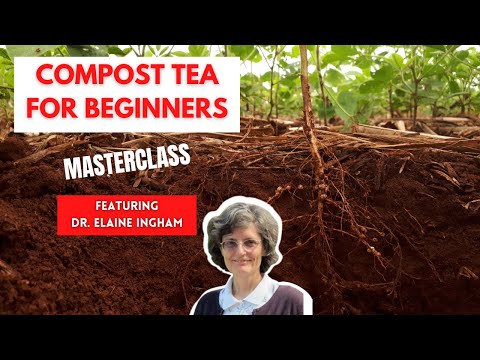
PermaNews Brief
Key Takeaways
Compost tea, when properly brewed with high-quality compost and aeration, significantly boosts plant and soil health through microbial enrichment.
- High-quality compost is essential for microbial diversity.
- Aeration prevents harmful anaerobic conditions in tea.
- Compost tea fosters a healthy plant ecosystem.
- Selectively feed microbes for desired beneficial growth.
- Poorly made tea can harm plants, so brew carefully.
Why It Matters
Understanding compost tea creation allows gardeners and farmers to cultivate robust plant growth and improve soil vitality naturally, reducing reliance on synthetic inputs.
What to Do Next
Assess your current composting methods to ensure you are producing high-quality compost for tea.
Recommended for: Gardeners, farmers, and soil enthusiasts looking to deepen their understanding and practice of ecological soil management and natural plant enhancement.
This article, the second in a five-part series, delves into the intricacies of creating and utilizing compost tea for enhanced plant growth, featuring insights from Dr. Elaine Ingham. The core concept revolves around cultivating a thriving microbial community within the tea that can then be applied to plants and soil, fostering a healthier and more productive ecosystem.
A fundamental aspect discussed is the importance of starting with high-quality compost. Not all compost is created equal, and the microbial diversity and activity within the initial compost directly influence the efficacy of the resulting tea. Dr. Ingham emphasizes that the compost should be rich in beneficial bacteria, fungi, protozoa, and nematodes, as these are the organisms that will be extracted and multiplied in the brewing process. The article highlights that poorly made compost, or compost that has been exposed to anaerobic conditions for too long, can harbor detrimental organisms, which would then be amplified in the tea, potentially harming plants rather than helping them. Therefore, careful selection and understanding of the compost source are paramount.
The brewing process itself is detailed, focusing on the critical elements required to support microbial proliferation. Aeration is presented as a non-negotiable component. Compost tea is an aerobic brew, meaning that a constant supply of oxygen is essential to encourage the growth of beneficial aerobic microorganisms and suppress harmful anaerobic ones. The article explains that without adequate aeration, the tea can quickly become anaerobic, leading to the production of compounds that are toxic to plants. Various methods of aeration, such as air pumps and diffusers, are implicitly suggested as necessary equipment for effective brewing.
Beyond aeration, the addition of microbial food sources is another key element. Dr. Ingham's approach involves providing specific nutrients that selectively encourage the growth of desired microbial groups. For instance, humic acids and kelp are mentioned as beneficial additions that provide a broad spectrum of nutrients and growth stimulants for a diverse microbial population. Sugars, in controlled amounts, can also be used to fuel bacterial growth, while more complex carbohydrates might be added to support fungal development. The article underscores that the specific "foods" added should be tailored to the desired microbial profile of the tea, depending on the target plants and soil conditions. For example, a tea intended for leafy greens might prioritize bacterial dominance, while one for woody perennials might aim for a higher fungal component.
The duration of the brewing process is also discussed as a crucial factor. The article explains that the optimal brewing time can vary depending on ambient temperature, the quality of the compost, and the specific goals for the tea. Generally, brewing for 24 to 36 hours is suggested as a common timeframe to achieve a high concentration of beneficial microorganisms without allowing the tea to become anaerobic or for microbial populations to decline due to resource depletion. Monitoring the tea's aroma and appearance can provide clues about its health and readiness. A healthy compost tea should have an earthy, pleasant smell, while a foul odor indicates anaerobic conditions.
Finally, the application of compost tea is covered. The article stresses that compost tea is not a fertilizer in the traditional sense, but rather a microbial inoculant. Its primary function is to introduce and establish beneficial microorganisms in the soil and on plant surfaces. These microbes then perform a variety of functions, including nutrient cycling, disease suppression, and improving soil structure. The tea can be applied as a foliar spray, directly to the leaves of plants, or as a soil drench, to inoculate the root zone. The timing and frequency of application are also important, with regular applications often recommended to maintain a robust microbial presence. The article implicitly suggests that understanding the specific needs of the plants and soil is crucial for maximizing the benefits of compost tea.
Source: youtube.com
Related Analysis
- Food Forest Courses Shift From Theory to Build-Ready Skills — Several food forest courses now open with site assessment and guild-building rather than design theory, suggesting a dev…
- Practitioners Build Silvopasture Playbook Before Researchers Catch Up — A small but consistent set of signals from the Northeast U.S. shows farmers actively piloting silvopasture while formal …
Related on PermaNews
- Elaine Ingham on Mycorrhizal Fungi: To Add or Not to Add? (Podcast)
- Seed Starting Success: Inoculation & Soil Biology Techniques (Video)
- Boost Soil & Plants Fast: Hay & Compost Tea Method (Video)
- Dr. Ingham's Compost Tea Masterclass: Grow Amazing Plants (Part 5) (Video)
- Dr. Ingham's Compost Tea Masterclass: Grow Amazing Plants (Part 4) (Video)
- Dr. Ingham's Compost Tea Masterclass: Grow Amazing Plants (3/5) (Video)
Explore more in Food Systems & Growing — the full hub for this knowledge area.