David The Good's Easy Bench Grafting for Fruit Trees
By David The Good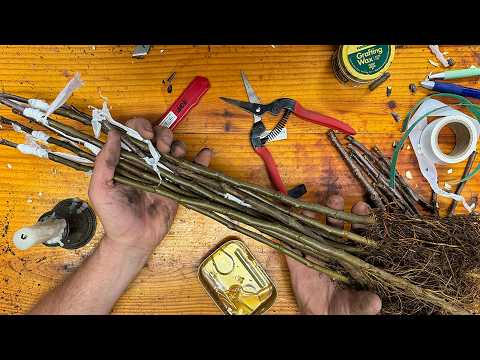
PermaNews Brief
Key Takeaways
Bench grafting offers an accessible and cost-effective way to propagate desired plant varieties by joining a scion to a rootstock.
- Graft indoors during dormancy for comfort and success.
- Whip-and-tongue graft ensures strong, viable unions.
- Prepare scions and rootstocks during dormant season.
- Sharp, clean tools are crucial for precise cuts.
- Maximize cambium contact for successful integration.
Why It Matters
This grafting method empowers individuals to create new hybrid plants with desirable characteristics, enhancing garden productivity and plant resilience without significant upfront costs.
What to Do Next
Research local sources for dormant scions and rootstocks to try bench grafting yourself this winter.
Recommended for: Home gardeners and small-scale orchardists interested in affordable, hands-on plant propagation and creating custom fruit tree varieties.
This article details a straightforward and economical method for bench grafting, as demonstrated by David The Good. Bench grafting is a technique performed indoors, typically during the dormant season, allowing grafters to work comfortably regardless of external weather conditions. This particular method emphasizes simplicity and accessibility, making it suitable for both beginners and those seeking to expand their grafting operations without significant investment.
The core principle of this grafting technique involves joining a scion (a shoot of the desired plant variety) to a rootstock (the root system of another plant). The goal is to create a new, hybrid plant that benefits from the desirable traits of both components – for instance, a fruit variety known for its flavor grafted onto a rootstock that provides disease resistance or dwarfing characteristics.
The process begins with the preparation of both the scion and the rootstock. Scions are typically collected from dormant trees during the winter months and stored in a cool, moist environment until ready for use. Rootstocks can be purchased or grown from seed, and they are also ideally dormant when grafting. The article highlights the importance of using sharp, clean tools to ensure precise cuts and minimize the risk of contamination. A sharp grafting knife or a very sharp utility knife is recommended.
The specific grafting technique described is a whip-and-tongue graft, a common and highly successful method. This involves making a long, sloping cut on both the scion and the rootstock, ensuring the cuts are of similar length and angle. The critical step then involves making a small, downward-sloping cut, or "tongue," into the face of the initial cut on both pieces. These tongues are designed to interlock, creating a strong mechanical bond and maximizing the cambium contact between the scion and rootstock. The cambium layer, a thin layer of actively growing cells just beneath the bark, is crucial for the successful union of the graft. Maximizing this contact point is paramount for the graft to take.
Once the scion and rootstock are interlocked, they are secured tightly. The article suggests using grafting tape, rubber bands, or even strips of plastic to hold the union firmly in place. The purpose of this binding is twofold: to maintain close contact between the cambium layers and to protect the graft from drying out. After binding, the entire grafted area, including the tip of the scion, is often sealed with grafting wax or a similar sealant. This further prevents moisture loss and protects the delicate tissues from pathogens.
The grafted plants are then placed in a suitable environment for healing. This typically involves a warm, humid location, which encourages the formation of callus tissue – the undifferentiated cells that bridge the gap between the scion and rootstock, eventually forming a vascular connection. The article implies that a simple indoor setup, perhaps with some humidity control, is sufficient for this stage.
Over time, if the graft is successful, the scion will begin to bud and grow, indicating that a strong union has formed and nutrients are being transported from the rootstock to the scion. The binding material can then be removed, though some materials are designed to degrade naturally.
The "cheap and easy" aspect of this method is emphasized through the minimal specialized equipment required and the straightforward nature of the whip-and-tongue technique. It demystifies the process of grafting, making it accessible to a wider audience and promoting self-sufficiency in propagating desired plant varieties. This approach aligns with permaculture principles by encouraging the propagation of resilient and productive plants using readily available resources and simple methods.
Source: youtube.com
Related Analysis
- Regenerative Farmers Flip Cover Crop Logic From Compliance to Profit — Practitioner accounts and a new meta-analysis suggest cover cropping is being reframed from conservation practice to pro…
- Farmers Convert Six Weeks of Rhubarb Into 25-Year Supply — Initial signals suggest a rhubarb preservation technique can extend a brief seasonal harvest into 25 years of storage—a …
Related on PermaNews
- Boost Tomato Yield: Avoid These Seedling Mistakes (Video)
- Optimal Timing: Fruit Tree Planting for Permaculture Success (Video)
- Choosing Your Fruit Tree: A Permaculture Guide (Video)
- Single Fruit Tree? Pollination Needs for Abundant Harvests (Video)
- Sprout Sweet Potatoes Easily: Your Guide to Slips (Video)
- Comfrey Propagation: 3 Key Methods Explained (Video)
Explore more in Food Systems & Growing — the full hub for this knowledge area.