Optimal Timing: Fruit Tree Planting for Permaculture Success
By Justin Rhodes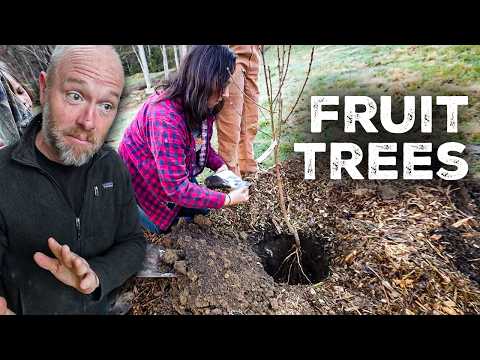
TL;DR: Planting fruit trees in the dormant season ensures robust root development and secures future harvests.
- Dormant season planting minimizes transplant shock.
- Fruit trees offer long-term food security.
- Site selection and soil are crucial factors.
- Choose varieties suited to your local climate.
- Bare-root trees are ideal for dormant planting.
Why it matters: Strategically planting fruit trees now creates a sustainable food source and boosts ecological resilience for years to come.
Do this next: Assess your garden for optimal fruit tree planting locations with adequate sun and drainage.
Recommended for: Home gardeners and permaculture enthusiasts looking to establish a sustainable and productive orchard.
The article emphasizes the opportune timing for planting fruit trees, particularly during the dormant season, which typically spans from late autumn to early spring. This period is considered ideal because the trees are not actively growing, allowing them to establish their root systems without the stress of simultaneously supporting foliage and fruit production. Planting during dormancy minimizes transplant shock, as the tree can focus its energy on root development before the demands of the growing season begin.
The author highlights the long-term benefits of planting fruit trees, framing it as an investment in future food security and ecological resilience. Fruit trees, once established, can provide a consistent source of fresh produce for many years, contributing to a more self-sufficient lifestyle. This aligns with permaculture principles of creating perennial systems that yield abundant resources with minimal ongoing input. The article suggests that waiting to plant can lead to missed opportunities, as it takes several years for most fruit trees to mature and begin bearing fruit. Therefore, planting sooner rather than later accelerates the timeline for enjoying harvests.
Key considerations for successful fruit tree planting are discussed, starting with site selection. The importance of choosing a location that receives adequate sunlight, ideally at least six to eight hours per day, is stressed. Proper drainage is another critical factor, as fruit trees are susceptible to root rot in waterlogged soils. The article advises assessing the soil type and, if necessary, amending it with organic matter to improve structure and fertility.
Regarding tree selection, the author recommends choosing varieties that are well-suited to the local climate and growing conditions. This includes considering chill hours – the amount of time a tree needs to experience cold temperatures to properly set fruit – and disease resistance. Opting for bare-root trees during the dormant season is often more economical and allows for easier inspection of the root system before planting.
The planting process itself is detailed, beginning with digging a hole that is wide enough to accommodate the spread of the roots and deep enough so that the graft union (the point where the scion is joined to the rootstock) remains above the soil line. The article advises gently spreading out the roots and backfilling the hole with the excavated soil, ensuring no air pockets are left. Watering thoroughly after planting is crucial to settle the soil around the roots.
Post-planting care is also covered, emphasizing the importance of consistent watering, especially during the first few years as the tree establishes. Mulching around the base of the tree is recommended to conserve soil moisture, suppress weeds, and regulate soil temperature. Protection from pests and diseases, as well as from animal browsing, is also mentioned as an ongoing task for young trees.
The article implicitly encourages a proactive approach to permaculture design, where the establishment of perennial food systems like orchards is prioritized. It suggests that by taking action now, individuals can contribute to creating resilient and productive landscapes that will provide benefits for generations to come. The underlying message is one of empowerment and foresight, urging readers to take advantage of the optimal planting window to secure future harvests and enhance their food independence.
Source: youtube.com
Related Analysis
- Farmers Convert Six Weeks of Rhubarb Into 25-Year Supply — Initial signals suggest a rhubarb preservation technique can extend a brief seasonal harvest into 25 years of storage—a …
- Compost Builds Soil Microbiomes—But Human Waste Divides Practitioners — A small but consistent set of signals indicates composting's soil benefits are well-documented, while human-waste compos…
Related on PermaNews
- Aloe Vera: Free Grapevine Rooting Hormone DIY (Video)
- April Harvest: The Unknown Edible Shrub for Your Food Forest (Video)
- 4 Pflanzen, 620 kg Tomaten: Permakultur-Erfolg! (Video)
- Famine Food: 60-Day Crop Beats Rice - Easy, Nutritious (Video)
- Gärten klimafest machen: Naturschutz durch Resilienz (Article)
- 20-Day Compost: Fast Permaculture Gardening Hack (Video)
Explore more in Food Systems & Growing — the full hub for this knowledge area.