Farmer's Garden Survived a Historic Drought, Here's How
By Warrior Poet Society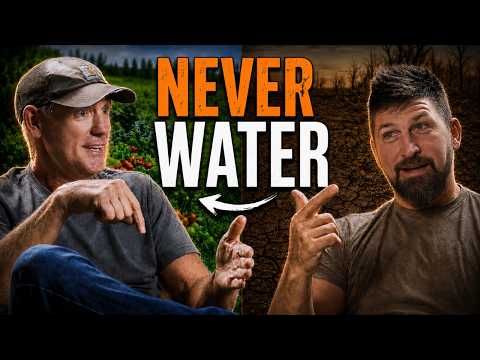
This episode presents a practical, field-tested drought-resilience case study from a regenerative homesteading setting. The core value of the conversation is that it moves beyond abstract drought advice and shows how one land manager actually redesigned the landscape to hold water longer and reduce dependence on frequent irrigation. The guest, Mike Herbert, has years of experience in soil development, organic farming, livestock management, and homesteading, and he explains a layered strategy built around earthworks, soil-building, and water harvesting.
A central technique described in the episode is the use of hugelkultur beds. These were created by digging wide, deep trenches, roughly six feet wide and three feet deep, then filling them with logs and woody material from the property before covering them with soil and mulch. The buried wood acts like a sponge over time, slowly absorbing and releasing moisture while also improving soil structure as it decomposes. The discussion also describes heavy mulching with hay and other organic cover materials, which reduces evaporation, protects the soil surface from direct sun, and supports moisture retention during dry periods.
The video also emphasizes water-flow management across the site. Instead of letting runoff leave the property, water was directed toward hugel beds so that one bed could catch overflow from another. This creates a staged retention system that maximizes infiltration and reduces waste. The episode touches on the importance of not relying on conventional plowing, but instead using subsoiling or other lower-disturbance methods to open pathways for water to enter the ground without destroying soil structure. That distinction matters for practitioners trying to preserve moisture and avoid compaction.
The case study is useful because it demonstrates a sequence of decisions: build organic matter, place woody biomass below the soil surface, cover with mulch, shape the land so water moves into retention zones, and avoid practices that accelerate evaporation or runoff. The result is a garden and homestead system that remained productive through a historic drought. For farmers, gardeners, and land stewards, the episode offers concrete design ideas they can adapt: trench-and-log beds, deep mulch, passive water harvesting, and infiltration-focused earthworks.
Source: youtube.com
Related Analysis
- Projects Pivot to Integrate Rainwater Harvesting with Energy — New evidence indicates a shift toward integrating rainwater cisterns with renewable energy systems in permaculture proje…
- Farmers Pivot to Innovative Water Solutions Amid Drought — Decentralized water management systems are emerging among regenerative farms to enhance resilience against drought.
Related on PermaNews
- Ernst Götsch's Cacao Syntropy: Master Agroforestry Now (How-To Guide)
- Designing Regenerative Resilience: Participatory Living Labs (How-To Guide)
- Berlins schwimmende Gärten: Permakultur auf dem Wasser (Case Study)
- Lo—TEK: Indigenous Tech for Climate Solutions (Article)
- Nakivale's Regenerative Toilets: Refugee Resilience, Circular Sanitation (Case Study)
- Finca Bellavista: Costa Rica's 200-Acre Water System Innovation (Case Study)
Explore more in Water, Climate & Adaptation — the full hub for this knowledge area.