Nakivale's Regenerative Toilets: Refugee Resilience, Circular Sanitation
PermaNews Brief
Key Takeaways
A refugee camp project uses composting toilets to turn human waste into a resource, improving sanitation and empowering communities.
- Composting toilets provide sanitation without water or extensive infrastructure.
- Waste transforms into valuable compost for soil restoration and agriculture.
- Community training and local involvement are key to project success.
- Two models, Arboloo and Ecosan, offer adaptable solutions.
- This approach promotes environmental regeneration and food security in crises.
Why It Matters
This initiative demonstrates how sustainable waste management can address humanitarian crises, foster self-sufficiency, and contribute to ecological restoration.
What to Do Next
Research local regulations on human waste composting for agricultural use.
Permaculture Context
What's unfolding in Nakivale matters far beyond the camp's borders, because it offers permaculture practitioners something increasingly rare: real-world proof that closed-loop sanitation systems work under genuine resource constraints, not just on well-funded demonstration farms. For those of us designing homesteads, intentional communities, or off-grid systems, the Arboloo and Ecosan models validate a principle we already hold theoretically — that human waste is a fertility asset, not a problem to be flushed away — but seeing it implemented at scale, with community ownership and minimal inputs, sharpens the argument considerably. The practical takeaway is this: if you've been hesitating to integrate humanure systems into your land design due to social acceptance concerns or perceived complexity, this project demonstrates that simplified protocols, clear training, and appropriate technology can shift both behavior and outcomes quickly. It also reinforces that resilience isn't built top-down through infrastructure spending, but through distributed, locally managed systems — exactly the design principle that separates regenerative living from conventional sustainability thinking.
Recommended for: Anyone interested in sustainable sanitation, humanitarian aid, or regenerative waste management in challenging environments.
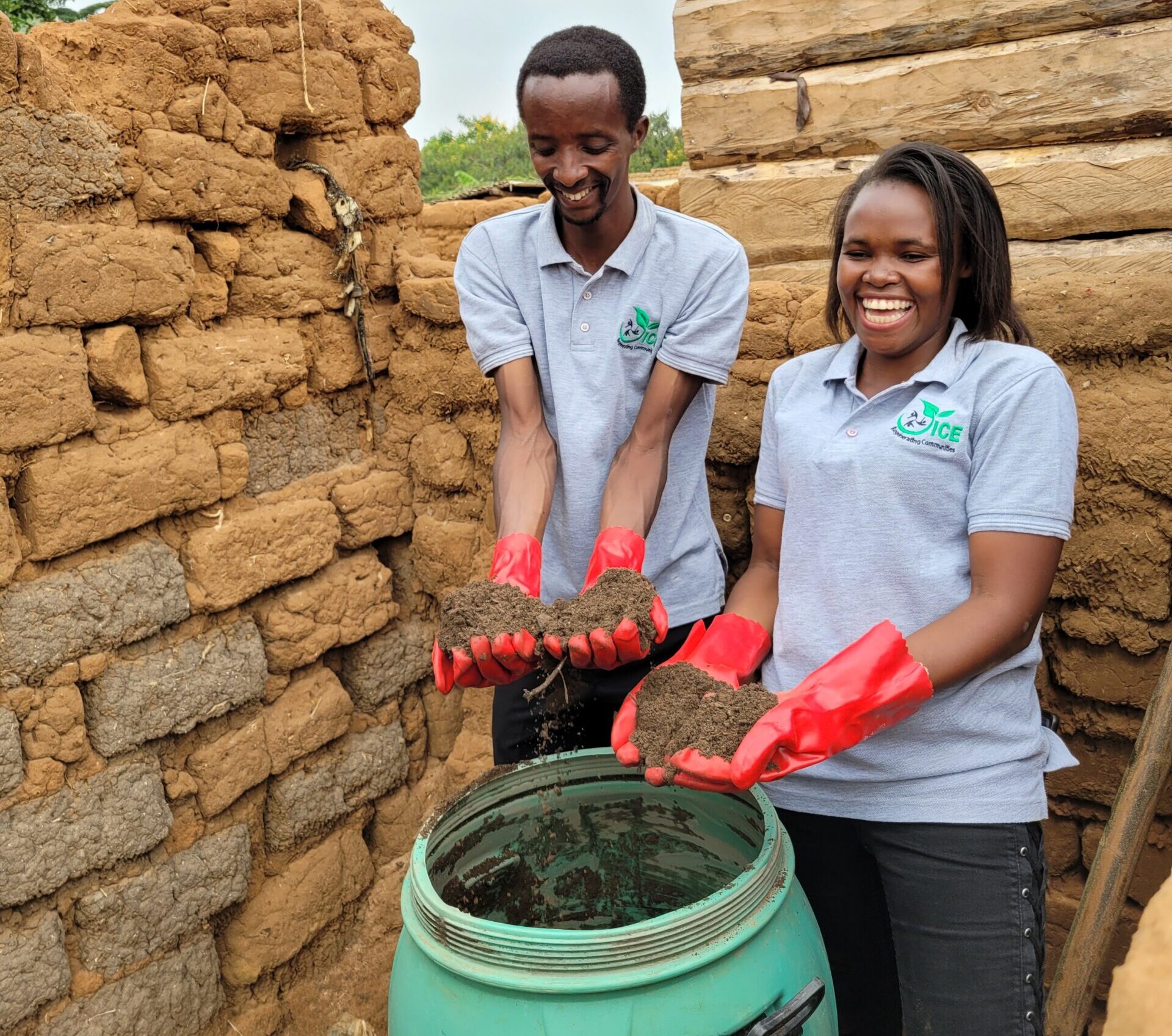
Generation Restoration e.V., in partnership with refugee-led organization UNIDOS, is implementing a regenerative sanitation model in Nakivale refugee camp using compost toilets and circular waste management. This initiative addresses urgent hygiene needs while promoting long-term environmental regeneration and food security. The project installs 30 eco-logical compost toilets using two low-tech models: Arboloo and Ecosan, both waterless and sewage-free. Arboloo toilets are designed for rural adaptability, transforming human waste into valuable compost that supports soil restoration, reduces synthetic fertilizer dependency, and empowers communities through training and ownership. Ecosan toilets employ a container-based system for reuse and mobility: waste collects in sealed containers under the toilet seat; users add dry matter like ash or sawdust after each use to control odor and initiate composting; full containers transport to a central site for hygienization and composting into nutrient-rich soil; the compost reuses for agriculture, tree planting, or landscaping. Key benefits include no water or infrastructure requirements, low maintenance, and local labor involvement. The €14,000 funding goal covers construction of 30 units, materials, maintenance, hygiene training, and waste monitoring. This approach turns crisis into opportunity by converting waste into resources, fostering refugee-led environmental healing, and building ground-up resilience. Practical implementation details emphasize safe composting processes to eliminate pathogens, ensuring compost safety for non-food crops initially, with scalability for camp-wide adoption. Community training focuses on operation, maintenance, and hygiene to sustain the system long-term.
Source: genr.world
Related Analysis
- High-Salt Fertilizers Block Soil Microbes, Kempf Says — High-salt fertilizers disrupt soil microbes and microbial colonization, trapping farmers in chemical dependency. Biologi…
- Fertilizer Shortage Forces Reckoning on Nitrogen Sources — Fertilizer supply crisis drives farms toward nitrogen-fixing cover crops, compost, and legume rotations as alternatives.
Related on PermaNews
- Ernst Götsch's Cacao Syntropy: Master Agroforestry Now (How-To Guide)
- Designing Regenerative Resilience: Participatory Living Labs (How-To Guide)
- Lo—TEK: Indigenous Tech for Climate Solutions (Article)
- Pippin Home Designs: Regenerative Home Design Explained (How-To Guide)
- Federal Policy Shift: Native Regenerative Ag for Soil & Carbon (Article)
- Indigenous Placekeeping: Regenerative Design Frameworks (How-To Guide)
Explore more in Shelter, Energy & Infrastructure — the full hub for this knowledge area.