Regenerative Farming: Cultivating Healthy Soil & Biodiversity
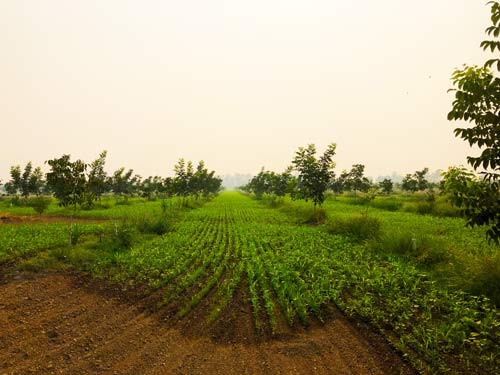
TL;DR: Regenerative farming techniques like cover cropping, composting, and agroforestry restore soil ecosystems, boost biodiversity, and improve farm resilience.
- Prioritize diverse root systems for soil health.
- Use cover crops to improve water infiltration.
- Compost on-site to build organic matter.
- Adopt no-till to preserve fungal networks.
- Mimic nature with polycultures and rotations.
- Integrate trees for shade, windbreaks, and carbon sequestration.
Why it matters: Implementing regenerative practices leads to healthier soil, reduced reliance on synthetic inputs, and more resilient farms capable of withstanding environmental stresses.
Do this next: Start a compost pile using farm waste to improve your soil organic matter.
Recommended for: Farmers, gardeners, and land managers seeking to restore soil ecosystems and build resilient agricultural systems.
This practitioner guide from a regenerative farmer provides a detailed roadmap for restoring soil ecosystems through proven techniques like cover cropping, composting, minimal tillage, microbial support, polycultures, crop rotations, and agroforestry. It emphasizes biodiversity enhancement via diverse root structures that foster symbiotic microbial relationships, such as nitrogen-fixing bacteria and phosphorus-solubilizing fungi, which naturally enrich the soil without synthetic inputs. In subtropical orchard examples, the guide showcases real-world applications where these methods reduced fertilizer and pesticide needs by over 50%, leading to long-term resilience against droughts and pests. Specific steps include selecting cover crop mixes with deep-rooted legumes and grasses to penetrate compacted layers, improving water infiltration by 30-40%; composting on-site with farm waste to boost organic matter to 5-7% levels; and implementing no-till practices that preserve fungal hyphae networks essential for nutrient cycling. Polycultures mimic natural ecosystems by interplanting fruit trees with nitrogen-fixers like pigeon pea and ground covers like sweet potato, increasing insect pollinator diversity and bird populations observed in farm audits. Crop rotations are tailored to subtropical climates, alternating heavy feeders with accumulators over 4-year cycles to prevent nutrient depletion. Agroforestry integrations, such as alley cropping with timber trees, provide shade, windbreaks, and additional income streams while sequestering 2-4 tons of carbon per hectare annually. The guide includes monitoring protocols like soil tests for microbial biomass carbon and earthworm counts, with case data showing yield stability during El Niño events where conventional neighbors saw 20-30% drops. Practical tips cover microbial inoculants like compost teas applied via fertigation, cost breakdowns (initial setup under $500/acre recovering in 2 years), and scaling for smallholders. Overall, it equips practitioners with actionable, field-tested strategies for building regenerative ecosystems that enhance biodiversity, soil vitality, and farm profitability in challenging climates.
Source: handyfarms.com
Related Analysis
- Farms Build Resilience, Pivot to Regenerative Soil — New initiatives and analysis explicitly frame regenerative agriculture as a direct solution for climate resilience, focu…
- Federal Policy Pivots, Builds Indigenous Agriculture Frameworks — Federal policy trends are integrating Indigenous knowledge with soil science in regenerative agriculture, shifting polic…
Related on PermaNews
- Ernst Götsch's Cacao Syntropy: Master Agroforestry Now (How-To Guide)
- Designing Regenerative Resilience: Participatory Living Labs (How-To Guide)
- Lo—TEK: Indigenous Tech for Climate Solutions (Article)
- Nakivale's Regenerative Toilets: Refugee Resilience, Circular Sanitation (Case Study)
- Pippin Home Designs: Regenerative Home Design Explained (How-To Guide)
- Borneo's Rainforest Revival: Dr. Smits' Sugar Palm Village Hub (Case Study)
Explore more in Food Systems & Growing — the full hub for this knowledge area.