Watch: Silvopasture - Farming and growing trees in the same field
PermaNews Brief
Key Takeaways
Silvopasture integrates livestock and tree farming, enhancing productivity and sustainability.
- Combines grazing with tree production
- Supports biodiversity and water quality
- Protects trees with shelters
- Allows continued land use for grazing
- Increases carbon storage and animal welfare
Why It Matters
Understanding silvopasture helps farmers balance productivity with environmental benefits, enhancing farm sustainability.
What to Do Next
Explore the silvopasture system by watching the video for practical insights.
Permaculture Context
For permaculture designers and regenerative farmers, this kind of institutional validation of silvopasture from an agricultural research body like Teagasc is genuinely significant. When mainstream farming advisory services begin presenting integrated tree-livestock systems as a practical default rather than a fringe experiment, it signals that the knowledge infrastructure around implementation — grants, technical support, established protocols — is maturing. That matters enormously for practitioners who have long understood the logic of stacking functions across vertical layers but struggled to access credible local guidance or financing pathways. The practical implication is this: if you are managing any amount of grazed land, the window to integrate trees cost-effectively is now more open than it has been in decades, particularly in regions where agroforestry schemes are being folded into agri-environment payments. Starting with wide-spaced broadleaf plantings in existing pasture requires relatively low disruption to current operations, yet it begins building the long-horizon assets — timber, shade, root-depth, carbon — that make a land system genuinely resilient across generational timescales. The stacking of economic and ecological returns is the core permaculture argument, and silvopasture makes it legible to conventional farmers.
Recommended for: Farmers interested in sustainable agroforestry practices.
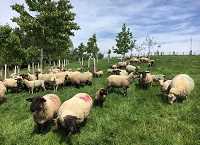
This Teagasc video provides a focused practical explanation of silvopasture, presenting it as Ireland’s most common agroforestry system chosen by farmers. The central message is that silvopasture allows farming and tree production to happen in the same field, combining livestock or grass production with a quality tree crop. The video describes a common establishment approach in which farmers plant broadleaf trees at wide spacing and protect them with tree shelters, while continuing to use the land for grazing, grass production, or both. That makes the piece particularly useful for practitioners because it moves beyond generic agroforestry advocacy and explains the basic spatial and management logic of the system.
The video also outlines why farmers might consider silvopasture: it can contribute to biodiversity, water quality, carbon storage, animal welfare, and overall productivity. These are not presented as abstract benefits; rather, they are tied to the ongoing coexistence of trees and farming activity in the same field. This matters for implementation because silvopasture is often evaluated on whether it can preserve core farm outputs while adding environmental value and longer-term tree-related returns. The content therefore has practical relevance for livestock producers, advisers, and land managers who need to understand what the system looks like on the ground and what tradeoffs or benefits may arise.
What makes this piece especially valuable is its simplicity and specificity. It explains a defined agroforestry type, identifies the basic planting and protection method, and connects the system to both farm function and public goods. That makes it a strong entry point for farmers exploring whether silvopasture could fit their enterprise. It is less of a technical manual than an informed overview, but it does offer concrete implementation signals: tree spacing, tree protection, continued grazing use, and the main outcome areas that matter in practice. For anyone assessing agroforestry options in a policy-supported farming environment, this is a concise and credible starting point.
Source: teagasc.ie
Related Analysis
- Campbell's Corporate Grants Push Farmers Into Regenerative Trials — Campbell's Grower Grants are funding real-acre regenerative trials, offering a corporate-backed mechanism for on-farm ex…
- Global Water Bankruptcy Forces Agricultural Adaptation — UN report reveals water bankruptcy across surface waters, glaciers, and groundwater, forcing immediate agricultural adap…
Related on PermaNews
- Ernst Götsch's Cacao Syntropy: Master Agroforestry Now (How-To Guide)
- Borneo's Rainforest Revival: Dr. Smits' Sugar Palm Village Hub (Case Study)
- Nagaland's Jhum-Alder Agroforestry: Climate-Smart Farming (Article)
- Revolutionizing Agriculture: People, Nature, & a Fertile Earth (Article)
- Interaktive Karte: Erfolgreiche Agroforst- und Mischbetriebe in Europa (Event)
- Regenerative Farming: Cultivating Healthy Soil & Biodiversity (How-To Guide)
Explore more in Food Systems & Growing — the full hub for this knowledge area.