Regenerative Farmer Fellowship Breakout Presentation
By Agraria Center for Regenerative Practice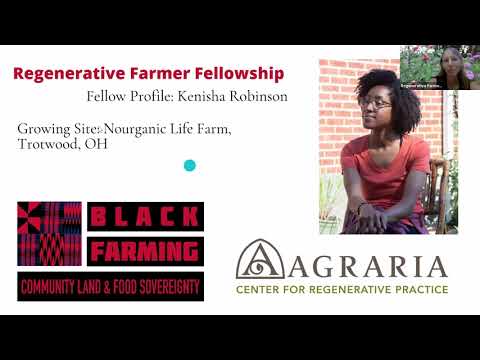
PermaNews Brief
Key Takeaways
The fellowship aids farmers by improving skills and infrastructure for regenerative practices.
- Pilot program supports regenerative farmers
- Focus on hands-on training and capacity-building
- Covers soil health, pest control, and more
- Hands-on learning model at various sites
- Iterative approach allows for program refinement
Why It Matters
This program directly addresses barriers farmers face in adopting regenerative methods by providing practical resources and support.
What to Do Next
Watch the presentation to learn about the training programs offered.
Permaculture Context
What makes this fellowship worth paying attention to is not just the curriculum — it is the model. Most regenerative education still happens in silos: a workshop here, an online course there, disconnected from the messy realities of running an actual farm. A structured, multi-month cohort that rotates through real working sites changes the learning dynamic entirely. Fellows are not just absorbing information; they are watching how decisions play out in different soil types, different microclimates, different management philosophies. For practitioners designing their own homesteads or market gardens, that kind of comparative, embodied exposure is nearly impossible to replicate alone. The partnership with The Nature Conservancy also signals something broader: that regenerative agriculture is increasingly being treated as a legitimate land management strategy by conservation institutions, not just a fringe lifestyle choice. That institutional legitimacy matters for access — to land, to grants, to technical assistance. If you are early in your regenerative journey, programs like this are worth tracking closely, because the networks and frameworks they develop tend to ripple outward into resources, mentorships, and local communities of practice that eventually become accessible beyond the fellows themselves.
Recommended for: Farmers seeking practical, hands-on training in regenerative practices.
This YouTube presentation discusses the Regenerative Farmer Fellowship, a pilot program of the Agraria Center for Regenerative Practice in partnership with The Nature Conservancy. The video appears to function as a detailed program update and explanation of how the fellowship is structured, what kinds of farmers it supports, and which practical topics are covered. Based on the transcript excerpts, the fellowship runs for 25 weeks, from April through October, and at the time of the presentation there were six fellows participating. The stated purpose is to support growers in building capacity on their own sites, including both infrastructure and knowledge/skills.
The video offers concrete examples of the training content, which includes compost and soil building, medicinal plants, value-added products, small farm equipment, seed starting, and regenerative pest control. This suggests the fellowship is not merely educational in a classroom sense; it is designed to help participants make operational improvements on real farms. That practical orientation is especially valuable for farmers trying to implement regenerative methods while also improving farm viability and resilience. The mention of workshops at different sites indicates a field-based, hands-on learning model rather than a centralized lecture series.
From a practitioner perspective, the most useful aspect is the emphasis on capacity-building that includes both physical infrastructure and technical know-how. Many regenerative agriculture initiatives fail to address the practical barriers farmers face, such as lack of equipment, inadequate compost systems, or insufficient support for transitioning crop and pest management practices. This program appears to address those barriers directly. The transcript also notes that the cohort is expected to be renewed the following year, which suggests the fellowship is being treated as an iterative pilot model with room for improvement and expansion. For people interested in regenerative agriculture training, this video provides a useful case of how fellowships can combine technical instruction, site-based workshops, and direct support for growers implementing change on their own farms.
Source: youtube.com
Related Analysis
- Permaculture Sites Bypass Backlinks to Win AI Citations — A small cluster of signals indicates AI citation logic diverges sharply from SEO rules, with hallucinated URLs creating …
- Stacking Functions Emerges as Key to Resilience Practices — Emerging evidence shows stacking functions enhances community resilience through interlinked systems focused on efficien…
Related on PermaNews
- Ernst Götsch's Cacao Syntropy: Master Agroforestry Now (How-To Guide)
- Designing Regenerative Resilience: Participatory Living Labs (How-To Guide)
- Lo—TEK: Indigenous Tech for Climate Solutions (Article)
- Nakivale's Regenerative Toilets: Refugee Resilience, Circular Sanitation (Case Study)
- Pippin Home Designs: Regenerative Home Design Explained (How-To Guide)
- Federal Policy Shift: Native Regenerative Ag for Soil & Carbon (Article)
Explore more in Skills, Preparedness & Self-Reliance — the full hub for this knowledge area.