2025: Regen Agriculture Bankability & Scale Insights
By Investing in Regenerative Agriculture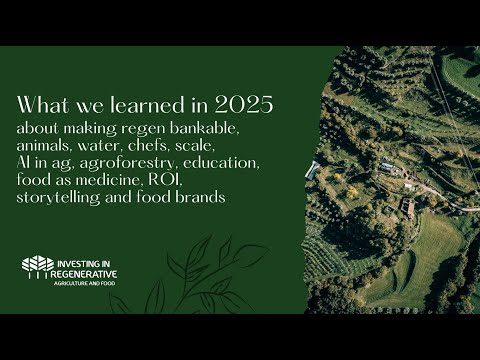
PermaNews Brief
Key Takeaways
Regenerative agriculture gained traction in 2025 by focusing on financial viability, integrated animal systems, and water management.
- Quantify regen practices to attract investment and insurance.
- Integrate livestock for soil, biodiversity, and nutrient cycling.
- Improve water infiltration via soil organic matter.
- Culinary world plays influential role.
- Align practices with ethical consumer values.
Why It Matters
Understanding these trends helps accelerate the adoption of regenerative practices and secure their financial future.
What to Do Next
Explore how to quantify the ecological and economic outcomes of your regenerative practices.
Recommended for: Farmers, policymakers, investors, and agricultural researchers interested in the future of regenerative agriculture.
The year 2025 offered significant insights into the evolving landscape of regenerative agriculture, highlighting key areas crucial for its widespread adoption and financial viability. A central theme revolved around demonstrating the economic benefits of regenerative practices and reducing perceived financial risks for investors and farmers alike. This involved developing clearer metrics for measuring ecological and economic outcomes, as well as establishing robust financial instruments that support the transition to regenerative systems. The focus was on moving beyond anecdotal evidence to quantifiable data that could attract mainstream investment and insurance products.
The role of animals within regenerative systems continued to be a prominent discussion point. 2025 underscored the importance of integrating livestock in a way that enhances soil health, biodiversity, and nutrient cycling, rather than viewing them as separate enterprises. This included exploring innovative grazing management techniques and understanding the complex interactions between animals, plants, and microbes. The year also saw increased attention on the ethical and welfare aspects of animal integration within regenerative models, aiming to align agricultural practices with consumer values.
Water management emerged as an increasingly critical component, particularly in the face of changing climate patterns. Discussions centered on how regenerative practices, such as increased organic matter in soil and strategic land contouring, could significantly improve water infiltration, retention, and overall watershed health. This included exploring technologies for efficient water use, as well as policy frameworks that incentivize water-conserving agricultural methods. The year emphasized the interconnectedness of soil health and water availability, positioning regenerative agriculture as a key solution for water security.
The culinary world, particularly chefs, played an unexpected yet influential role in driving demand for regeneratively produced food. 2025 saw a growing trend of chefs actively seeking out ingredients from regenerative farms, not only for their perceived superior flavor and nutritional qualities but also to support sustainable food systems. This created a powerful market signal, encouraging more farmers to adopt regenerative practices and providing a direct link between agricultural methods and consumer preferences. The influence of chefs helped to elevate the profile of regenerative agriculture beyond niche markets.
The concept of "scale" was a recurring topic, addressing the challenge of transitioning regenerative practices from small-scale, experimental projects to widespread adoption across diverse agricultural landscapes. This involved exploring strategies for scaling up regenerative techniques without compromising their ecological integrity. Discussions included the role of farmer networks, knowledge sharing platforms, and government policies in facilitating broader adoption. The year highlighted the need for adaptable models that could be implemented in various geographical and economic contexts.
Artificial intelligence (AI) began to show its potential as a transformative tool in regenerative agriculture. 2025 saw the emergence of AI applications for optimizing resource management, predicting crop yields, monitoring soil health, and even assisting with complex grazing decisions. AI was envisioned as a means to enhance efficiency, reduce labor, and provide data-driven insights that could accelerate the transition to regenerative systems. The ethical implications and accessibility of AI for all farmers were also part of the conversation.
Agroforestry, the integration of trees and shrubs into agricultural landscapes, gained significant traction. 2025 emphasized the multiple benefits of agroforestry systems, including enhanced biodiversity, carbon sequestration, improved soil health, and diversified farm income. The year saw increased interest in designing and implementing various agroforestry models, from silvopasture to alley cropping, as a means to create more resilient and productive agricultural ecosystems. The long-term ecological and economic advantages of integrating woody perennials were a key focus.
In summary, 2025 provided a comprehensive look at the multifaceted challenges and opportunities within regenerative agriculture. The year underscored the necessity of financial innovation to make these practices economically viable, the integral role of animals and water management, the growing influence of consumer demand driven by the culinary sector, and the critical need for scalable solutions. Furthermore, the potential of advanced technologies like AI and the proven benefits of practices like agroforestry were highlighted as crucial elements in accelerating the global transition towards more sustainable and resilient food systems.
Source: youtube.com
Related Analysis
- Rainforest Alliance Launches Certification Tied to Soil Results — A developing direction in regenerative ag certifications demands measurable soil outcomes, not just practice adoption. R…
- Campbell's Corporate Grants Push Farmers Into Regenerative Trials — Campbell's Grower Grants are funding real-acre regenerative trials, offering a corporate-backed mechanism for on-farm ex…
Related on PermaNews
- Ernst Götsch's Cacao Syntropy: Master Agroforestry Now (How-To Guide)
- Borneo's Rainforest Revival: Dr. Smits' Sugar Palm Village Hub (Case Study)
- Nagaland's Jhum-Alder Agroforestry: Climate-Smart Farming (Article)
- Revolutionizing Agriculture: People, Nature, & a Fertile Earth (Article)
- Interaktive Karte: Erfolgreiche Agroforst- und Mischbetriebe in Europa (Event)
- Regenerative Farming: Cultivating Healthy Soil & Biodiversity (How-To Guide)
Explore more in Food Systems & Growing — the full hub for this knowledge area.