Matthew Fitzgerald: MN Organic Grain, Software, Stewardship (Ep. 172)
By John Kempf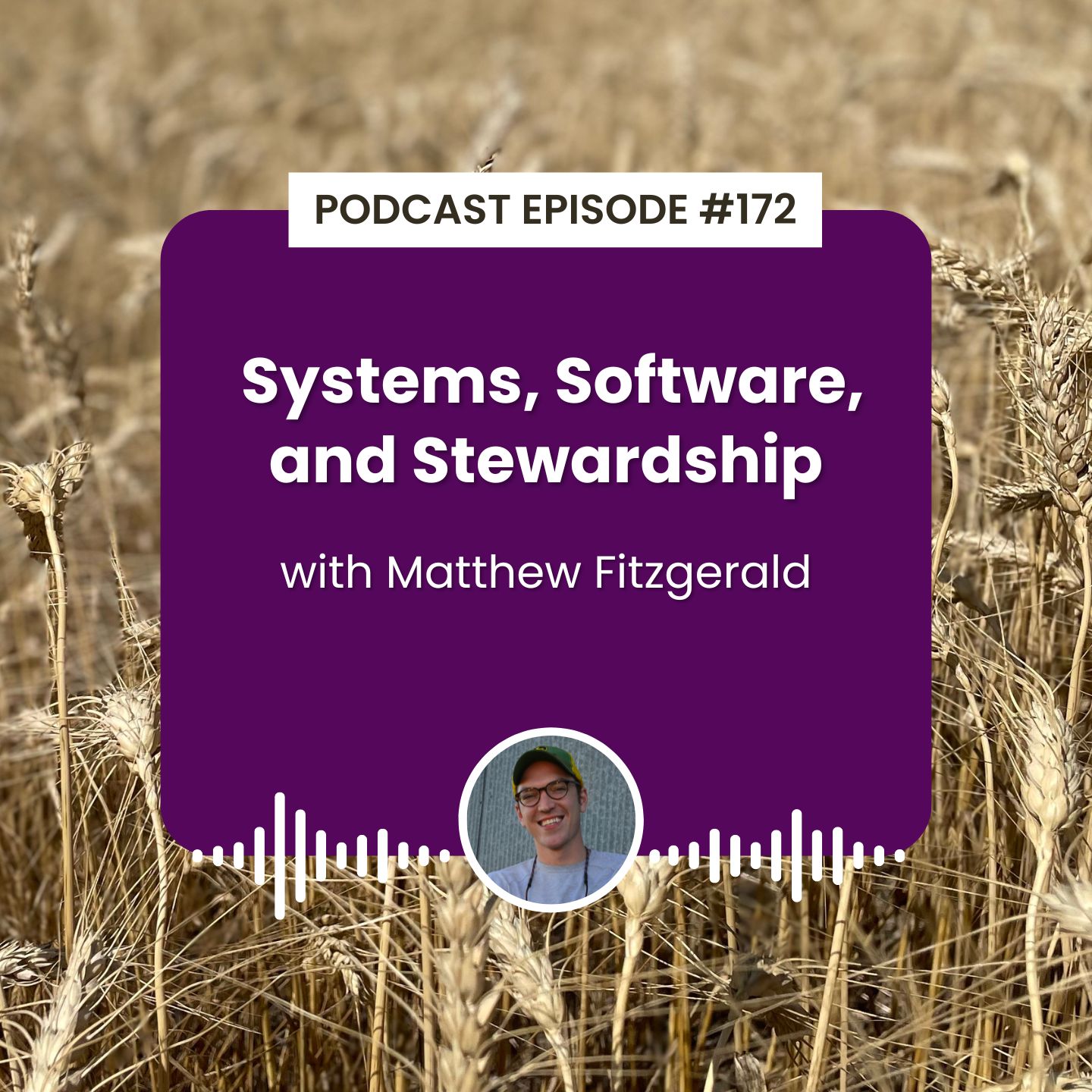
TL;DR: Matthew Fitzgerald, an organic grain farmer, developed FarmFlow software to professionalize organic farming and demonstrate its financial viability through optimized operations and AI integration.
- FarmFlow optimizes organic farm operations with AI.
- Data links field passes to increased yields.
- Decommodify organic grain for financial stability.
- Creative partnerships overcome farmer entry barriers.
- AI tools like FieldLark enhance agronomic decisions.
Why it matters: Fitzgerald's work demonstrates how organic farming can be both ecologically sound and financially competitive, offering a model for the future of sustainable agriculture.
Do this next: Explore how visual tools can help manage complexity in your own operations, as highlighted by FarmFlow's success.
Recommended for: Farmers, agricultural innovators, and policymakers interested in the future of economically viable organic farming and technological integration.
Matthew Fitzgerald, a second-generation organic grain farmer in Minnesota, manages 2,500 acres of land, continuing the legacy of organic pioneer Mabel Brelia. His operation, situated at the intersection of the big woods and the prairie, focuses on a diverse crop rotation. Fitzgerald's work extends beyond farming, as he actively seeks to address contemporary economic hurdles in agriculture and cultivate opportunities for future generations of land stewards.
A significant innovation from Fitzgerald is FarmFlow, a system he developed to optimize farm operations. Initially a visual whiteboard for tracking field passes, FarmFlow has evolved into sophisticated software. This tool integrates standard operating procedures with emerging artificial intelligence (AI) technologies, aiming to professionalize organic farming and demonstrate its financial viability and competitiveness.
The discussion between Fitzgerald and John Kempf, founder of Advancing Eco Agriculture (AEA), covered several key areas. They explored strategies for overcoming the high barriers to entry for new farmers, emphasizing the importance of creative partnerships and supportive policies. Fitzgerald elaborated on the concept of FarmFlow, highlighting how visual tools can effectively manage the complexities inherent in organic systems.
A crucial insight from Fitzgerald's work is the strong correlation identified through data analysis between the frequency of field passes and increased crop yields. This finding underscores the importance of precise and timely field management in organic agriculture. The conversation also touched upon the need to "decommodify" organic grain, a strategy aimed at ensuring financial stability and economic independence for organic farmers.
The role of AI in modern farming was a prominent topic, with Fitzgerald discussing how tools like FieldLark can enhance agronomic decision-making and improve operational efficiency. He also emphasized the value of team diversity and a concept he termed "quorum sensing" in building resilient farm operations, suggesting that a variety of perspectives and collective intelligence contribute to stronger agricultural practices.
John Kempf, the host, is recognized as a leading expert in biological and regenerative farming. He established AEA in 2006 with the goal of providing farmers with education, tools, and strategies to positively impact the global food supply. Kempf's approach is rooted in a comprehensive, systems-based understanding of plant nutrition, drawing from plant physiology, mineral nutrition, and soil microbiology.
AEA's mission is to enhance the resilience, efficiency, and profitability of growers through regenerative agriculture. The organization works directly with farmers, offering a unique line of liquid mineral crop nutrition products and biological inoculants. Their programs are informed by advanced plant and soil data-gathering techniques, enabling farm operations to achieve critical crop quality markers. AEA claims to have brought about significant and lasting change across millions of acres by collaborating with growers to foster healthier soil, stronger crops, and increased profits. Beyond direct engagement with farmers, AEA is a prominent voice in regenerative agriculture media and education, producing the Regenerative Agriculture Podcast, webinars, and other educational content that serve as valuable resources for growers globally.
Source: advancingecoag.com
Related Analysis
- Farms Build Resilience, Pivot to Regenerative Soil — New initiatives and analysis explicitly frame regenerative agriculture as a direct solution for climate resilience, focu…
- Federal Policy Pivots, Builds Indigenous Agriculture Frameworks — Federal policy trends are integrating Indigenous knowledge with soil science in regenerative agriculture, shifting polic…
Related on PermaNews
- Ernst Götsch's Cacao Syntropy: Master Agroforestry Now (How-To Guide)
- Designing Regenerative Resilience: Participatory Living Labs (How-To Guide)
- Lo—TEK: Indigenous Tech for Climate Solutions (Article)
- Nakivale's Regenerative Toilets: Refugee Resilience, Circular Sanitation (Case Study)
- Pippin Home Designs: Regenerative Home Design Explained (How-To Guide)
- Federal Policy Shift: Native Regenerative Ag for Soil & Carbon (Article)
Explore more in Food Systems & Growing — the full hub for this knowledge area.