Build Your Own TROBOLO Composting Toilet: DIY Guide
PermaNews Brief
Key Takeaways
Build a DIY composting toilet using simple woodworking techniques to manage waste and conserve water in off-grid or permaculture settings.
- Composting toilets conserve water and recycle waste.
- Separate liquids and solids for efficient composting.
- Select container sizes based on toilet scale and use.
- Use durable materials and ensure proper ventilation.
- DIY build provides self-sufficiency and practical skills.
Why It Matters
Composting toilets offer a sustainable way to manage human waste, reducing water consumption and producing valuable compost for soil enrichment, particularly in areas with limited water or sewerage infrastructure.
What to Do Next
Gather materials like wooden boards and a urine diverter to begin constructing the toilet body.
Recommended for: Ecologically-minded individuals seeking to implement sustainable waste practices and enhance resource cycling on their property or in off-grid setups.
This comprehensive DIY guide from TROBOLO provides detailed, step-by-step instructions for building a custom composting toilet, ideal for off-grid living, regenerative setups, or permaculture systems where water conservation and waste recycling are priorities. It emphasizes practical construction using accessible materials like wooden boards, focusing on space-saving designs suitable for small to large installations. Key recommendations include selecting solids container sizes based on toilet scale: 5-6.5 liters for compact versions, 10-15 liters for medium (e.g., their 11-liter option), and up to 22-25 liters for larger ones, ensuring efficient waste management without frequent emptying.
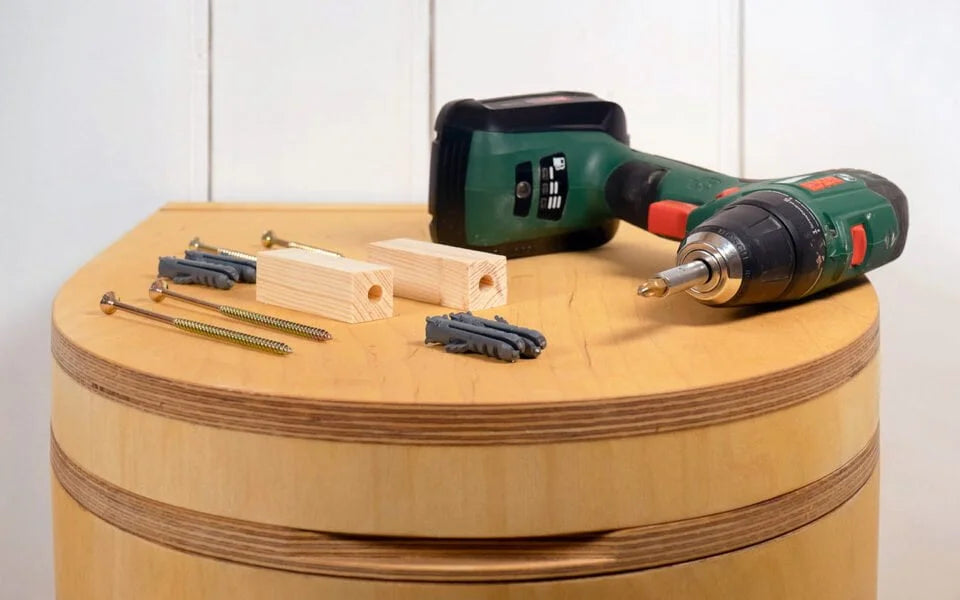
The build process starts with Step 1: Assembling the toilet body. Source wooden boards cut to size, then join the bottom and sides using wood glue suitable for the material, screws, or a combination for durability. Advanced users can opt for fork joints requiring precise woodworking. This forms a sturdy frame that supports all components.
Step 2: Fitting the urine diverter is critical for separating liquids and solids, enhancing composting efficiency and odor control. Mount the diverter to a dedicated wooden board using adhesive or screws, then hinge this board to the body for easy access. This allows folding up for container removal, making maintenance straightforward.
Subsequent steps cover inserting containers: fold up the top board with seat and diverter, then place solids and liquids containers precisely. Additional tips include accessories for optimization, tricks for ventilation to prevent smells, and ensuring hygienic operation. The design promotes self-sufficiency by recycling waste into compost, aligning with resilience principles. Practical insights highlight material choices for longevity, such as weather-resistant woods, and troubleshooting common issues like improper sealing. Users gain concrete skills for replication, including measurements for hinges, board dimensions, and integration of TROBOLO's containers for plug-and-play compatibility. This guide empowers owner-builders with field-tested methods, reducing reliance on commercial units while achieving professional results in sustainable sanitation.
Source: trobolo.com
Related Analysis
- What Climate-Adapted Natural Building Actually Costs in Germany — Climate-adapted natural building in Germany — spanning straw bale, rammed earth, hempcrete, and Passive House-certified …
- Natural Builders Swap Whole-Structure Cob for Hybrid Wall Systems — Several sources suggest natural builders are dividing straw bale and cob by solar orientation within single homes—a func…
Related on PermaNews
- Ernst Götsch's Cacao Syntropy: Master Agroforestry Now (How-To Guide)
- Finnish Off-Grid: Rocket Mass Heater Performance in Greenhouse (Case Study)
- Berlins schwimmende Gärten: Permakultur auf dem Wasser (Case Study)
- Rodale Report 2025: Thermal Mass Boost in Solar Greenhouses (Case Study)
- Nakivale's Regenerative Toilets: Refugee Resilience, Circular Sanitation (Case Study)
- AUTarcaMatricultura La Palma: Permakultur & Energieautarkie (How-To Guide)
Explore more in Shelter, Energy & Infrastructure — the full hub for this knowledge area.