5 Hotel Gardens: Native Plants, Wildlife Habitat & Design
PermaNews Brief
Key Takeaways
Hotel gardens worldwide offer guests tranquil escapes and unique aesthetic experiences, transforming stays into immersive horticultural journeys.
- Well-designed hotel gardens enhance guest experience.
- Hotel Bel-Air features diverse, secluded twelve-acre gardens.
- Fairmont Empress boasts thousands of fragrant rose bushes.
- Hotel Villa d'Este showcases Renaissance terraced gardens.
- Gardens can become destinations in their own right.
Why It Matters
Thoughtfully designed hotel gardens contribute significantly to guest satisfaction and can serve as major attractions, influencing travel decisions and enhancing property value.
What to Do Next
Consider how incorporating diverse plant species or themed garden sections could elevate your landscape design.
Recommended for: Anyone interested in landscape design, hospitality, or creating exceptional outdoor spaces.
When selecting accommodations, travelers often consider a hotel's exterior aesthetics, with gardens frequently being a significant draw. Beyond merely providing a pleasant view, well-designed hotel gardens can offer a tranquil escape and enhance the overall guest experience. Several establishments around the world have distinguished themselves through their exceptional horticultural displays, transforming their grounds into destinations in their own right.
One notable example is the Hotel Bel-Air in Los Angeles, California. This iconic hotel is renowned for its expansive and meticulously maintained gardens, which span twelve acres. The landscape features a diverse collection of plant species, including mature trees, vibrant flower beds, and tranquil water features. Guests can explore winding pathways, discover hidden alcoves, and enjoy the serene atmosphere created by the lush greenery. The design emphasizes a sense of seclusion and natural beauty, providing a stark contrast to the bustling city outside.
Another impressive horticultural achievement can be found at the Fairmont Empress in Victoria, British Columbia, Canada. This historic hotel is famous for its stunning rose garden, which boasts thousands of individual rose bushes representing numerous varieties. The garden is a riot of color and fragrance during the blooming season, attracting both hotel guests and local visitors. Beyond the roses, the grounds also incorporate other ornamental plantings and manicured lawns, contributing to the hotel's grand and elegant aesthetic. The garden's design complements the hotel's classic architecture, creating a cohesive and visually appealing environment.
In Europe, the Hotel Villa d'Este on Lake Como, Italy, stands out for its magnificent Renaissance gardens. These terraced gardens are a masterpiece of landscape architecture, featuring intricate geometric patterns, ancient statues, and elaborate fountains. The design incorporates elements of classical Italian garden style, with a focus on symmetry, perspective, and the integration of art and nature. Guests can wander through centuries-old cypress groves, admire the panoramic views of Lake Como, and experience the timeless beauty of this historic estate. The gardens are not just a backdrop but an integral part of the hotel's luxurious appeal.
Further illustrating the diversity of hotel garden styles is The Huntington Hotel in San Francisco, California. While not as sprawling as some of the other examples, this hotel's rooftop garden offers a unique urban oasis. Perched high above the city, the garden provides stunning views of the San Francisco skyline and the bay. It features a carefully curated selection of plants, including flowering shrubs and small trees, arranged to create a peaceful and intimate setting. The design maximizes the limited space, demonstrating how even in an urban environment, a beautiful and functional garden can be created to enhance the guest experience.
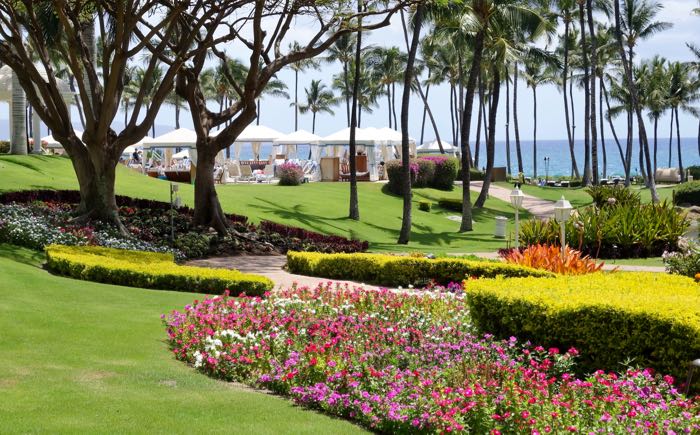
Finally, the Four Seasons Resort Hualalai in Kailua-Kona, Hawaii, showcases a garden design that seamlessly integrates with its natural surroundings. The resort's landscape incorporates native Hawaiian plants, lava rock formations, and natural ponds, creating an authentic and ecologically sensitive environment. The gardens are designed to reflect the unique biodiversity of the Hawaiian islands, with an emphasis on sustainability and a connection to the local culture. Guests can explore pathways that wind through tropical foliage, discover hidden waterfalls, and observe local wildlife, all within the resort's beautifully landscaped grounds. This approach highlights how hotel gardens can not only be aesthetically pleasing but also serve as educational and environmentally conscious spaces.
These examples collectively demonstrate that hotel gardens are far more than just decorative elements. They are carefully designed and maintained spaces that contribute significantly to a hotel's character, offer unique experiences to guests, and can even become attractions in their own right, reflecting diverse horticultural traditions and design philosophies from around the globe.
Source: urbanfarmonline.com
Related Analysis
- Food Forest Courses Shift From Theory to Build-Ready Skills — Several food forest courses now open with site assessment and guild-building rather than design theory, suggesting a dev…
- Practitioners Build Silvopasture Playbook Before Researchers Catch Up — A small but consistent set of signals from the Northeast U.S. shows farmers actively piloting silvopasture while formal …
Related on PermaNews
- Permaculture Visions: Online Training & Mentorship Since 1993 (How-To Guide)
- Smartes Stadtgrün: Digitale Bewässerung & KI gegen Dürre (How-To Guide)
- Grauwasser & Stadtgrün: Kühlere Städte dank DBU-Projekt (Article)
- Permaculture Homes: Why Aren't All Built This Way? (Video)
- 13 Garden Water Hacks: Regenerative & Low-Water Strategies (How-To Guide)
- Modular Root Cellar: Year-Round Food Security Design (How-To Guide)
Explore more in Food Systems & Growing — the full hub for this knowledge area.