Top 36 Veggies for Self-Sufficiency: My Best Variety Picks
By Huw Richards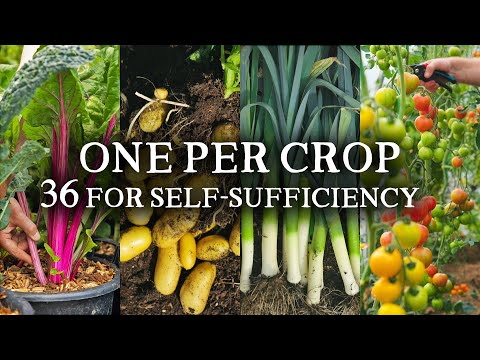
PermaNews Brief
Key Takeaways
Boost your self-sufficiency by selecting high-performing vegetable varieties for yield, resilience, and nutrition in your home garden.
- Choose varieties for maximum yield and resilience.
- Prioritize robust root vegetables for storage.
- Select leafy greens for continuous harvest.
- Embrace disease-resistant fruiting varieties.
- Match varieties to local growing conditions.
Why It Matters
Optimal variety selection directly impacts garden productivity, food security, and the overall success of self-sufficiency efforts. This guide helps gardeners make informed choices to maximize their harvest.
What to Do Next
Consult this guide to identify key varieties optimized for your specific gardening goals and climate.
Recommended for: Home gardeners and aspiring self-sufficients looking for curated advice on optimal vegetable variety selection to boost productivity and resilience.
This article provides a comprehensive guide to selecting optimal vegetable varieties for self-sufficiency, focusing on maximizing yield, resilience, and nutritional value across 36 different crops. The author emphasizes that while personal preference and local conditions play a significant role, certain varieties consistently outperform others in a home garden setting. The recommendations are geared towards gardeners aiming to produce a substantial portion of their own food.
For root vegetables, the article highlights varieties known for their robust growth and storage capabilities. Carrots, for instance, are represented by a type that offers both good flavor and reliable yields. Beets are chosen for their dual-purpose leaves and roots, with a specific variety noted for its sweetness and consistent size. Potatoes are covered with a recommendation for a versatile, disease-resistant type suitable for various culinary uses and long-term storage. Onions are represented by a long-day variety known for its excellent keeping qualities, crucial for year-round supply. Garlic, a staple, has a hardneck variety suggested for its cold hardiness and strong flavor. Radishes are selected for their quick maturity and crisp texture, allowing for multiple successions throughout the growing season.
Leafy greens are another major category, with varieties chosen for their productivity and nutritional density. Lettuce is represented by a loose-leaf type that allows for cut-and-come-again harvesting, extending its usefulness. Spinach has a cold-hardy variety recommended for its ability to produce well into cooler weather. Kale, a highly nutritious crop, has a specific type chosen for its tenderness and resistance to common pests. Swiss chard is included for its vibrant colors and continuous production.
Fruiting vegetables are extensively covered, with an emphasis on disease resistance and consistent yields. Tomatoes, a cornerstone of many gardens, have a determinate variety suggested for its concentrated harvest, ideal for canning and preserving, alongside an indeterminate type for extended fresh eating. Peppers, both sweet and hot, are represented by varieties known for their productivity and adaptability to different climates. Eggplant has a resilient variety recommended for its consistent fruit set. Cucumbers are covered with a pickling type for preservation and a slicing type for fresh consumption, both noted for their disease resistance. Zucchini and other summer squash are represented by prolific varieties that offer continuous harvests. Winter squash, crucial for long-term food storage, has a specific type chosen for its excellent keeping qualities and rich flavor.
Legumes, vital for protein and soil health, are also addressed. Bush beans are recommended for their quick maturity and ease of cultivation, with a variety chosen for its stringless pods. Pole beans, offering higher yields in a smaller footprint, have a specific type noted for its vigorous growth. Peas are covered with a shelling variety known for its sweet flavor and productivity.
Other important crops include corn, with a recommendation for a dependable sweet corn variety. Cabbage is represented by a type suitable for both fresh eating and fermentation. Broccoli and cauliflower have varieties chosen for their reliable head formation. Asparagus, a perennial, has a high-yielding, disease-resistant variety suggested for its long-term productivity. Strawberries, another perennial fruit, have a June-bearing variety recommended for its concentrated harvest, ideal for processing.
The article implicitly encourages gardeners to experiment and observe what works best in their unique microclimates, but provides a strong starting point with varieties that have proven successful for self-sufficiency goals. The underlying theme is to select varieties that not only produce well but also contribute to a resilient and productive food system for the home gardener.
Source: youtube.com
Related Analysis
- Does Growing Your Own Food Actually Save Money? The Real Numbers — Most home gardens save money by year two — but only if the right crops are planted. Herbs and salad greens deliver 5–10x…
Related on PermaNews
- Autarke Solar-Wind-Systeme: LiFePO4 Batterie-Management-Guide (How-To Guide)
- Holmgren's RetroSuburbia: Permaculture for Resilient Living (Article)
- Transform 6 Weeks of Rhubarb into 25 Years of Preservation (Video)
- Transform 6 Weeks of Rhubarb for 25 Years of Preservation (Video)
- May 2026 Garden Tour: 99% of Our Fresh Food Grown in Containers (Video)
- The Ultimate Chicken Tractor for Complete Self-Sufficiency (Free Plans) (Video)
Explore more in Food Systems & Growing — the full hub for this knowledge area.