Justin Rhodes: Food Forest & Carbon Farming (12/11/25)
By Justin Rhodes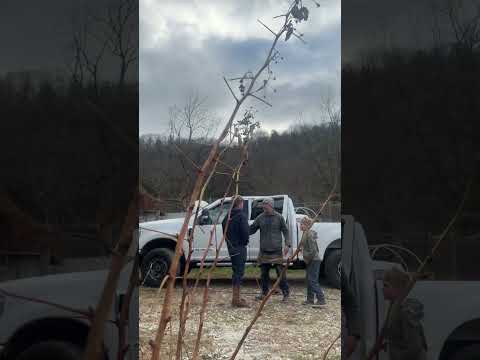
PermaNews Brief
Key Takeaways
A food forest mimics natural ecosystems to create a self-sustaining, multi-layered food production system.
- Design with vertical layers for maximum yield.
- Utilize plant guilds for mutual benefit.
- Reduces labor compared to annual gardens.
- Boosts biodiversity and pest control.
- Long-term benefits outweigh initial effort.
Why It Matters
Food forests offer a resilient, low-maintenance solution for sustainable food production, enhancing ecosystem health and reducing reliance on external inputs.
What to Do Next
Explore plant guilds suitable for your local environment.
Recommended for: Anyone interested in creating a resilient, productive, and ecological food source with long-term benefits.
The provided article, dated December 11, 2025, from Justin Rhodes, discusses the concept of a "food forest" and its potential to provide a sustainable and abundant food source. The author emphasizes that a food forest is not merely a collection of fruit trees but a carefully designed ecosystem that mimics the structure and functions of a natural forest. This approach aims to create a resilient and self-sustaining system that requires minimal human intervention once established.
A core principle highlighted is the layering of plants. This involves planting different species that occupy various vertical spaces, from tall canopy trees like fruit and nut trees, to understory trees, shrubs, herbaceous plants, groundcovers, and even root crops. This multi-layered design maximizes the use of available sunlight and space, leading to higher productivity per square foot compared to traditional single-crop farming. The article suggests that this layering also creates diverse microclimates and habitats, benefiting a wider range of beneficial insects and wildlife, which in turn contribute to pest control and pollination.
The concept of "guilds" is also central to the food forest philosophy. A guild is a group of plants that are grown together because they mutually benefit each other. For example, a fruit tree might be planted with nitrogen-fixing plants to enrich the soil, dynamic accumulators to bring up nutrients from deeper soil layers, and pest-repellent herbs. This symbiotic relationship reduces the need for external inputs like fertilizers and pesticides, further enhancing the system's sustainability. The author implies that understanding these plant relationships is crucial for successful food forest design.
The article further elaborates on the long-term benefits of a food forest. Unlike annual vegetable gardens that require yearly planting and significant labor, a well-established food forest becomes increasingly productive over time with less effort. The perennial nature of most food forest plants means they continue to yield year after year, building soil health and biodiversity. This shift from annual to perennial agriculture is presented as a key aspect of creating a truly sustainable food system. The author also touches upon the idea that a food forest can provide a diverse array of food products, including fruits, nuts, berries, edible leaves, and medicinal plants, contributing to a more varied and nutritious diet.
Furthermore, the article implicitly addresses the ecological advantages of food forests. By creating a dense and diverse plant community, food forests contribute to carbon sequestration, helping to mitigate climate change. They also improve water retention in the soil, reducing runoff and erosion, and enhancing local water cycles. The increased biodiversity supports a healthier ecosystem, providing habitat for pollinators, birds, and other beneficial organisms. This holistic approach to land management is presented as a way to work with nature rather than against it.
In essence, the article from Justin Rhodes on December 11, 2025, serves as an informative piece advocating for the adoption of food forest principles. It outlines the key design elements, such as layering and guilds, and emphasizes the long-term ecological and productive benefits of this permaculture approach. The underlying message is that by mimicking natural forest ecosystems, individuals can create resilient, abundant, and sustainable food sources that benefit both people and the planet.
Source: youtube.com
Related Analysis
- Food Forest Courses Shift From Theory to Build-Ready Skills — Several food forest courses now open with site assessment and guild-building rather than design theory, suggesting a dev…
- Practitioners Build Silvopasture Playbook Before Researchers Catch Up — A small but consistent set of signals from the Northeast U.S. shows farmers actively piloting silvopasture while formal …
Related on PermaNews
- Ernst Götsch's Cacao Syntropy: Master Agroforestry Now (How-To Guide)
- Finnish Off-Grid: Rocket Mass Heater Performance in Greenhouse (Case Study)
- Berlins schwimmende Gärten: Permakultur auf dem Wasser (Case Study)
- Rodale Report 2025: Thermal Mass Boost in Solar Greenhouses (Case Study)
- AUTarcaMatricultura La Palma: Permakultur & Energieautarkie (How-To Guide)
- Earthaven Ecovillage: 30 Years Off-Grid with Hydro & Solar (Video)
Explore more in Food Systems & Growing — the full hub for this knowledge area.