Ecuador Hummingbirds & Melastome Pollination Secrets
By Crime Pays But Botany Doesn't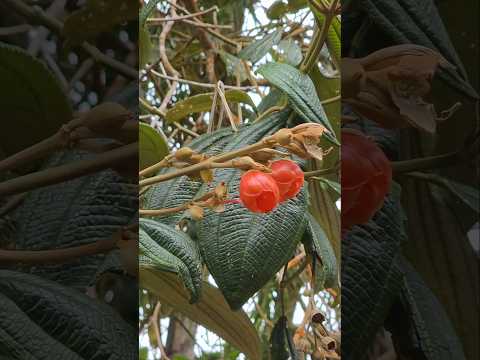
A recent study conducted in Ecuador has shed light on the intricate relationship between hummingbirds and a specific group of flowering plants known as Melastomes, focusing on the mechanisms of pollination. The research delved into how these plants, particularly those with anthers that release pollen through pores rather than slits, have evolved to attract and utilize hummingbirds for reproductive success. This specialized pollen release, often referred to as poricidal anthers, necessitates a specific interaction, typically involving "buzz pollination" by bees. However, in the context of hummingbird pollination, the study explored alternative strategies.
The researchers observed various species of Melastomes across different altitudes and habitats in Ecuador, meticulously documenting the floral morphology, nectar production, and the behavior of visiting hummingbirds. A key finding was the adaptation of certain Melastome species to present their pollen in a way that is accessible and transferable to hummingbirds, despite the absence of the typical buzz pollination mechanism. Instead of relying on vibrations, these plants often exhibit anthers that are strategically positioned to brush against the hummingbird's beak or forehead as it sips nectar. This contact ensures pollen deposition onto the bird, which is then carried to the stigma of another flower.
The study highlighted the diversity in floral structures within the Melastome family that facilitate hummingbird pollination. Some species displayed brightly colored flowers, predominantly red or orange, which are known to be highly attractive to hummingbirds. Others exhibited tubular or trumpet-shaped corollas, perfectly suited for the long, slender beaks of these birds. The timing of nectar production was also a significant factor, with many species producing nectar during the peak foraging hours of hummingbirds.
Furthermore, the research investigated the chemical composition and quantity of nectar produced by these Melastomes. It was found that the nectar was typically rich in sugars, providing a high-energy reward for the hummingbirds, thus incentivizing repeated visits. The volume of nectar also played a role, with some species producing larger quantities to ensure the birds spent more time at each flower, increasing the chances of successful pollen transfer.
The study also considered the co-evolutionary aspects of this relationship. It suggested that the unique floral traits observed in these Ecuadorian Melastomes are a result of a long evolutionary history with hummingbirds. Over time, plants that developed features more appealing or efficient for hummingbird pollination would have had greater reproductive success, leading to the prevalence of these traits. Conversely, hummingbirds that were more adept at extracting nectar and pollen from these specialized flowers would have also thrived.
The findings contribute to a broader understanding of pollination ecology, particularly in biodiversity hotspots like Ecuador. They underscore the importance of specialized interactions between plants and their pollinators for ecosystem health and stability. The research also provides valuable insights into the evolutionary pressures that drive floral diversification and the intricate adaptations that arise in response to specific pollinator guilds. This detailed examination of hummingbird pollination in Ecuadorian Melastomes offers a compelling example of the complex and dynamic processes shaping plant-animal interactions in tropical ecosystems.
Source: youtube.com
Related Analysis
- Composting Advice Shifts From Chemistry to Microbial Biology — Several sources suggest composting guidance is pivoting from nutrient ratios toward microbial ecology—reframing what "go…
- Does Growing Your Own Food Actually Save Money? The Real Numbers — Most home gardens save money by year two — but only if the right crops are planted. Herbs and salad greens deliver 5–10x…
Related on PermaNews
- Ernst Götsch's Cacao Syntropy: Master Agroforestry Now (How-To Guide)
- Finnish Off-Grid: Rocket Mass Heater Performance in Greenhouse (Case Study)
- Berlins schwimmende Gärten: Permakultur auf dem Wasser (Case Study)
- Rodale Report 2025: Thermal Mass Boost in Solar Greenhouses (Case Study)
- AUTarcaMatricultura La Palma: Permakultur & Energieautarkie (How-To Guide)
- Earthaven Ecovillage: 30 Years Off-Grid with Hydro & Solar (Video)
Explore more in Food Systems & Growing — the full hub for this knowledge area.