Ensuring Water Security for Your Homestead: Strategies and Solutions
PermaNews Brief
Key Takeaways
Understanding water management is essential for resilient homesteading and gardening.
- Water security is crucial for every homestead
- Healthy soil enhances water retention
- Rainwater differs from municipal water
- Effective drainage prevents flooding
- Conserve water through practical gardening methods
Why It Matters
This episode emphasizes the significance of water management in ensuring sustainable gardening and homesteading practices, especially under varying weather conditions.
What to Do Next
Listen to the episode for actionable water management strategies.
Permaculture Context
For permaculture practitioners, water is never just a utility — it is the connective tissue running through every zone and sector of a well-designed system. What this conversation points toward is a shift that regenerative growers increasingly understand: stop managing water as a linear input and start designing landscapes that slow, spread, and sink it at every opportunity. The practical implications here run deeper than installing a rain barrel. When your soil organic matter climbs even one or two percentage points, your water-holding capacity increases dramatically, reducing irrigation dependency in ways no infrastructure investment can match. This matters enormously when watering restrictions hit or a pump fails at the wrong moment — your living soil becomes your actual reservoir. Equally important is the drainage side of this equation, which permaculture design often addresses through swales, berms, and strategic earthworks that prevent waterlogging while simultaneously recharging groundwater. For anyone building genuine homestead resilience, the message is clear: invest in your soil biology first, design your water pathways intentionally, and your property will navigate both drought and deluge with far greater stability than any conventional garden ever could.
Recommended for: Gardening enthusiasts looking to enhance water sustainability.
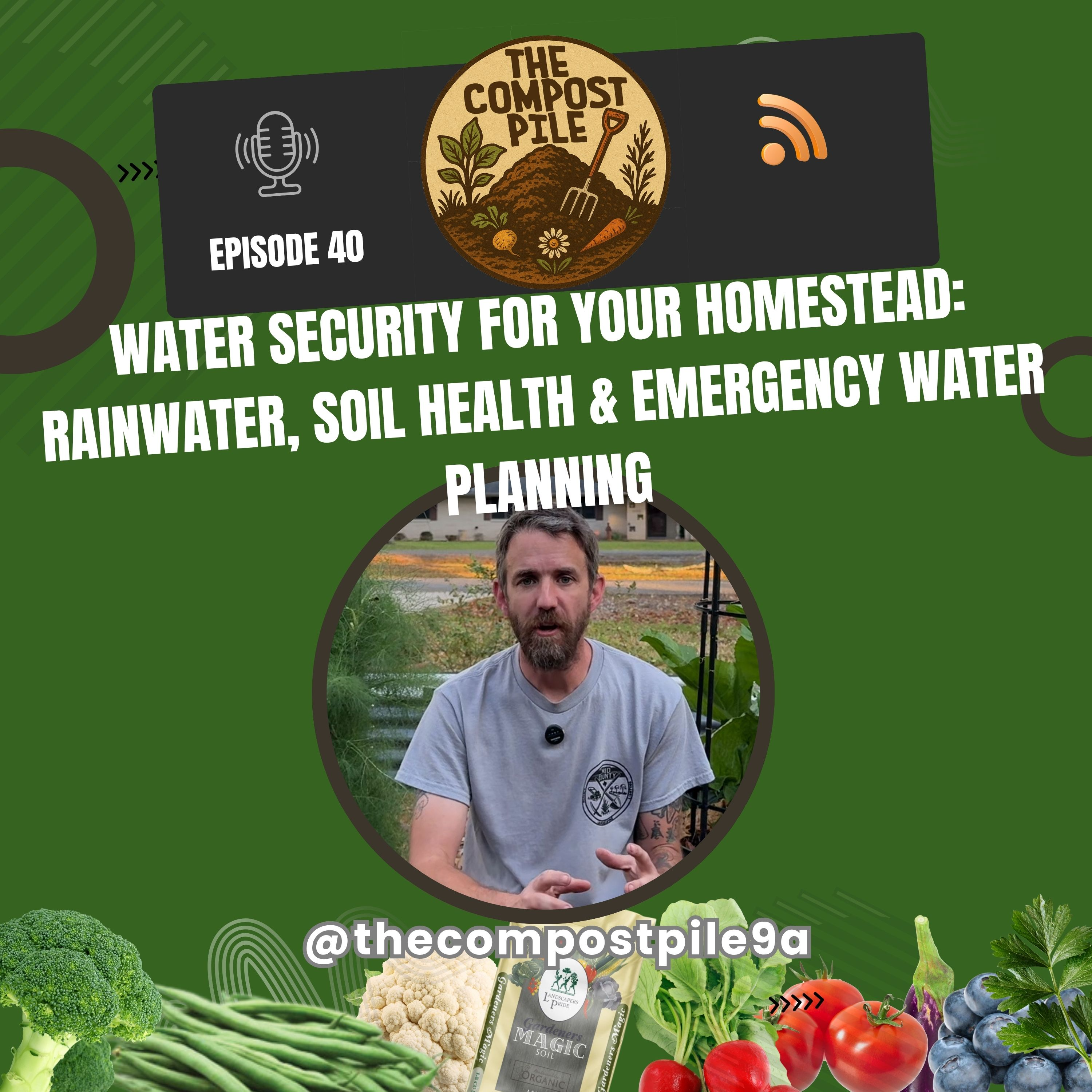
Water is one of the most valuable resources on any homestead or garden, but most people don't think about it until there's a problem. In this episode of The Compost Pile, we explore water security, why it matters, and how understanding water can make your garden, homestead, and property more resilient.Whether you're gardening in Zone 9, raising backyard chickens, growing vegetables, or simply looking to become more self-sufficient, this episode will help you think differently about water management, rainwater, soil health, and preparing your property for both drought and heavy rainfall.We'll discuss why healthy soil is your best water storage system, how organic matter and compost improve water retention, why drainage is just as important as irrigation, and practical ways to make your property more prepared for hurricanes, flooding, watering restrictions, or unexpected water outages.In this episode, you'll learn:Why water security is essential for every homesteadHow healthy soil stores water and supports stronger plantsThe difference between rainwater and municipal waterHow to improve soil moisture retention naturallyWhy drainage is critical after heavy rainPractical ways to conserve water in the gardenHow to prepare your property for droughts, floods, and emergenciesTips for creating a more resilient homestead and sustainable gardenAt The Compost Pile, we believe gardening is about more than growing plants—it's about understanding the systems that make a garden and homestead thrive. By learning how water moves through your property and how your soil, plants, and ecosystem respond, you'll become a better gardener and a more resilient homesteader.If you enjoy practical gardening tips, homesteading education, and growing successfully in Southeast Texas and USDA Zone 9, be sure to subscribe and join us each week for new episodes, garden walks, and educational content.What does your property teach you about water after a big rain? Let us know in the comments—we'd love t
Source: rss.com
Related Analysis
- Regenwasser nutzen: 5 Wege, was sie wirklich kosten – und die Rechtslage, die viele übersehen — Regenwassernutzung ist in Deutschland Mainstream – von der Regentonne bis zur Erd-Zisterne. Wir zeigen fünf Wege vom Gar…
- Water-Harvesting Swales: What They Cost, Where Practitioners Agree — and the One Real Safety Debate — Swales — level, on-contour ditches that slow, spread and sink rainwater into the soil — are a foundational permaculture …
Related on PermaNews
- Berlins schwimmende Gärten: Permakultur auf dem Wasser (Case Study)
- Nakivale's Regenerative Toilets: Refugee Resilience, Circular Sanitation (Case Study)
- Finca Bellavista: Costa Rica's 200-Acre Water System Innovation (Case Study)
- Priya's 2024 India Report: 10-Hectare Water Harvesting Success (Case Study)
- Borneo's Rainforest Revival: Dr. Smits' Sugar Palm Village Hub (Case Study)
- Holmgren's 40 Yrs: Abundant Permaculture Design Webinar 3 (Video)
Explore more in Water, Climate & Adaptation — the full hub for this knowledge area.