Opting Out: Justin Rhodes' Self-Sufficiency Journey
By Justin Rhodes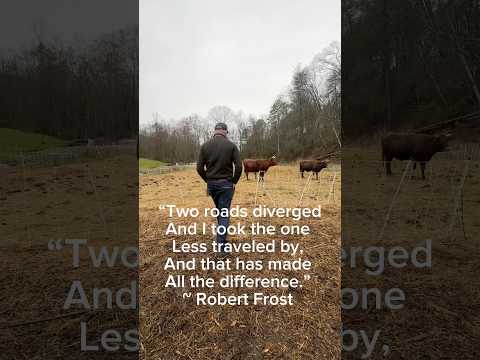
TL;DR: Embracing permaculture and self-sufficiency offers a path to freedom from modern societal pressures and dissatisfaction.
- Conventional paths can lead to dissatisfaction and stress.
- Self-sufficiency and permaculture offer alternative lifestyles.
- Prioritize values like self-reliance and community well-being.
- Homesteading involves learning diverse practical skills.
- Opting out is a conscious choice, not total isolation.
Why it matters: Understanding the impact of industrial systems on well-being can inspire intentional living choices that foster greater personal freedom and ecological health.
Do this next: Explore local permaculture groups or workshops to connect with like-minded individuals and learn practical skills.
Recommended for: Individuals seeking to transition to a more self-sufficient, permaculture-aligned lifestyle and prioritize personal and environmental well-being.
The article "I opted out" by Justin Rhodes discusses the author's personal journey and decision to disengage from certain aspects of modern society, particularly those he perceives as detrimental to well-being and a fulfilling life. The author recounts a period of disillusionment with conventional societal expectations, including the pursuit of a traditional career path, reliance on industrial systems, and constant exposure to mainstream media and consumerism.
Rhodes describes a gradual awakening to the potential for a more self-sufficient and intentional lifestyle. This shift began with an increasing awareness of the origins of food, the impact of industrial agriculture, and the desire to provide healthier options for his family. This initial interest in food production evolved into a broader exploration of permaculture principles and sustainable living practices.
A significant turning point for the author was the realization that many societal norms, while seemingly offering convenience or security, often came at the cost of personal freedom, environmental health, and genuine connection. He details how the constant pressure to conform, to work in unfulfilling jobs, and to consume endlessly led to feelings of stress and dissatisfaction. This prompted a deliberate decision to "opt out" of these systems.
The author emphasizes that opting out does not necessarily mean complete isolation or rejection of all modern conveniences. Instead, it represents a conscious choice to prioritize certain values, such as self-reliance, community, ecological stewardship, and personal well-being. For Rhodes, this translated into practical steps like moving to a rural property, establishing a homestead, and focusing on growing his own food. He details the process of learning new skills, from gardening and animal husbandry to food preservation and natural building techniques.
The article highlights the challenges and rewards associated with this lifestyle change. While acknowledging the hard work and dedication required to build a self-sufficient homestead, Rhodes stresses the immense satisfaction and sense of purpose derived from living in alignment with his values. He describes the joy of providing healthy food for his family, the connection to nature, and the strengthening of community bonds through shared knowledge and resources.
Furthermore, Rhodes touches upon the concept of financial independence as a crucial component of opting out. He explains how reducing reliance on external systems, such as grocery stores and utility companies, can lead to greater financial freedom and resilience. This doesn't necessarily mean accumulating vast wealth, but rather minimizing expenses and creating multiple streams of income that align with a sustainable lifestyle, such as selling surplus produce or offering educational workshops.
The author also discusses the importance of mental and emotional well-being in this journey. He contrasts the stress and anxiety often associated with the fast-paced modern world with the peace and contentment found in a more deliberate and nature-connected existence. He suggests that by reducing exposure to negative influences and focusing on positive, productive activities, individuals can cultivate greater inner peace and resilience.
In essence, "I opted out" serves as a narrative of personal transformation, advocating for a thoughtful re-evaluation of societal norms and an intentional embrace of a more sustainable, self-directed, and fulfilling way of life, rooted in permaculture principles and a deep connection to the natural world.
Source: youtube.com
Related Analysis
- Stacking Functions Emerges as Key to Resilience Practices — Emerging evidence shows stacking functions enhances community resilience through interlinked systems focused on efficien…
- Homesteading Moves Beyond Skill Acquisition to Durability — Homesteading is evolving beyond initial skill acquisition, with practitioners increasingly prioritizing long-term mainte…
Related on PermaNews
- Autarke Permakultur-Siedlung: Solar-Wind & Redox-Flow-Speicher (Case Study)
- Autarke Solar-Wind-Systeme: LiFePO4 Batterie-Management-Guide (How-To Guide)
- Holmgren's RetroSuburbia: Permaculture for Resilient Living (Article)
- Turn 6 Weeks of Rhubarb Into 25 Years of Storage (Video)
- Turn 6 Weeks of Rhubarb Into 25 Years of Storage (Video)
- Full Garden Tour For May 2026! GROWING 99% Of Our Fresh Food In Containers (Video)
Explore more in Skills, Preparedness & Self-Reliance — the full hub for this knowledge area.