Trailer: Charlie Arnott & Hamish Mackay's Biodynamics Unpacked
By The Ground We Walk On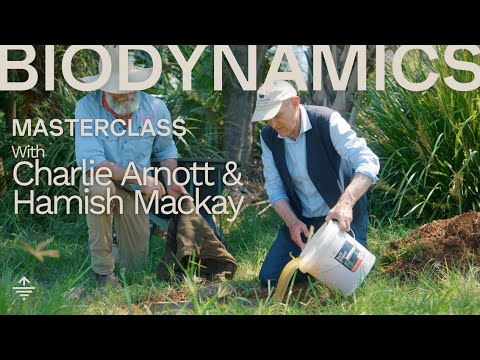
PermaNews Brief
Key Takeaways
Biodynamic farming is presented as a practical approach to agriculture that enhances soil, plants, and farm resilience.
- Demystifies biodynamics as practical and accessible.
- Works with nature for soil and plant vitality.
- Views the farm as a self-contained, living organism.
- Emphasizes observation and land connection.
- Utilizes biodynamic preparations for soil biology.
Why It Matters
This approach offers a holistic framework for farmers to deepen their understanding of their environment, leading to more resilient and productive agricultural systems.
What to Do Next
Explore biodynamic principles to see how they can integrate with your farming practices.
Recommended for: Farmers, gardeners, and agricultural enthusiasts interested in sustainable and biodynamic practices.
This trailer introduces a masterclass on biodynamic farming, featuring Charlie Arnott and Hamish Mackay. The course aims to demystify biodynamics, presenting it as a practical and accessible approach to agriculture rather than an esoteric or overly complex system. It emphasizes that biodynamics is fundamentally about understanding and working with natural processes to enhance soil health, plant vitality, and overall farm resilience.
Charlie Arnott, a prominent figure in regenerative agriculture, highlights the importance of observation and connection to the land. He suggests that biodynamics offers a framework for farmers to deepen their understanding of their environment, moving beyond conventional input-heavy methods. The masterclass will delve into the core principles of biodynamics, explaining how these principles translate into actionable practices on the farm. This includes a focus on the farm as a self-contained, living organism, where all elements – soil, plants, animals, and even cosmic rhythms – are interconnected and influence one another.
Hamish Mackay, another experienced biodynamic practitioner, reinforces the idea that biodynamics is not about rigid adherence to a set of rules, but rather about developing an intuitive understanding of natural systems. He emphasizes the practical application of biodynamic preparations, which are key to stimulating biological activity in the soil and enhancing plant growth. The course will likely cover the creation and application of these preparations, such as compost preparations and field sprays, explaining their role in fostering a healthy farm ecosystem. The trailer suggests that these preparations, often perceived as mystical, will be presented in a clear, scientific, and practical manner, demonstrating their tangible benefits.
A significant aspect of the masterclass appears to be its focus on soil health. Both Arnott and Mackay underscore that healthy soil is the foundation of a productive and resilient farm. Biodynamics, through its emphasis on compost, cover cropping, and minimal tillage, aims to build living, fertile soil that can better withstand environmental stresses and produce nutrient-dense food. The course will likely explore how biodynamic practices contribute to increased microbial diversity, improved water retention, and enhanced nutrient cycling within the soil.
Furthermore, the masterclass seems to address the broader ecological benefits of biodynamic farming. By working in harmony with nature, biodynamic farms can contribute to biodiversity, reduce reliance on synthetic inputs, and mitigate environmental impact. The trailer implies that participants will gain insights into creating a more sustainable and regenerative agricultural system that benefits not only the farm but also the wider environment.
The target audience for this masterclass appears to be a wide range of individuals interested in sustainable agriculture, from seasoned farmers looking to transition to biodynamic methods to home gardeners seeking to improve their soil and plant health. The instructors aim to make biodynamics approachable, demonstrating that its principles can be adapted to various scales and contexts. The masterclass is positioned as an educational resource that provides both theoretical knowledge and practical skills, enabling participants to implement biodynamic practices effectively.
In essence, the trailer for this masterclass promises a comprehensive and practical exploration of biodynamic farming. It aims to demystify the subject, presenting it as a powerful and accessible approach to creating healthy, resilient, and productive agricultural systems by working in harmony with natural processes. The course will likely cover foundational principles, practical applications of biodynamic preparations, and the overarching benefits for soil health, plant vitality, and environmental sustainability.
Source: youtube.com
Related Analysis
- Worm Castings Rebuild Soil Structure While Cutting Water Use — Vermicompost improves soil structure, moisture retention, and microbial life while converting food waste into usable fer…
Related on PermaNews
- Ernst Götsch's Cacao Syntropy: Master Agroforestry Now (How-To Guide)
- Finnish Off-Grid: Rocket Mass Heater Performance in Greenhouse (Case Study)
- Berlins schwimmende Gärten: Permakultur auf dem Wasser (Case Study)
- Rodale Report 2025: Thermal Mass Boost in Solar Greenhouses (Case Study)
- AUTarcaMatricultura La Palma: Permakultur & Energieautarkie (How-To Guide)
- Earthaven Ecovillage: 30 Years Off-Grid with Hydro & Solar (Video)
Explore more in Food Systems & Growing — the full hub for this knowledge area.