MIgardener: Ripe Watermelon Harvest Secrets #shorts
By MIgardener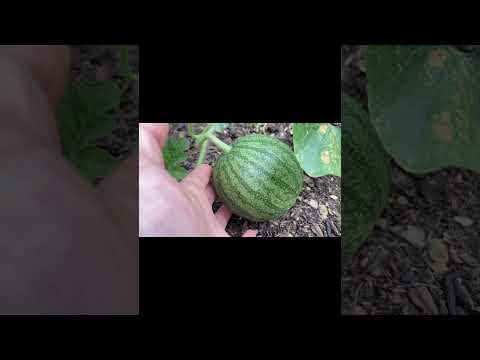
PermaNews Brief
Key Takeaways
To harvest ripe watermelons, look for a dried tendril and a yellow ground spot, as size alone is not a reliable indicator.
- Dried tendril signals peak ripeness.
- Yellow ground spot means it is ready.
- Size is not a reliable indicator.
- Avoid guessing with sound tests.
- Harvesting too early reduces sweetness.
Why It Matters
Understanding ripeness cues prevents premature harvesting, ensuring sweeter, more flavorful watermelons and maximizing garden yield.
What to Do Next
Inspect your watermelon plants for dried tendrils and yellow ground spots.
Recommended for: Home gardeners, especially those new to growing watermelons, looking for reliable harvesting indicators.
The provided content describes a short video focusing on the harvesting of homegrown watermelons. The video, produced by MIgardener, highlights the process of determining when a watermelon is ripe and ready for picking.
The central theme revolves around practical indicators for ripeness, moving beyond mere visual size. A key technique demonstrated involves observing the "tendril" or "pig tail" located near the stem of the watermelon. The video explains that when this tendril, which is a small, curly growth, completely dries up and turns brown, it's a strong indication that the fruit has reached its peak sweetness and is ready for harvest. This method is presented as a reliable alternative to other, sometimes less accurate, indicators.
Another important sign discussed is the "ground spot" or "belly spot" of the watermelon. This is the area where the watermelon rests on the ground as it grows. The video emphasizes that a ripe watermelon will have a distinct yellow or creamy-yellow ground spot. If this spot is still white or pale green, it suggests the fruit needs more time to mature on the vine. The transition from white to yellow signifies that the watermelon has absorbed sufficient sunlight and nutrients, leading to the development of its characteristic flavor and sweetness.
The video also touches upon the sound test, a common but sometimes subjective method. While not the primary focus, it implicitly acknowledges that a ripe watermelon often produces a dull, hollow thud when tapped, as opposed to a sharper, higher-pitched sound from an unripe one. However, the tendril and ground spot methods are presented as more definitive and less prone to misinterpretation, especially for novice gardeners.
The overall message conveyed is that successful watermelon harvesting isn't just about waiting for the fruit to get big; it's about understanding and recognizing specific physiological cues that signal optimal ripeness. By focusing on these natural indicators, gardeners can ensure they are picking watermelons at their prime, maximizing flavor and enjoyment. The video aims to empower home gardeners with simple yet effective techniques to achieve a successful harvest of their homegrown watermelons, contributing to a more rewarding gardening experience. The use of the "shorts" format suggests a concise and visually driven presentation of these key harvesting tips.
Source: youtube.com
Related Analysis
- Food Forest Courses Shift From Theory to Build-Ready Skills — Several food forest courses now open with site assessment and guild-building rather than design theory, suggesting a dev…
- Practitioners Build Silvopasture Playbook Before Researchers Catch Up — A small but consistent set of signals from the Northeast U.S. shows farmers actively piloting silvopasture while formal …
Related on PermaNews
- Ernst Götsch's Cacao Syntropy: Master Agroforestry Now (How-To Guide)
- Finnish Off-Grid: Rocket Mass Heater Performance in Greenhouse (Case Study)
- Berlins schwimmende Gärten: Permakultur auf dem Wasser (Case Study)
- Rodale Report 2025: Thermal Mass Boost in Solar Greenhouses (Case Study)
- AUTarcaMatricultura La Palma: Permakultur & Energieautarkie (How-To Guide)
- Earthaven Ecovillage: 30 Years Off-Grid with Hydro & Solar (Video)
Explore more in Food Systems & Growing — the full hub for this knowledge area.