Market Garden Build: New Beds & Water Lines Installed
By Self Sufficient CJ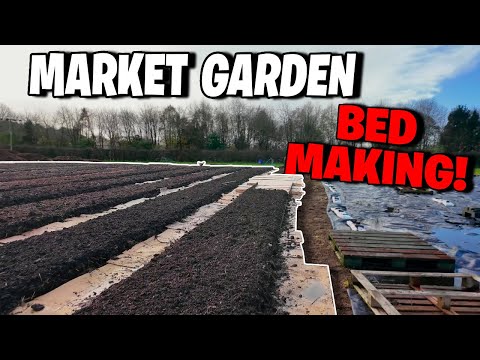
TL;DR: Establishing new garden beds and an efficient irrigation system are key steps in expanding a market garden for increased productivity.
- Expand growing areas with new garden beds.
- Implement no-dig sheet mulching for soil health.
- Install durable irrigation for efficient watering.
- Bury water lines for protection and longevity.
- Select appropriate pipe sizes for water delivery.
Why it matters: Efficiently expanding garden beds and installing robust irrigation significantly boost market garden productivity and resource management, ensuring long-term success.
Do this next: Consider adopting sheet mulching techniques for your new garden beds to improve soil health and suppress weeds.
Recommended for: Market gardeners and small-scale farmers seeking to efficiently expand their growing areas and irrigation infrastructure.
The article details the ongoing development of a market garden, focusing on the establishment of new garden beds and the installation of an irrigation system. The primary goal is to expand the growing area and improve water management for increased efficiency and productivity.
A significant portion of the work involved preparing new garden beds. The process began with the removal of existing ground cover, which in this case was a combination of grass and weeds. This initial clearing is crucial for creating a clean slate for cultivation. Following the clearing, a layer of cardboard was laid down. This technique serves multiple purposes: it acts as a weed barrier, suppressing unwanted growth, and it also gradually breaks down, contributing organic matter to the soil. On top of the cardboard, a substantial layer of wood chips was applied. Wood chips are beneficial for soil health, acting as a mulch to retain moisture, regulate soil temperature, and slowly decompose to enrich the soil with nutrients. This layering approach, often referred to as "lasagna gardening" or sheet mulching, is a no-dig method that builds soil fertility over time. The article emphasizes the importance of these layers in creating a healthy and productive growing environment without extensive tilling.
The next major undertaking was the installation of the irrigation system. The market garden is located a considerable distance from the primary water source, necessitating the laying of long water lines. The main line, a 1-inch poly pipe, was chosen for its durability and capacity to deliver sufficient water pressure over a long distance. This main line was buried to protect it from damage, temperature fluctuations, and UV degradation, ensuring its longevity and efficiency. The process of burying the pipe involved digging a trench, laying the pipe, and then backfilling the trench. This is a labor-intensive but essential step for a permanent and reliable irrigation system.
From the main line, smaller, 3/4-inch poly pipes were branched off to service individual garden beds. This branching system allows for targeted watering, ensuring that each bed receives adequate moisture without over-watering or wasting water in non-cultivated areas. The article highlights the strategic placement of these branch lines to maximize coverage and minimize water loss. The installation also included various fittings such as elbows, tees, and connectors to create a comprehensive and functional network. The choice of poly pipe for both main and branch lines suggests a preference for a flexible, durable, and relatively easy-to-install material suitable for agricultural applications.
The overall strategy for the market garden emphasizes sustainable and efficient practices. The no-dig bed preparation conserves soil structure and promotes microbial life, while the installed irrigation system aims to optimize water usage. The long-term vision for the garden includes continuous expansion and refinement of these systems to support a diverse range of crops. The ongoing progress demonstrates a commitment to building a productive and resilient agricultural enterprise through careful planning and diligent execution of permaculture-inspired techniques. The article implicitly suggests that these foundational steps are crucial for the future success and scalability of the market garden operation.
Source: youtube.com
Related Analysis
- Farmers Convert Six Weeks of Rhubarb Into 25-Year Supply — Initial signals suggest a rhubarb preservation technique can extend a brief seasonal harvest into 25 years of storage—a …
- Compost Builds Soil Microbiomes—But Human Waste Divides Practitioners — A small but consistent set of signals indicates composting's soil benefits are well-documented, while human-waste compos…
Related on PermaNews
- Ernst Götsch's Cacao Syntropy: Master Agroforestry Now (How-To Guide)
- Finnish Off-Grid: Rocket Mass Heater Performance in Greenhouse (Case Study)
- Berlins schwimmende Gärten: Permakultur auf dem Wasser (Case Study)
- Rodale Report 2025: Thermal Mass Boost in Solar Greenhouses (Case Study)
- AUTarcaMatricultura La Palma: Permakultur & Energieautarkie (How-To Guide)
- Earthaven Ecovillage: 30 Years Off-Grid with Hydro & Solar (Video)
Explore more in Food Systems & Growing — the full hub for this knowledge area.