Storm-Proof Your Land: Diverse Rainwater Strategies Explained
By GrowTree Organics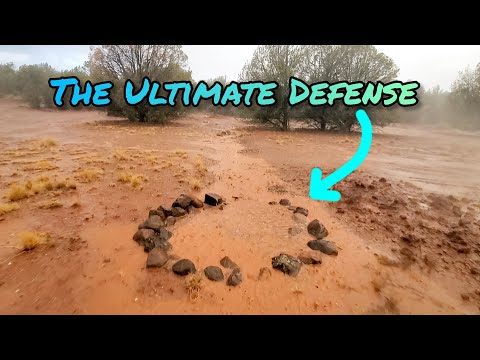
PermaNews Brief
Key Takeaways
Permaculture strategies like swales, berms, and rotational grazing boost water retention and soil health in arid regions, combating drought and extreme weather.
- Earthworks reduce runoff and recharge groundwater.
- Rotational grazing enhances water infiltration and soil structure.
- Restoring old creek beds revives natural water channels.
- Small interventions significantly improve water catchment.
- Permaculture aids carbon sequestration and food security.
Why It Matters
Implementing strategic water management techniques in dry environments can regenerate landscapes, prevent erosion, and build resilience against intense weather events, improving ecosystem health and food security.
What to Do Next
Explore how swales and berms can be integrated into your landscape to slow and infiltrate rainwater runoff, especially in areas prone to infrequent but intense rainfall.
Recommended for: Farmers, land managers, and environmental stewards interested in sustainable water systems and regenerative agriculture.
This video by GrowTree Organics explores practical rainwater harvesting and earthworks techniques used in desert permaculture to combat water scarcity and improve soil health. The focus is on real-world case studies from arid environments, demonstrating how strategic water management can regenerate degraded landscapes and build resilience against extreme weather events. The video highlights several key strategies, including the construction of swales and berms, which are designed to intercept and slow down rainwater runoff, allowing it to infiltrate the soil and recharge groundwater. These earthworks are particularly effective in desert regions where rainfall is infrequent but often intense, as they help prevent erosion and maximize water retention. Rotational grazing is also discussed as a complementary practice, where livestock are moved systematically to prevent overgrazing and allow vegetation to recover, further enhancing water infiltration and soil structure. The video illustrates how water filtration through the landscape—using natural vegetation and soil layers—can purify runoff and support diverse plant life. Restoring old creek beds is another technique shown, which not only revives natural water channels but also creates microhabitats for wildlife and increases biodiversity. The case studies presented emphasize the importance of observation and adaptive management, showing how small-scale interventions can lead to significant improvements in water catchment and landscape health. The video also touches on the broader ecological benefits of these practices, such as increased carbon sequestration, improved food security, and enhanced ecosystem services. Overall, the content provides a comprehensive look at how permaculture principles can be applied to create sustainable water systems in challenging environments, offering practical insights for farmers, land managers, and environmental stewards.
Source: youtube.com
Related Analysis
- High-Salt Fertilizers Block Soil Microbes, Kempf Says — High-salt fertilizers disrupt soil microbes and microbial colonization, trapping farmers in chemical dependency. Biologi…
- Fertilizer Shortage Forces Reckoning on Nitrogen Sources — Fertilizer supply crisis drives farms toward nitrogen-fixing cover crops, compost, and legume rotations as alternatives.
Related on PermaNews
- Ernst Götsch's Cacao Syntropy: Master Agroforestry Now (How-To Guide)
- Finnish Off-Grid: Rocket Mass Heater Performance in Greenhouse (Case Study)
- Designing Regenerative Resilience: Participatory Living Labs (How-To Guide)
- Berlins schwimmende Gärten: Permakultur auf dem Wasser (Case Study)
- Lo—TEK: Indigenous Tech for Climate Solutions (Article)
- Rodale Report 2025: Thermal Mass Boost in Solar Greenhouses (Case Study)
Explore more in Water, Climate & Adaptation — the full hub for this knowledge area.