Permaculture Boosts Carbon, Soil, & Biodiversity in Central Europe
PermaNews Brief
Key Takeaways
Permaculture farming significantly boosts carbon, soil quality, and biodiversity compared to conventional methods without compromising yields in Central Europe.
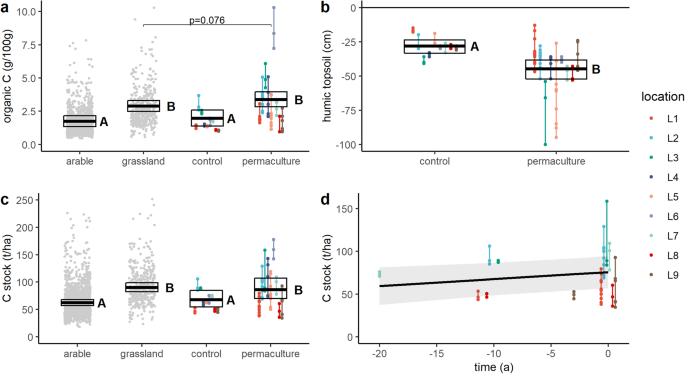
- Permaculture increases soil carbon stocks by 27% and improves soil structure.
- Earthworm populations and species richness are drastically higher in permaculture soils.
- Vascular plant and bird species richness show significant gains with permaculture.
- Agroforestry and market gardening are key practices driving these improvements.
- Permaculture offers a viable, sustainable alternative to industrial agriculture.
- Soil macro- and micronutrients are elevated on permaculture sites.
Why It Matters
This study provides strong scientific evidence that permaculture practices actively regenerate ecosystems, offering a scalable solution to soil degradation, biodiversity loss, and climate change.
What to Do Next
Start a small-scale permaculture garden or incorporate agroforestry principles into your existing growing space.
Recommended for: Farmers, land managers, and keen gardeners interested in evidence-based ecological regeneration and sustainable food production.
A comprehensive scientific study examined nine farms utilizing permaculture practices and paired control fields with locally predominant agriculture in Central Europe to assess the environmental impact of permaculture systems. The research found significant improvements across multiple ecological indicators. Permaculture sites demonstrated 27% higher soil carbon stocks compared to control fields, while soil bulk density was 20% lower, indicating better soil structure and health. Earthworm abundance was remarkably 201% higher on permaculture sites, suggesting enhanced soil biological activity and ecosystem function. The study also measured concentrations of various soil macro- and micronutrients, finding them substantially higher on permaculture sites, which indicates better conditions for crop production and potentially higher nutrient density in crops produced. Beyond soil metrics, biodiversity improvements were dramatic: species richness of vascular plants was 457% higher, earthworms showed 77% higher species richness, and bird species richness was 197% higher on permaculture sites compared to control areas. The most common practices applied on permaculture sites in this study were agroforestry, crop-livestock integration, market gardening, and facilitation of semi-natural habitats. These findings clearly demonstrate that permaculture farmers' intentions to change crucial ecosystem properties are successful. The research suggests permaculture as an effective tool for the redesign of farming systems towards environmental sustainability, offering a viable alternative to conventional industrial agriculture while maintaining comparable yields. This comprehensive study provides scientific validation for permaculture's potential to address pressing environmental challenges including soil degradation, climate change, and biodiversity loss.
Source: nature.com
Related Analysis
- Food Forest Courses Shift From Theory to Build-Ready Skills — Several food forest courses now open with site assessment and guild-building rather than design theory, suggesting a dev…
- Practitioners Build Silvopasture Playbook Before Researchers Catch Up — A small but consistent set of signals from the Northeast U.S. shows farmers actively piloting silvopasture while formal …
Related on PermaNews
- Ernst Götsch's Cacao Syntropy: Master Agroforestry Now (How-To Guide)
- Finnish Off-Grid: Rocket Mass Heater Performance in Greenhouse (Case Study)
- Berlins schwimmende Gärten: Permakultur auf dem Wasser (Case Study)
- Rodale Report 2025: Thermal Mass Boost in Solar Greenhouses (Case Study)
- AUTarcaMatricultura La Palma: Permakultur & Energieautarkie (How-To Guide)
- Earthaven Ecovillage: 30 Years Off-Grid with Hydro & Solar (Video)
Explore more in Food Systems & Growing — the full hub for this knowledge area.