Lunar Gardening: Why I Skip It (But You Can Try)
By Huw Richards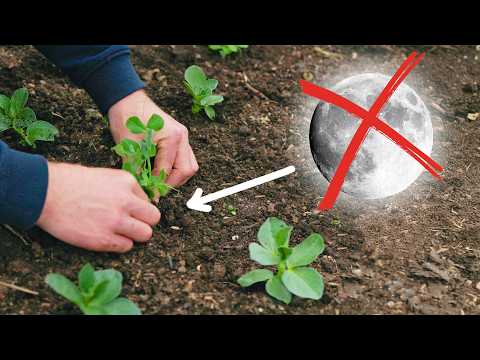
TL;DR: Aligning gardening activities with lunar phases, known as moon planting, is a traditional practice believed to enhance plant growth by leveraging the moon's gravitational and light influences on soil moisture and plant vigor.
- Lunar phases impact soil moisture and plant growth.
- New moon favors root crops and germination.
- Waxing moon boosts leafy greens and fruiting plants.
- Full moon is for transplanting or soil preparation.
- Different phases suit specific gardening tasks.
Why it matters: Understanding moon planting offers a traditional approach to optimize gardening tasks, potentially leading to healthier plants and increased yields by working with natural rhythms.
Do this next: Explore how the moon's phases align with your local growing calendar to identify optimal planting times for specific crops.
Recommended for: Gardeners interested in traditional, biodynamic, and lunar-influenced planting methods seeking to optimize plant health and yields.
The practice of moon planting, also known as lunar gardening or biodynamic gardening, is a traditional approach to agriculture that aligns planting and harvesting activities with the phases of the moon. This method is rooted in the belief that the moon's gravitational pull, which influences tides, also affects the water content in soil and plants, thereby impacting their growth. Proponents of moon planting suggest that specific lunar phases are more conducive to certain gardening tasks, leading to healthier plants and more abundant yields.
The core principle of moon planting involves dividing the lunar cycle into four main phases: the new moon, the first quarter, the full moon, and the last quarter. Each phase is associated with different recommendations for gardening activities. During the new moon and the waxing crescent (the period between the new moon and the first quarter), the moon's gravitational pull is believed to draw moisture upwards, encouraging seed germination and strong root development. This makes it an ideal time for planting annuals that produce above-ground crops, such as leafy greens, corn, and beans.
As the moon progresses to the first quarter and continues to wax towards the full moon, the light intensity increases. This period is considered optimal for planting flowering annuals, fruit-bearing plants, and vegetables that produce their yield above ground, like tomatoes, peppers, and squash. The increasing moonlight is thought to stimulate leaf growth and overall plant vigor.
The full moon phase is often seen as a time of peak energy and moisture. Some moon planting calendars suggest this is a good time for transplanting, as plants are believed to be more resilient. However, others recommend a brief pause in planting during the full moon itself, reserving it for harvesting or preparing the soil.
Following the full moon, during the waning gibbous and the last quarter, the moon's gravitational pull is thought to draw energy downwards, favoring root development. This makes it an opportune time for planting root crops such as carrots, potatoes, and onions. It is also considered suitable for pruning, as the reduced sap flow is believed to minimize stress on the plant and prevent disease. The final phase, the waning crescent leading back to the new moon, is often recommended for tasks like weeding, pest control, and soil enrichment, as plant growth is thought to be less vigorous during this period.
Beyond the four main phases, some moon planting systems also incorporate astrological considerations, aligning gardening tasks with the zodiac signs the moon passes through. For example, when the moon is in a water sign (Cancer, Scorpio, Pisces), it's considered a good time for planting leafy vegetables. Earth signs (Taurus, Virgo, Capricorn) are associated with root crops, while air signs (Gemini, Libra, Aquarius) are linked to flowering plants, and fire signs (Aries, Leo, Sagittarius) are often associated with fruit-bearing plants.
While many gardeners attest to the positive effects of moon planting, scientific evidence directly supporting its efficacy is limited. Most studies on the topic have not conclusively demonstrated a significant difference in plant growth or yield between crops planted according to lunar cycles and those planted without such considerations. Skeptics often attribute perceived successes to other factors, such as careful observation of weather patterns, soil conditions, and general good gardening practices.
Despite the lack of widespread scientific validation, the practice of moon planting continues to be embraced by many, particularly within the organic and biodynamic farming communities. For these practitioners, it's not just about maximizing yield, but also about fostering a deeper connection with nature, observing natural rhythms, and cultivating a holistic approach to gardening. The tradition offers a framework for mindful gardening, encouraging a more deliberate and thoughtful engagement with the planting process. Ultimately, whether one chooses to follow moon planting or not, the underlying principles of understanding plant needs, soil health, and environmental conditions remain crucial for successful gardening.
Source: youtube.com
Related Analysis
- Farmers Convert Six Weeks of Rhubarb Into 25-Year Supply — Initial signals suggest a rhubarb preservation technique can extend a brief seasonal harvest into 25 years of storage—a …
- Compost Builds Soil Microbiomes—But Human Waste Divides Practitioners — A small but consistent set of signals indicates composting's soil benefits are well-documented, while human-waste compos…
Related on PermaNews
- Ernst Götsch's Cacao Syntropy: Master Agroforestry Now (How-To Guide)
- Finnish Off-Grid: Rocket Mass Heater Performance in Greenhouse (Case Study)
- Berlins schwimmende Gärten: Permakultur auf dem Wasser (Case Study)
- Rodale Report 2025: Thermal Mass Boost in Solar Greenhouses (Case Study)
- AUTarcaMatricultura La Palma: Permakultur & Energieautarkie (How-To Guide)
- Earthaven Ecovillage: 30 Years Off-Grid with Hydro & Solar (Video)
Explore more in Food Systems & Growing — the full hub for this knowledge area.