Concrete Composting: Urban Permaculture Solution #shorts
By The Permaculture Consultant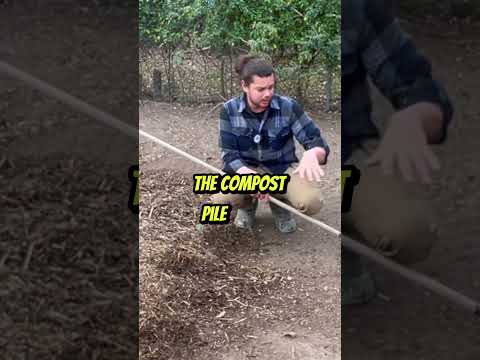
TL;DR: Composting directly on concrete offers an accessible solution for urban dwellers and those with limited space, transforming organic waste into valuable soil amendments.
- Concrete composting expands waste diversion to urban spaces.
- Layering greens and browns remains essential.
- Careful moisture management prevents anaerobic conditions.
- Begin with a coarse layer for drainage and airflow.
Why it matters: This method overcomes space limitations, making composting viable for a broader demographic and significantly reducing landfill waste.
Do this next: Explore setting up a concrete composting system using organic waste materials like food scraps and dry leaves.
Recommended for: Urban dwellers, apartment residents, and anyone with limited outdoor space interested in waste reduction.
The Permaculture Consultant recently shared a brief but insightful piece on the practice of composting directly on concrete surfaces. This method, while seemingly unconventional to some, offers a practical solution for individuals and communities with limited garden space or those operating in urban environments where permeable ground is scarce. The core idea behind "compost on concrete" is to leverage readily available hard surfaces as a base for decomposition, rather than requiring a dedicated patch of soil.
One of the primary advantages highlighted is its accessibility. Not everyone has a backyard or an allocated area for a traditional compost pile. Urban dwellers, apartment residents, or even businesses in built-up areas often face constraints on green space. By utilizing concrete patios, driveways, or even rooftops (with appropriate structural considerations), composting becomes a viable option for a much broader demographic. This expands the reach of composting, allowing more organic waste to be diverted from landfills and transformed into valuable soil amendments.
The process itself generally mirrors traditional composting, albeit with some adaptations. The fundamental principles of layering "greens" (nitrogen-rich materials like food scraps, grass clippings) and "browns" (carbon-rich materials like dry leaves, wood chips, cardboard) still apply. Maintaining the correct moisture level and ensuring adequate aeration are also crucial for successful decomposition. However, when composting on concrete, particular attention needs to be paid to drainage. While a traditional pile can naturally drain into the soil below, a concrete base prevents this. Therefore, it's important to either create a system that allows for leachate collection or to manage moisture carefully to prevent anaerobic conditions and unpleasant odors. Some practitioners might use a layer of coarse material at the bottom, like wood chips or small branches, to facilitate airflow and prevent the pile from becoming waterlogged.
Another key aspect is the potential for heat retention. Concrete can absorb and retain heat, which can be beneficial for accelerating the composting process, especially in cooler climates. This thermal mass can help maintain optimal temperatures for microbial activity, leading to faster breakdown of organic matter. Conversely, in very hot climates, direct sun exposure on concrete might lead to excessive drying of the compost, requiring more frequent watering.
The resulting compost, once mature, can then be used in various ways, even without direct access to garden beds. It can be incorporated into raised garden beds, container gardens, or used to enrich potting mixes for houseplants. For those with access to community gardens or local green spaces, the finished compost can be transported and applied there, contributing to broader ecological health. This method effectively decouples the act of composting from the immediate need for a garden plot, making it a more flexible and adaptable practice.
Furthermore, composting on concrete can serve as an educational tool, demonstrating the principles of waste reduction and resource cycling in highly visible, accessible locations. It can spark conversations about sustainability and encourage more people to participate in organic waste management, even if they don't envision themselves as traditional gardeners. The simplicity and adaptability of this approach underscore its potential to foster a more circular economy, transforming what might otherwise be considered waste into a valuable resource, regardless of the immediate environment.
Source: youtube.com
Related Analysis
- Farms Build Resilience, Pivot to Regenerative Soil — New initiatives and analysis explicitly frame regenerative agriculture as a direct solution for climate resilience, focu…
- Federal Policy Pivots, Builds Indigenous Agriculture Frameworks — Federal policy trends are integrating Indigenous knowledge with soil science in regenerative agriculture, shifting polic…
Related on PermaNews
- Nakivale's Regenerative Toilets: Refugee Resilience, Circular Sanitation (Case Study)
- BEAM Compost: Pilzkompost & Vieh für Bodengesundheit (Case Study)
- Rodale Institute: Soil Health Principles for Regenerative Ag (How-To Guide)
- Permaculture Soil Health: Composting for Living Systems (Article)
- Boost Soil Health: Permaculture's Regenerative Methods (How-To Guide)
- TRANSFORMO mis Residuos Orgánicos con LOMBRICES CALIFORNIANAS en la MINI GRANJA 👨🌾 (Video)
Explore more in Food Systems & Growing — the full hub for this knowledge area.