Year-Round Leeks: Grow All Four Seasons!
By Charles Dowding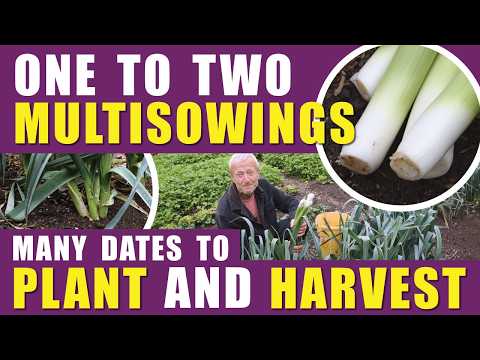
TL;DR: Leeks offer continuous harvests year-round through staggered planting and specific cultivation practices.
- Stagger plantings for continuous leek supply.
- Start seeds indoors for strong growth.
- Plant in dibbled holes for blanched stems.
- Mound soil around leeks for blanching.
- Ensure fertile soil and consistent moisture.
Why it matters: Year-round leek production enhances garden resilience and provides a consistent food source.
Do this next: Learn how to implement staggered leek plantings in your garden.
Recommended for: Gardeners aiming for self-sufficiency and year-round food production with resilient crops.
Leeks are a versatile and rewarding vegetable to grow, offering the potential for harvests throughout the entire year with proper planning and cultivation techniques. Unlike some other crops, leeks are quite resilient and can withstand a range of weather conditions, including significant cold, making them a valuable addition to a permaculture garden aiming for continuous production.
The key to achieving year-round leek harvests lies in staggered plantings. Instead of sowing all seeds at once, successive sowings ensure a continuous supply of plants at various stages of growth. This strategy allows for harvesting mature leeks while younger plants are still developing, ready to take their place. The timing of these sowings is crucial and depends on the local climate and desired harvest periods. For instance, an early spring sowing can provide leeks for summer and autumn, while a late summer or early autumn sowing can yield leeks for winter and early spring.
Starting leek seeds indoors or in a protected environment is often beneficial, especially for earlier sowings. This provides a controlled environment for germination and initial growth, protecting delicate seedlings from harsh weather and pests. Once the seedlings have developed a few true leaves and are sturdy enough, they can be transplanted outdoors. When transplanting, it's common practice to plant leek seedlings in a dibbled hole rather than a shallow trench. This method encourages the development of a longer blanched stem, which is the most desirable part of the leek. As the leeks grow, the soil can be gradually mounded up around the stems, further enhancing blanching and protecting the developing stalks from sunlight, which can make them tougher and greener.
Leeks thrive in well-drained, fertile soil rich in organic matter. Amending the soil with compost or well-rotted manure before planting provides essential nutrients for strong growth. Consistent moisture is also important, particularly during dry spells, to prevent stress and ensure good development. However, overwatering should be avoided to prevent root rot.
Pest and disease issues with leeks are generally manageable. Common problems might include leek moth or rust, but these can often be mitigated through good cultural practices such as crop rotation, maintaining healthy soil, and promptly removing any affected plant material. Companion planting with certain herbs or vegetables can also sometimes deter pests.
Harvesting leeks is straightforward. They can be pulled from the ground when they reach a desirable size, typically from the thickness of a pencil to a substantial stalk. For continuous harvesting, it's best to take individual plants as needed, leaving the others to continue growing. In colder climates, a layer of mulch can be applied around the leeks in late autumn to provide insulation and protect them from severe freezes, extending the harvest window well into winter. Even after heavy frosts, leeks often remain viable and can be harvested as long as the ground isn't completely frozen solid.
By understanding the principles of staggered planting, proper soil preparation, appropriate transplanting techniques, and basic plant care, gardeners can successfully cultivate leeks for a consistent supply throughout all four seasons, contributing to a more resilient and productive permaculture system.
Source: youtube.com
Related Analysis
- Farmers Convert Six Weeks of Rhubarb Into 25-Year Supply — Initial signals suggest a rhubarb preservation technique can extend a brief seasonal harvest into 25 years of storage—a …
- Compost Builds Soil Microbiomes—But Human Waste Divides Practitioners — A small but consistent set of signals indicates composting's soil benefits are well-documented, while human-waste compos…
Related on PermaNews
- Year-Round Harvest: The 6-Month Storage Perennial Vegetable (Video)
- Year-Round Garlic: Perennial Allium Sativum Harvests! (Video)
- 4-Year Covered Market Gardens: Season Extension Insights (Video)
- Beat the Frost: Gardening Protection Strategies (Video)
- Perennial Veggies: Easy, Continuous Harvests (#Permaculture) (Video)
- Charles Dowding: Early Harvest in 3 No-Dig Ways (Video)
Explore more in Food Systems & Growing — the full hub for this knowledge area.