Microbes Eradicate Toxins: A Composting & Garden Essential
By The Permaculture Consultant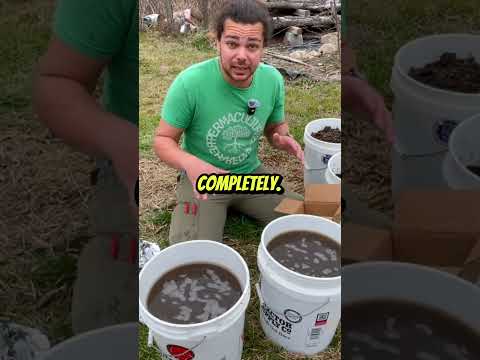
PermaNews Brief
Key Takeaways
Microbes play a vital role in breaking down harmful substances in ecosystems, transforming toxins into less damaging forms.
- Microorganisms actively neutralize pollutants through bioremediation.
- Healthy soil microbes support robust plant growth.
- Compost microbes efficiently break down organic matter.
- Microbes degrade pesticide and herbicide residues.
- Rich microbial environments enhance ecosystem resilience.
Why It Matters
Understanding microbial action helps maintain healthy soil and promotes natural detoxification, crucial for sustainable gardening and ecological balance.
What to Do Next
Encourage diverse microbial life in your compost and garden soil.
Recommended for: Gardeners, composters, and environmental enthusiasts interested in natural detoxification processes and soil health.
This video from The Permaculture Consultant highlights the crucial role of microbial life in breaking down harmful substances within an ecosystem, particularly in the context of gardening and composting. The core message emphasizes that microorganisms are not merely passive components of soil or compost but active agents capable of bioremediation – the process of using biological organisms to neutralize pollutants.
The video implicitly suggests that many common toxins, whether they originate from synthetic chemicals, industrial byproducts, or even naturally occurring but concentrated harmful compounds, can be rendered inert or transformed into less damaging forms through microbial action. This process is fundamental to maintaining healthy soil, which in turn supports robust plant growth and overall ecological balance.
When discussing compost, the video points to the fact that a diverse and thriving microbial community is essential for efficient decomposition. Beyond simply breaking down organic matter into nutrient-rich humus, these microbes also tackle any undesirable elements that might be present in the raw materials. For instance, if compost inputs contain residues of pesticides or herbicides, certain bacteria and fungi possess metabolic pathways that can degrade these complex molecules into simpler, non-toxic compounds. This detoxification process is not instantaneous but occurs over time as the microbial population works through the material.
In a broader garden setting, the video implies that healthy soil teeming with microorganisms acts as a natural filter and purifier. When pollutants enter the soil, whether through runoff, atmospheric deposition, or direct application, the microbial community can begin to process them. This natural detoxification mechanism is a cornerstone of permaculture principles, which advocate for working with natural systems rather than against them. By fostering a rich microbial environment, gardeners can enhance the resilience of their soil and plants against environmental stressors and contaminants.
The video likely touches upon the conditions that favor microbial activity, such as adequate moisture, appropriate temperature, and a balanced supply of organic carbon and nitrogen. These factors are critical for supporting the diverse range of microorganisms needed for effective toxin degradation. A healthy compost pile or garden soil is not just a collection of inert particles but a living ecosystem where countless microscopic organisms are constantly performing vital functions, including the breakdown of potentially harmful substances.
Ultimately, the video serves as a concise reminder of the power of the unseen world beneath our feet. It underscores that by understanding and nurturing microbial life, individuals can contribute significantly to the health of their gardens and, by extension, the wider environment, by leveraging nature's own detoxification mechanisms. This perspective is central to permaculture, which seeks to design self-sustaining systems that mimic natural processes, including the biological breakdown of unwanted compounds.
Source: youtube.com
Related Analysis
- Composting Advice Shifts From Chemistry to Microbial Biology — Several sources suggest composting guidance is pivoting from nutrient ratios toward microbial ecology—reframing what "go…
- Does Growing Your Own Food Actually Save Money? The Real Numbers — Most home gardens save money by year two — but only if the right crops are planted. Herbs and salad greens deliver 5–10x…
Related on PermaNews
- Nakivale's Regenerative Toilets: Refugee Resilience, Circular Sanitation (Case Study)
- Permaculture is Revolution Disguised as Gardening | David Holmgren—Wild & Kind series, Morag Gamble (Video)
- Topsoil is the basis of life on Earth (Video)
- BEAM Compost: Pilzkompost & Vieh für Bodengesundheit (Case Study)
- Rodale Institute: Soil Health Principles for Regenerative Ag (How-To Guide)
- Permaculture Soil Health: Composting for Living Systems (Article)
Explore more in Food Systems & Growing — the full hub for this knowledge area.