No-Till Potato Planting: The Permaculture Nerd's Guide
By No-Till Growers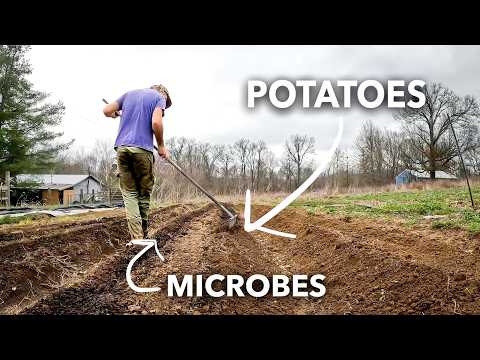
TL;DR: Cultivate potatoes with a no-till method using organic mulch to improve yields and soil health, departing from conventional trenching and hilling.
- No-till approach minimizes soil disturbance.
- Organic mulch replaces traditional hilling.
- Tubers thrive in loose, airy material.
- Improved soil health and moisture retention.
- Potatoes are modified stems, not root vegetables.
Why it matters: This method offers a sustainable way to increase potato yields and enhance soil vitality by mimicking natural processes, reducing labor and dependence on artificial inputs.
Do this next: Watch the video to understand the step-by-step process of implementing this no-till potato planting technique.
Recommended for: Gardeners interested in sustainable, no-till methods for growing potatoes with higher yields and healthier soil.
The article, "Planting Potatoes Like a Nerd," from No-Till Growers, delves into an unconventional yet highly effective method for cultivating potatoes, emphasizing a no-till approach and a deep understanding of the plant's growth habits. The core philosophy revolves around minimizing soil disturbance, maximizing organic matter, and creating an optimal environment for tuber development, moving away from traditional trenching and hilling practices.
The author begins by challenging the common perception of potato planting, suggesting that many conventional methods are inefficient and can even hinder yield. Instead of digging deep trenches, the recommended approach involves placing seed potatoes directly on the soil surface or just barely covered, followed by a substantial layer of organic material. This organic layer, often consisting of wood chips, straw, or compost, serves multiple critical functions. Firstly, it acts as a mulch, suppressing weeds and conserving soil moisture, which are vital for potato growth. Secondly, as it decomposes, it continuously feeds the soil with nutrients, fostering a healthy microbial environment. Thirdly, and perhaps most importantly for potatoes, it provides a loose, friable medium into which the tubers can easily expand.
A key insight presented is the understanding of how potatoes form. Unlike many root vegetables that grow downwards, potatoes are modified stems (tubers) that develop from stolons, which emerge from the main stem. These stolons prefer to grow horizontally or slightly upwards into loose, airy material. Traditional hilling, while attempting to provide cover, can sometimes compact the soil around the developing tubers, making it harder for them to expand and potentially leading to misshapen or smaller potatoes. By contrast, a thick layer of organic mulch offers an ideal, uncompacted environment for stolon and tuber development.
The article details a step-by-step process for this "nerdy" potato planting method. It starts with preparing the bed, ideally a permanent no-till bed that has been enriched with compost over time. Seed potatoes, which have been chitted (sprouted) for a head start, are then placed on the soil surface. Following this, a significant layer of organic material, often 6-12 inches deep, is applied over the seed potatoes. This initial layer is crucial for providing the necessary cover and initiating the decomposition process. As the potato plants grow, additional layers of organic material can be added, effectively "hilling" the plants with mulch rather than soil. This continuous mulching not only encourages more tuber formation along the stem but also protects the developing potatoes from sunlight, preventing greening.
Another significant advantage highlighted is the ease of harvest. Instead of digging through compacted soil, potatoes grown in this manner can often be simply "uncovered" by raking away the organic mulch. This minimizes damage to the tubers, reduces labor, and leaves the soil structure undisturbed, ready for the next planting cycle. The article also touches upon the benefits for soil health, noting that this method enhances soil organic matter, improves water infiltration, and supports a thriving soil food web, all of which contribute to a more resilient and productive garden ecosystem.
In essence, the "Planting Potatoes Like a Nerd" article advocates for a thoughtful, biologically-driven approach to potato cultivation. It encourages gardeners to observe plant behavior, understand soil dynamics, and leverage natural processes to achieve superior yields with less effort and greater ecological benefit, ultimately redefining what constitutes "smart" gardening practices for this popular crop.
Source: youtube.com
Related Analysis
- Farmers Convert Six Weeks of Rhubarb Into 25-Year Supply — Initial signals suggest a rhubarb preservation technique can extend a brief seasonal harvest into 25 years of storage—a …
- Compost Builds Soil Microbiomes—But Human Waste Divides Practitioners — A small but consistent set of signals indicates composting's soil benefits are well-documented, while human-waste compos…
Related on PermaNews
- Ernst Götsch's Cacao Syntropy: Master Agroforestry Now (How-To Guide)
- Finnish Off-Grid: Rocket Mass Heater Performance in Greenhouse (Case Study)
- Berlins schwimmende Gärten: Permakultur auf dem Wasser (Case Study)
- Rodale Report 2025: Thermal Mass Boost in Solar Greenhouses (Case Study)
- AUTarcaMatricultura La Palma: Permakultur & Energieautarkie (How-To Guide)
- Earthaven Ecovillage: 30 Years Off-Grid with Hydro & Solar (Video)
Explore more in Food Systems & Growing — the full hub for this knowledge area.