Transatlantic Lessons from Community Gardens and Farms
By NYC Parks GreenThumb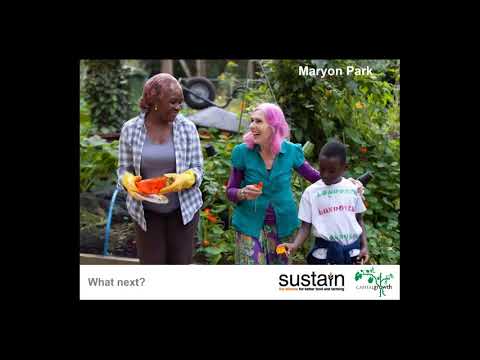
PermaNews Brief
Key Takeaways
Community gardens and farms enhance urban resilience and food security post-COVID-19.
- Urban farms boost local food security
- Community gardens foster neighborhood solidarity
- Panelists share practical governance insights
- Volunteers play key roles in urban gardening
- Lessons learned inform future resilience strategies
Why It Matters
Understanding how community gardens function strengthens city resilience and food systems.
What to Do Next
Listen to the recorded panel event for diverse insights.
Permaculture Context
What this exchange reveals, beneath the surface of pandemic-era adaptation, is that community gardens and urban farms are not simply food-production spaces — they are living demonstrations of permaculture's core ethics operating at a neighbourhood scale. Care for people, care for the earth, and fair share of surplus become tangible and visible when a garden feeds isolated residents, composts kitchen waste, and redistributes harvests across income levels. For regenerative practitioners, the transatlantic dimension matters: governance models that work in Toronto's community land trust context may translate, with adaptation, to London's allotment culture or New York's community garden movement. If you are building personal or household resilience, the practical implication is clear — embedding yourself in an existing community growing space, rather than working in isolation, dramatically strengthens your capacity to weather disruption. You gain soil knowledge, seed networks, volunteer relationships, and institutional memory that no homestead operating alone can replicate. The deeper lesson is that resilience is fundamentally relational, and the most durable permaculture systems are those woven tightly into the social fabric of their place.
Recommended for: Urban farmers and community organizers seeking practical insights.
This recorded panel event brings together community gardeners and urban farmers from London, Toronto, and New York City to discuss how gardens and farms are contributing to city resilience, food security, and COVID-19 response. Because it is a multi-city practitioner exchange, it is valuable for identifying field-tested ideas rather than abstract theory. The session is organized as a cross-city webinar, which means it is likely to include comparative lessons on how different municipal and nonprofit models support community growing spaces, how volunteers are mobilized, and how gardens adapt during disruptions. The event description highlights solidarity among neighbors and preparation for the future, suggesting that participants discuss both immediate pandemic-era responses and longer-term resilience planning. For practitioners, the key value of this source is that it centers voices from the field: community gardeners, urban farmers, and city-based organizers who are actively working in operational contexts. That makes it especially useful for learning about governance, volunteer coordination, and public-facing resilience narratives. The format is a panel event rather than a formal report, so the insights are likely to be qualitative and experience-based. Still, it is a strong source for understanding how community gardens and farms function as social infrastructure, how they support local food security, and how transnational peer learning can shape better local practice. It is most relevant for people designing community garden programs, resilience initiatives, or urban agriculture networks who want real-world examples from established urban food systems.
Source: youtube.com
Related Analysis
- DIY Root Cellar vs. Chest Freezer: Build Costs & Payback — A DIY in-ground or basement root cellar in the US costs roughly $500–$5,000 to build depending on method, while a chest …
- Worm Composting: 6 Ways to Build a Bin, Real 2026 Costs, and Where the Research Actually Disagrees — Vermicomposting turns kitchen scraps into worm castings using a container, bedding, and red wigglers (Eisenia fetida) — …
Related on PermaNews
- Berlins schwimmende Gärten: Permakultur auf dem Wasser (Case Study)
- Soil Strategies for Transitioning to Small Scale Organic Regenerative Ag (Event)
- Seed Saving: A Revolutionary Act for Biodiversity & Food (Article)
- New York's Initiative Boosts Community Gardens for Urban Food Security (Article)
- 10 Innovative Solutions from Community Gardens Tackling Food Deserts in 2026 (How-To Guide)
- Webinar - TOPP Educator Webinars: Organic Certification for Urban Farms (Event)
Explore more in Food Systems & Growing — the full hub for this knowledge area.