Biochar's Carbon Storage Potential in Permaculture
By The Biochar Prepper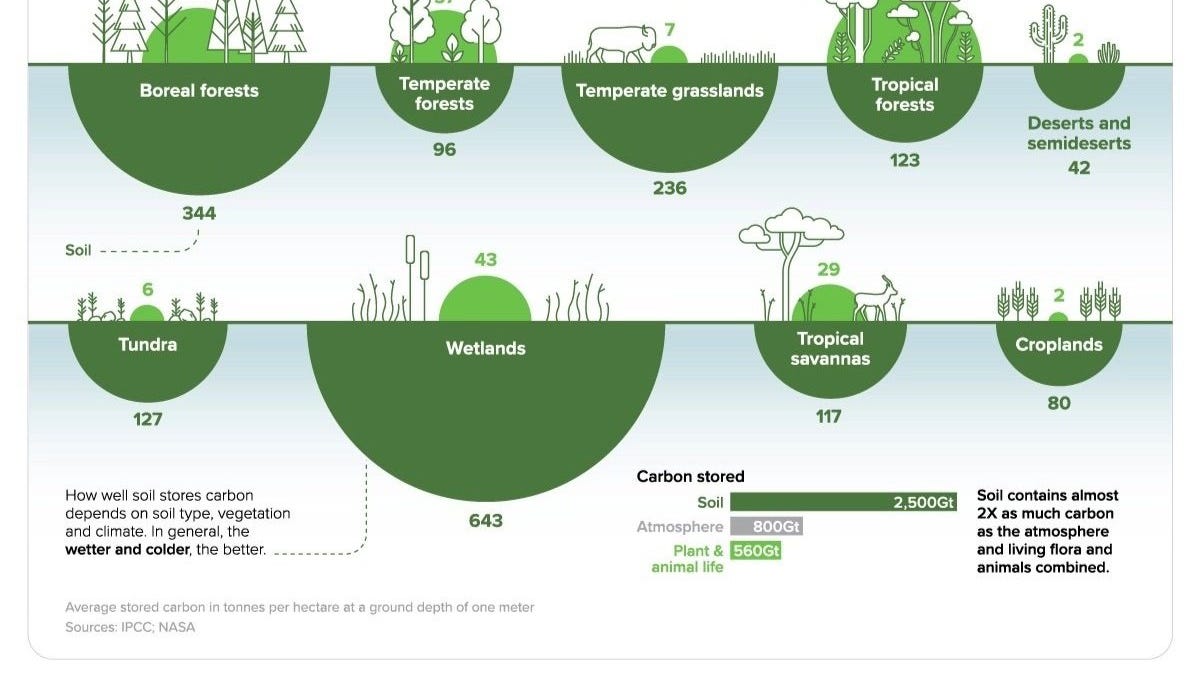
PermaNews Brief
Key Takeaways
Biochar offers a durable solution for atmospheric carbon removal and soil enrichment in farming systems.
- Biochar stores carbon for centuries, unlike other organic matter.
- It enhances soil health and agricultural output.
- Croplands offer significant carbon sequestration potential.
- Biochar is a key topic in regenerative agriculture discussions.
- Integrating biochar helps agriculture become a carbon sink.
Why It Matters
Biochar application in agriculture can transform farms into long-term carbon sinks, directly combating climate change while boosting food production.
What to Do Next
Research local suppliers of biochar or methods for its small-scale production.
Recommended for: Farmers, gardeners, and land managers interested in advanced soil building and climate change mitigation strategies.
This blog post examines the role of biochar in permaculture and regenerative agriculture systems, with particular focus on carbon storage potential across different land types. The author explores how biochar—a form of charcoal produced from biomass—can be integrated into agricultural practices to enhance carbon sequestration while improving soil health and productivity. A central theme is the comparison of carbon storage capacity in croplands versus desert environments, highlighting how agricultural systems can be optimized to maximize their role as carbon sinks. The post contextualizes this discussion within the broader regenerative agriculture movement, which seeks to restore soil health and ecosystem function while producing food and fiber. Biochar's relevance to permaculture is significant because it represents a long-term carbon storage solution; unlike organic matter that decomposes relatively quickly, biochar can persist in soil for centuries, making it an effective tool for permanent carbon sequestration. The blog post references the upcoming R-Future 2026 symposium on regenerative agriculture and permaculture, positioning biochar as a key topic in contemporary discussions about sustainable land management. The author notes that a dedicated talk on biochar was scheduled to air on January 18, 2026, indicating the growing recognition of biochar's importance in regenerative agriculture circles. The post encourages continued dialogue about future agricultural practices and climate solutions, suggesting that biochar and other carbon-focused strategies will play an increasingly important role in addressing climate change through land management. By highlighting biochar's potential within permaculture frameworks, the author contributes to the broader conversation about how agricultural systems can transition from carbon sources to carbon sinks, supporting both food security and climate mitigation objectives.
Source: biocharprepper.substack.com
Related Analysis
- High-Salt Fertilizers Block Soil Microbes, Kempf Says — High-salt fertilizers disrupt soil microbes and microbial colonization, trapping farmers in chemical dependency. Biologi…
- Fertilizer Shortage Forces Reckoning on Nitrogen Sources — Fertilizer supply crisis drives farms toward nitrogen-fixing cover crops, compost, and legume rotations as alternatives.
Related on PermaNews
- Ernst Götsch's Cacao Syntropy: Master Agroforestry Now (How-To Guide)
- Finnish Off-Grid: Rocket Mass Heater Performance in Greenhouse (Case Study)
- Designing Regenerative Resilience: Participatory Living Labs (How-To Guide)
- Berlins schwimmende Gärten: Permakultur auf dem Wasser (Case Study)
- Lo—TEK: Indigenous Tech for Climate Solutions (Article)
- Rodale Report 2025: Thermal Mass Boost in Solar Greenhouses (Case Study)
Explore more in Food Systems & Growing — the full hub for this knowledge area.