Best Practices for the Sustainable Urban Farm
PermaNews Brief
Key Takeaways
Urban agriculture thrives in cities through adaptive practices and community collaboration.
- Urban farms adapt to small and dense spaces
- Consumer support is vital for urban farms
- Building relationships fosters stronger networks
- Education in farming techniques is essential
- Policy support strengthens urban agriculture initiatives
Why It Matters
Implementing urban agriculture can enhance local food security and community engagement. It requires collaboration and informed governance to succeed effectively.
What to Do Next
Explore your local urban farms and get involved.
Permaculture Context
For permaculture practitioners, this bulletin quietly validates something the regenerative community has long understood: urban food systems don't fail because of bad intentions, they fail because of missing infrastructure — legal, relational, and educational. The emphasis on FSA registration and Census of Agriculture participation is particularly significant for those of us working outside conventional agricultural frameworks. These aren't bureaucratic formalities; they're the mechanisms through which urban growers gain political visibility and access to capital that can fund soil remediation, water harvesting systems, and perennial plantings that take years to mature. If you're building a productive urban homestead or supporting a community growing space, the practical implication is this: treat institutional literacy as a design element, not an afterthought. Know your land tenure situation before you plant a food forest. Build supplier and knowledge relationships with neighboring farms before you need them. And recognize that your purchasing decisions and public advocacy are inputs into the system just as surely as compost is. Resilience at the neighborhood scale is assembled through dozens of deliberate small actions, most of them unglamorous, all of them compounding.
Recommended for: Individuals and organizations interested in urban agriculture.
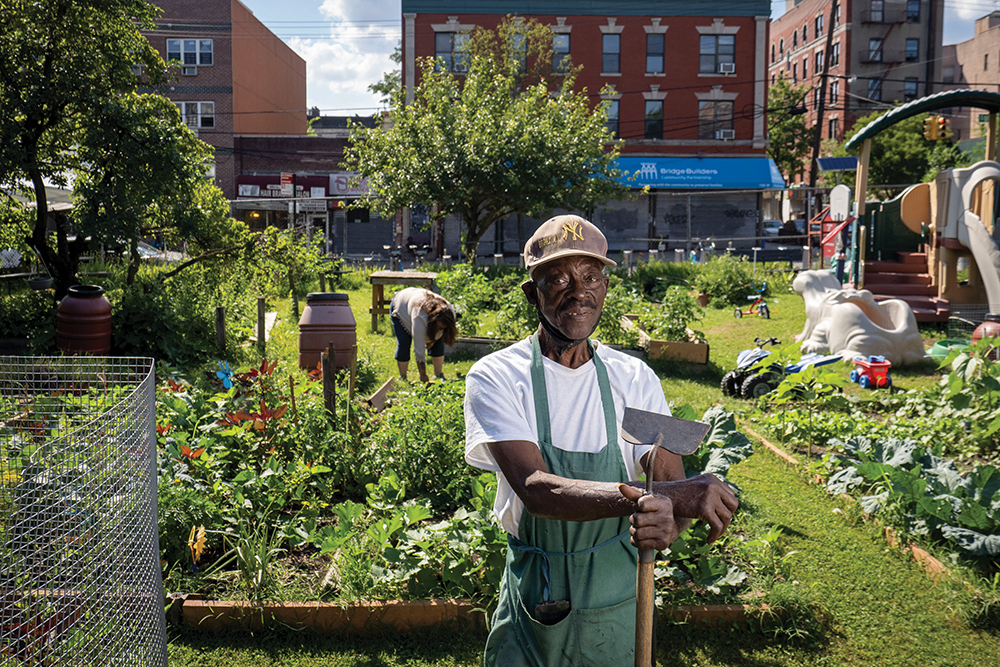
This bulletin is a practical guide for establishing and managing an urban farm or community garden, with emphasis on the operational issues that matter most in dense urban settings. It explains that urban farms are highly adaptable and can range from small farms on repurposed vacant lots to rooftop gardens and multilevel vertical farms, often combining ecological farming practices with infrastructure. The document is particularly useful because it translates the concept of urban agriculture into implementation guidance for several audiences. For consumers, it recommends supporting urban farms by buying products, attending events, sharing experiences, and advocating for city policies that support resource distribution to local residents. For urban farmers, it emphasizes building relationships with other farms and organizations, registering for an FSA farm number to access loans and cost-share programs, and participating in the Census of Agriculture so that urban agriculture is visible in public data. The bulletin also recommends investing in education on soil, pest, and water management, which makes it clear that technical knowledge is a prerequisite for sustainable performance. For policymakers, it urges communication with farmers and food organizations, and it highlights long-term land access as a core policy need. What makes this source valuable is its concrete orientation: it does not just endorse urban farming, it identifies the institutional, educational, and land-tenure steps needed to make it durable. For community gardens and local food projects, the main lesson is that successful urban agriculture requires not only growing skill but also governance, policy support, and collaboration across the local food network.
Source: sare.org
Related Analysis
- Rainforest Alliance Launches Certification Tied to Soil Results — A developing direction in regenerative ag certifications demands measurable soil outcomes, not just practice adoption. R…
- Campbell's Corporate Grants Push Farmers Into Regenerative Trials — Campbell's Grower Grants are funding real-acre regenerative trials, offering a corporate-backed mechanism for on-farm ex…
Related on PermaNews
- Berlins schwimmende Gärten: Permakultur auf dem Wasser (Case Study)
- Soil Strategies for Transitioning to Small Scale Organic Regenerative Ag (Event)
- Seed Saving: A Revolutionary Act for Biodiversity & Food (Article)
- We Grow Urban Farm: Regenerative Urban Agriculture Case Study (Video)
- 2025 Urban Ag: Deep Roots, Growing Trends & Policy Impact (Case Study)
- Regeneratives Stadtgärtnern: Ökosysteme heilen & neu beleben (How-To Guide)
Explore more in Food Systems & Growing — the full hub for this knowledge area.