Joel Salatin Talks Permaculture: Fields of Farmers & SKIP
By paul wheaton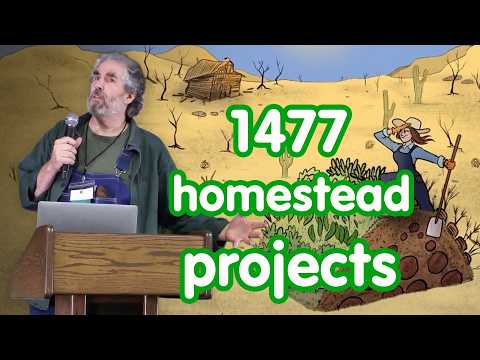
TL;DR: The Fields of Farmers program teaches permaculture through hands-on projects, featuring Joel Salatin on regenerative agriculture.
- Learn permaculture design and practical application.
- Develop food forests and water systems.
- Integrate livestock for regeneration.
- Build community and share knowledge.
- Joel Salatin shares innovative farming methods.
Why it matters: This program equips individuals with essential skills for sustainable living and farming, fostering self-sufficiency and ecological restoration.
Do this next: Explore local permaculture education programs or workshops to gain hands-on experience.
Recommended for: Aspiring homesteaders, farmers, and permaculture enthusiasts seeking practical skills and community support.
The Fields of Farmers program, an initiative focused on permaculture education and practical application, recently hosted a significant event featuring Joel Salatin, a prominent figure in sustainable agriculture. This gathering was part of a broader effort to equip individuals with the knowledge and skills necessary to establish and manage permaculture-based homesteads and farms.
The program itself is structured around a comprehensive curriculum that covers various aspects of permaculture design, implementation, and maintenance. Participants engage in hands-on learning experiences, working on real-world projects that demonstrate permaculture principles in action. These projects often involve developing food forests, establishing efficient water management systems, building sustainable structures, and integrating livestock into a regenerative agricultural model. The emphasis is on creating self-sustaining ecosystems that produce food, fiber, and fuel while enhancing biodiversity and soil health.
A key component of the Fields of Farmers program is its focus on community building and knowledge sharing. Participants are encouraged to collaborate, share their experiences, and learn from each other's successes and challenges. This collaborative environment fosters a sense of camaraderie and provides a support network for individuals embarking on their permaculture journeys. The program also aims to connect participants with experienced permaculture practitioners and mentors, offering guidance and insights into the practicalities of establishing and managing a permaculture enterprise.
Joel Salatin's involvement in the program was a significant highlight. Known for his innovative and highly productive farming methods, Salatin shared his extensive knowledge and experience in regenerative agriculture. His presentations and discussions likely covered topics such as rotational grazing, pastured poultry, direct marketing strategies, and the economic viability of small-scale, diversified farms. Salatin's approach emphasizes working with natural systems to maximize productivity and minimize environmental impact, a philosophy that aligns perfectly with the core tenets of permaculture. His insights would have provided valuable practical advice and inspiration for participants looking to implement similar systems on their own land.
The program also incorporates elements of the SKIP (Sustainable Knowledge and Integrated Permaculture) methodology, which is a structured approach to learning and applying permaculture principles. This methodology likely involves a series of modules or workshops that guide participants through the process of designing, implementing, and managing permaculture systems. The SKIP framework aims to make permaculture accessible and actionable, breaking down complex concepts into manageable steps and providing practical tools for application.
The overall goal of the Fields of Farmers program, particularly with events like the one featuring Joel Salatin, is to empower individuals to create resilient and productive homesteads and farms. By providing a blend of theoretical knowledge, practical skills, and real-world examples from experts like Salatin, the program seeks to foster a new generation of permaculture practitioners who can contribute to a more sustainable and food-secure future. The focus on hands-on projects ensures that participants gain practical experience, while the emphasis on community and mentorship provides ongoing support and learning opportunities. This holistic approach aims to equip individuals with the tools and confidence to transform their land into thriving, regenerative ecosystems.
Source: youtube.com
Related Analysis
- Farms Build Resilience, Pivot to Regenerative Soil — New initiatives and analysis explicitly frame regenerative agriculture as a direct solution for climate resilience, focu…
- Federal Policy Pivots, Builds Indigenous Agriculture Frameworks — Federal policy trends are integrating Indigenous knowledge with soil science in regenerative agriculture, shifting polic…
Related on PermaNews
- Ernst Götsch's Cacao Syntropy: Master Agroforestry Now (How-To Guide)
- Finnish Off-Grid: Rocket Mass Heater Performance in Greenhouse (Case Study)
- Berlins schwimmende Gärten: Permakultur auf dem Wasser (Case Study)
- Rodale Report 2025: Thermal Mass Boost in Solar Greenhouses (Case Study)
- AUTarcaMatricultura La Palma: Permakultur & Energieautarkie (How-To Guide)
- Earthaven Ecovillage: 30 Years Off-Grid with Hydro & Solar (Video)
Explore more in Food Systems & Growing — the full hub for this knowledge area.