Sacred Farming: Soul Fire Farm's Spiritual Permaculture 3D
By Soul Fire Farm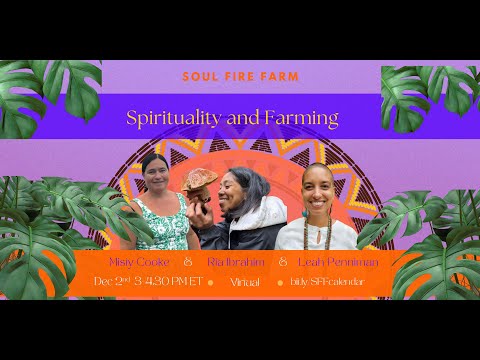
TL;DR: Integrating spiritual practices into farming fosters a deeper connection to the land, promoting ecological health and community through mindful cultivation.
- Farming is a spiritual practice, not just food production.
- Honor the sacred in soil, seeds, plants, and animals.
- Indigenous wisdom informs interconnectedness with nature.
- Rituals and ceremonies deepen connection to land.
- Ethical farming promotes ecological health and social justice.
Why it matters: Embracing spirituality in farming transforms our relationship with food and the environment, leading to more sustainable and equitable practices.
Do this next: Explore local indigenous farming practices and their spiritual underpinnings.
Recommended for: Anyone interested in deepening their connection to farming beyond just technique, including permaculture practitioners, home gardeners, and agricultural ethicists.
The intersection of spirituality and farming, particularly within the context of permaculture, offers a profound perspective on our relationship with the land and the food we consume. This approach moves beyond mere agricultural techniques, delving into the deeper, often sacred, dimensions of cultivation. It recognizes that farming is not just a physical act of growing food, but also a spiritual practice that connects us to the earth, to each other, and to something larger than ourselves.
One of the core tenets of this spiritual farming philosophy is the concept of honoring the sacred in all aspects of the agricultural process. This means viewing the soil not just as a medium for growth, but as a living entity deserving of respect and care. It involves acknowledging the life force within seeds, plants, and animals, and approaching their cultivation with reverence. This perspective often draws from indigenous wisdom traditions that have long understood the interconnectedness of all life and the importance of living in harmony with nature.
The practice of spiritual farming often incorporates rituals and ceremonies that acknowledge the cycles of nature and express gratitude for the bounty of the earth. These can range from simple blessings before planting or harvesting to more elaborate celebrations tied to solstices, equinoxes, or other significant natural events. Such practices serve to deepen the farmer's connection to the land and to instill a sense of mindfulness and intentionality in their work. They also foster a sense of community among those involved, creating a shared spiritual experience around food production.
Furthermore, this approach emphasizes the ethical dimensions of farming. It encourages practices that promote ecological health, social justice, and economic equity. This includes sustainable land management techniques that build soil fertility, conserve water, and protect biodiversity. It also extends to ensuring fair labor practices, providing access to healthy food for all, and supporting local food systems. The spiritual aspect of farming thus becomes a driving force for creating a more just and sustainable food system for everyone.
The virtual 3D aspect mentioned in the context of "Honoring the Sacred" suggests an innovative way to engage with these concepts. It implies the use of immersive digital platforms to explore and understand the spiritual dimensions of farming. This could involve virtual tours of farms that highlight sacred spaces or practices, interactive simulations that demonstrate the impact of different farming methods on the environment and community, or even virtual gatherings where people can share their experiences and insights on spiritual farming. Such technologies could serve as powerful tools for education, advocacy, and community building, making these profound concepts accessible to a wider audience.
Ultimately, integrating spirituality into farming is about cultivating a holistic relationship with our food, our land, and our communities. It's about recognizing that the act of growing food is a sacred trust, and that by honoring this trust, we can create a more nourishing, resilient, and equitable world. This perspective encourages a shift from a purely extractive model of agriculture to one that is regenerative, respectful, and deeply connected to the spiritual essence of life itself.
Source: youtube.com
Related Analysis
- Farmers Convert Six Weeks of Rhubarb Into 25-Year Supply — Initial signals suggest a rhubarb preservation technique can extend a brief seasonal harvest into 25 years of storage—a …
- Compost Builds Soil Microbiomes—But Human Waste Divides Practitioners — A small but consistent set of signals indicates composting's soil benefits are well-documented, while human-waste compos…
Related on PermaNews
- Ernst Götsch's Cacao Syntropy: Master Agroforestry Now (How-To Guide)
- Finnish Off-Grid: Rocket Mass Heater Performance in Greenhouse (Case Study)
- Berlins schwimmende Gärten: Permakultur auf dem Wasser (Case Study)
- Rodale Report 2025: Thermal Mass Boost in Solar Greenhouses (Case Study)
- AUTarcaMatricultura La Palma: Permakultur & Energieautarkie (How-To Guide)
- Earthaven Ecovillage: 30 Years Off-Grid with Hydro & Solar (Video)
Explore more in Food Systems & Growing — the full hub for this knowledge area.