Australia's Cool Soil Initiative: Low-Carbon Farming Since 2018
PermaNews Brief
Key Takeaways
A multi-stakeholder initiative in Australia is scaling low-carbon agriculture by connecting corporate supply chains with on-farm practice changes.
- Corporate partnerships drive widespread adoption of conservation farming.
- No-till, livestock integration, and precision inputs improve soil health.
- Cool Farm Tool provides individualized natural capital reports.
- Grassroots groups offer training, field days, and technical support.
- The initiative demonstrates scalable environmental and economic benefits.
Why It Matters
This initiative offers a powerful model for how corporations can incentivize and scale regenerative agricultural practices across their supply chains, leading to significant environmental and economic benefits for farmers.
What to Do Next
Explore how existing agricultural tools can be integrated with corporate sustainability goals to create similar incentive programs.
Recommended for: Anyone interested in large-scale regenerative agriculture, corporate sustainability, or supply chain greening efforts in grain production.
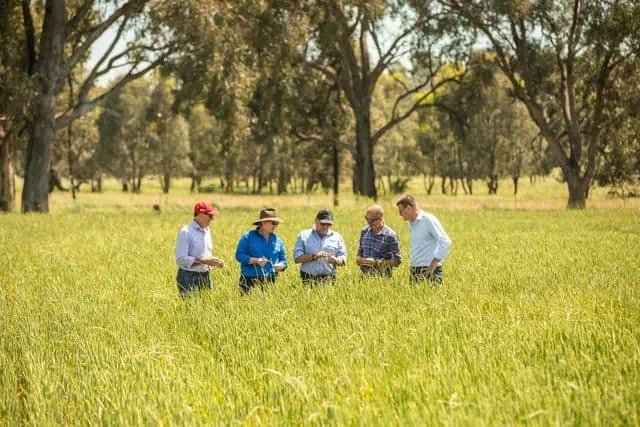
The Cool Soil Initiative (CSI), launched in 2018 with funding from Mars Petcare, Kellogg, Food Agility CRC, and Charles Sturt University, partners with Sustainable Food Lab to promote low-carbon agriculture practices across Australia. It targets multinational food suppliers, retailers, grain processors, aggregators, and bulk handlers sourcing maize, corn, wheat, and canola using conservation techniques including no-till, livestock integration, and precision fertilizer application. CSI builds grassroots capacity in New South Wales, Victoria, and Queensland through watershed-scale Farming System Groups delivering trainings, field days, and individualized natural capital reports via the Cool Farm Tool. These reports identify opportunities to enhance soil health, reduce emissions, and increase yields. Members contribute to technical assistance, GHG monitoring, reporting, and verification, creating an all-in-one platform for climate-smart agriculture suitable for farms of all sizes. Livestock integration plays a key role in nutrient cycling and soil regeneration, complementing no-till and precision inputs to mitigate greenhouse gases while maintaining productivity. Practical details include farmer-specific recommendations from field days and tools, enabling measurable impacts on supply chain sustainability and ESG strategies. The initiative demonstrates scalable systems change by aligning corporate sourcing with on-farm practices, providing concrete data on emissions reductions and natural capital. For regenerative systems, it offers actionable strategies like integrating livestock for organic matter addition, reducing synthetic inputs, and improving resilience to climate variability. Contact points like Elizabeth Reaves at Sustainable Food Lab facilitate deeper engagement, with links to further resources on technical assistance scaling. This model provides practitioners with verified methods to achieve dual environmental and economic outcomes in grain production.
Source: sustainablefoodlab.org
Related Analysis
- Does Growing Your Own Food Actually Save Money? The Real Numbers — Most home gardens save money by year two — but only if the right crops are planted. Herbs and salad greens deliver 5–10x…
- Regenerative Farmers Flip Cover Crop Logic From Compliance to Profit — Practitioner accounts and a new meta-analysis suggest cover cropping is being reframed from conservation practice to pro…
Related on PermaNews
- Boost Biodiversity: Regenerative Ag for a Sustainable Future (How-To Guide)
- Gabe Brown's Regenerative Journey: ND to TX & MT Ranches (Article)
- CA Rangelands: Regenerative Grazing Fights Drought (10-Yr Study) (Case Study)
- Silvopasture: Maximize Livestock Gains with Regenerative Trees (How-To Guide)
- Regenerate Soil: Animal Integration in Carbon Farming (How-To Guide)
- 2026 Agroforestry Institute (Event)
Explore more in Food Systems & Growing — the full hub for this knowledge area.