2026 Regen Ag: Verified Impact from Concept to Global Scale
PermaNews Brief
Key Takeaways
Regenerative agriculture is moving from theory to proven impact by 2026, with global case studies showing verified environmental and economic benefits.
- Scaled case studies prove regenerative agriculture's verified global impact.
- Diageo and others confirm increased soil carbon and biodiversity.
- No-till, cover cropping, and grazing reduce inputs and boost resilience.
- Measurement protocols enable market premiums and carbon credits.
- Real-world data links regenerative practices to economic viability.
Why It Matters
Understanding these verified outcomes helps farmers adopt practices that generate environmental benefits and secure market advantages through proven sustainability.
What to Do Next
Research local initiatives and financial incentives for transitioning to regenerative practices in your region.
Recommended for: Farmers, policymakers, and investors seeking practical, data-driven insights into the global scalability and economic viability of regenerative agriculture.
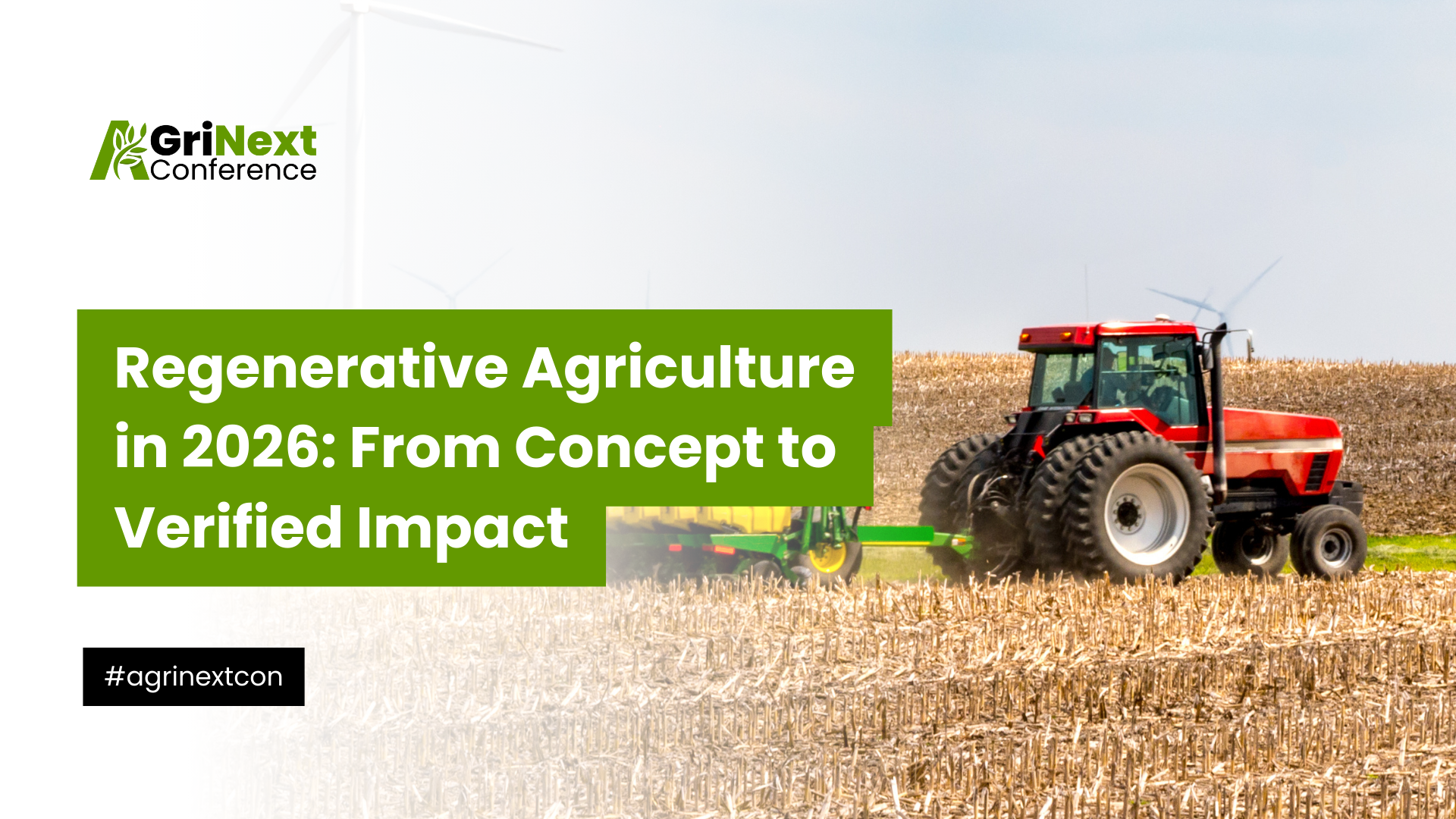
The article explores regenerative agriculture's 2026 evolution from concept to verified global impact through scaled case studies across regions and commodities. It emphasizes Diageo's initiatives and similar programs verifying outcomes like soil carbon increases, biodiversity gains, and yield stability via standardized metrics. Practitioners learn from real-world implementations: corporate-backed transitions track multi-year data on no-till, cover cropping, and grazing integrations, showing reduced inputs and climate resilience. Detailed global examples provide actionable insights into measurement protocols for carbon credits, biodiversity baselines, and economic viability, enabling farms to adopt verified practices for market premiums. Ties to regenerative living via resilient supply chains supporting self-sufficiency and permaculture-aligned systems with field-tested results confirming scalability.
Source: agrinextcon.com
Related Analysis
- Food Forest Courses Shift From Theory to Build-Ready Skills — Several food forest courses now open with site assessment and guild-building rather than design theory, suggesting a dev…
- Practitioners Build Silvopasture Playbook Before Researchers Catch Up — A small but consistent set of signals from the Northeast U.S. shows farmers actively piloting silvopasture while formal …
Related on PermaNews
- PRI Jordan: Arid Zone Permaculture Yields 5 Tons/Hectare (Case Study)
- Aboriginal Cool Burns: Permaculture's Ancient Fire Wisdom (Case Study)
- Crop Rotation Boosts Soil Biodiversity: Global Meta-analysis (Article)
- Ivana Gazibara's $1.4B Initiative to Revamp Midwest Agriculture (Video)
- Reviving the Aravallis: A Journey into Regenerative Agriculture (Video)
- 10 Dryland Crops Boosting Biodiversity and Food Security (Article)
Explore more in Food Systems & Growing — the full hub for this knowledge area.