Unveiling Garden Wisdom: Insights from Nature's Imperfections
PermaNews Brief
Key Takeaways
A thriving garden may show signs of imperfection; learn what plants communicate.
- Healthy gardens reveal subtle signals
- Fungi can enhance plant resilience
- Stress in tomato plants affects yield
- Host plants attract beneficial butterflies
- Pest management is about balance
Why It Matters
Understanding garden signals empowers gardeners to make informed decisions and fosters healthier ecosystems.
What to Do Next
Listen to the episode for insights on understanding plant signals.
Permaculture Context
For permaculture practitioners, the real shift happening here isn't about gardening technique — it's about epistemology. How we read a landscape determines every decision we make within it. When we train ourselves to interpret yellowing leaves as potential nitrogen cycling conversations rather than failures, or recognize caterpillar damage as evidence that we've successfully established habitat connectivity, we stop managing a garden and start participating in one. This matters practically because the reflex to intervene — to spray, pull, or correct — is one of the most expensive habits a regenerative grower can have, costly in time, inputs, and disrupted ecological relationships. Practitioners building food forests or integrated homestead systems in particular need this perceptual foundation early, because polyculture systems will always look messier than monocultures, and without the ability to distinguish productive complexity from genuine dysfunction, the temptation to simplify back toward conventional methods is real. Learning the language of plant stress signals is ultimately how you reduce your dependence on external inputs and start letting the system guide its own management.
Recommended for: Gardeners looking to deepen their understanding of plant health.
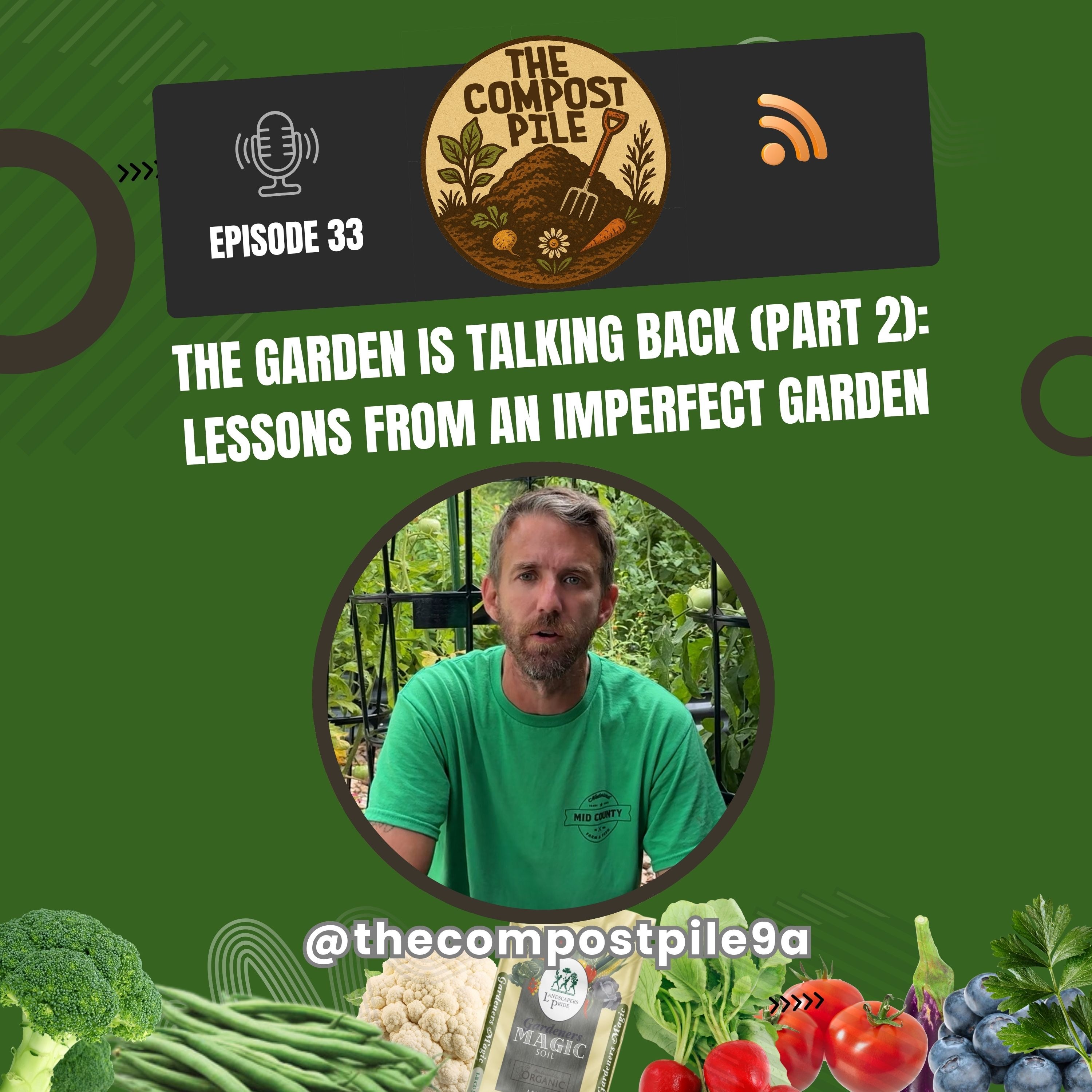
Does a healthy garden have to look perfect? In this solo episode of The Compost Pile, David takes a walk through the garden to explore what plants are really telling us. From yellowing leaves and nutrient deficiencies to fungi, pest damage, caterpillar host plants, and sprawling tomato vines, we discuss why imperfection is often a sign of a thriving ecosystem—not a failing garden.Learn how to read visual clues from your plants, understand when action is needed (and when it's not), and build confidence as a gardener by focusing on function over appearance.Whether you're growing vegetables, flowers, or a backyard food forest in Southeast Texas or beyond, this episode will help you see your garden through a different lens.Topics Covered: • Reading plant health signals • Beneficial fungi in the garden • Tomato plant stress and production • Host plants for butterflies • Managing garden pests realistically • Building resilient soil ecosystems • Why perfection isn't the goalGardening Zone9 OrganicGardening Tomatoes SoilHealth GardenPests Homesteading PollinatorGarden Butterflies TheCompostPile SoutheastTexasGardening GardenTips
Source: rss.com
Related Analysis
- Campbell's Corporate Grants Push Farmers Into Regenerative Trials — Campbell's Grower Grants are funding real-acre regenerative trials, offering a corporate-backed mechanism for on-farm ex…
- Global Water Bankruptcy Forces Agricultural Adaptation — UN report reveals water bankruptcy across surface waters, glaciers, and groundwater, forcing immediate agricultural adap…
Related on PermaNews
- AUTarcaMatricultura La Palma: Permakultur & Energieautarkie (How-To Guide)
- Borneo's Rainforest Revival: Dr. Smits' Sugar Palm Village Hub (Case Study)
- PRI Jordan: Arid Zone Permaculture Yields 5 Tons/Hectare (Case Study)
- Holmgren's 40 Yrs: Abundant Permaculture Design Webinar 3 (Video)
- Amazonas: Chakra Waldgärten – Dynamische Agroforst-Wunder (Case Study)
- CIT-ED Pioneers Tribal Food Forest for Climate & Food Security (Case Study)
Explore more in Food Systems & Growing — the full hub for this knowledge area.