Compost: Permaculture's Fertility Engine | Discover Podcast
By Discover Permaculture with Geoff Lawton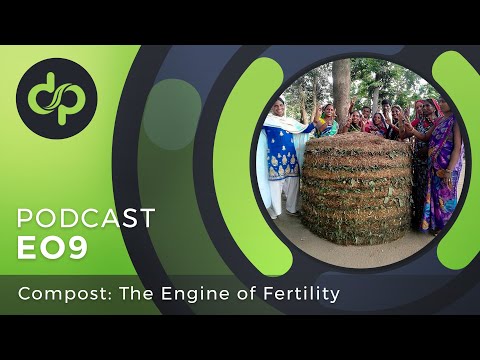
TL;DR: Compost is essential for building fertile soil, enhancing microbial life, improving soil structure, and boosting water retention, all vital for robust plant growth in permaculture.
- Compost creates fertile soil foundational to permaculture.
- It fosters a thriving microbial ecosystem in the soil.
- Compost improves soil structure for aeration and root growth.
- It significantly increases soil water retention capacity.
- Compost transforms organic matter into nutrient-dense living soil.
Why it matters: Compost directly impacts the health and resilience of your garden and broader ecosystem by improving soil quality and nutrient cycling.
Do this next: Start a compost pile with kitchen scraps and garden waste to begin enriching your soil.
Recommended for: Gardeners and permaculture enthusiasts looking to profoundly improve soil health and fertility.
Compost serves as a foundational element in establishing and sustaining fertile soil, acting as a crucial driver for ecological well-being within a permaculture framework. Its importance extends beyond mere soil enrichment, playing a significant role in fostering a flourishing microbial ecosystem, enhancing soil structure, and improving water retention. These combined benefits contribute to robust plant development and overall ecosystem resilience.
The composting process involves the natural breakdown of organic materials by microorganisms, transforming raw organic matter into a stable, nutrient-dense substance. This transformation is more than just a simple disintegration; it's a complex biological process that results in a living soil amendment. When organic materials such as plant residues, food scraps, and animal manures are combined in appropriate proportions and under suitable conditions, a diverse array of bacteria, fungi, and other decomposers begin to break them down. This microbial activity is central to the production of high-quality compost.
One of the primary advantages of compost is its capacity to significantly improve soil structure. Healthy soil is not simply a collection of mineral particles; it is a complex, porous matrix. Compost introduces organic matter that binds soil particles together, forming aggregates. This aggregation creates spaces within the soil, facilitating better aeration and water infiltration. In compacted or heavy clay soils, compost can loosen the structure, making it easier for plant roots to penetrate and for water to drain effectively. Conversely, in sandy soils, compost functions like a sponge, increasing the soil's ability to hold water and nutrients, preventing them from leaching away too quickly.
Beyond physical improvements, compost is a powerhouse of biological activity. It introduces and nurtures a vast and diverse community of beneficial microorganisms. These microbes are essential for nutrient cycling, making nutrients available to plants in a usable form. For instance, bacteria and fungi break down complex organic compounds into simpler ones that plant roots can absorb. They also form symbiotic relationships with plant roots, such as mycorrhizal fungi, which extend the plant's root system and enhance its capacity to absorb water and nutrients. A healthy microbial population also contributes to disease suppression, as beneficial microbes can outcompete or inhibit the growth of harmful pathogens.
The nutrient content of compost is another key aspect of its fertility-boosting properties. While not a fast-acting fertilizer, compost provides a slow-release source of essential plant nutrients, including nitrogen, phosphorus, potassium, and a wide range of micronutrients. These nutrients are released gradually as the organic matter continues to decompose, providing a steady supply for plants over an extended period. This slow-release mechanism reduces the risk of nutrient leaching and runoff, making it an environmentally friendly approach to fertilization.
Furthermore, compost contributes to the long-term health and resilience of the soil. Regular application of compost builds soil organic matter over time, which is a critical indicator of soil health. Higher organic matter content leads to increased cation exchange capacity (CEC), meaning the soil can retain more positively charged nutrient ions, preventing them from being washed away. This enhanced nutrient retention capacity makes the soil more fertile and less dependent on external inputs.
Within a permaculture context, the creation and utilization of compost align perfectly with principles of waste reduction, resource cycling, and building self-sustaining systems. By transforming organic "waste" into a valuable soil amendment, permaculture practitioners close nutrient loops, reducing the need for off-farm inputs and minimizing environmental impact. The continuous generation and application of compost become an integral part of maintaining a regenerative and productive ecosystem, driving the fertility that underpins the entire system.
Source: youtube.com
Related Analysis
- Farms Build Resilience, Pivot to Regenerative Soil — New initiatives and analysis explicitly frame regenerative agriculture as a direct solution for climate resilience, focu…
- Federal Policy Pivots, Builds Indigenous Agriculture Frameworks — Federal policy trends are integrating Indigenous knowledge with soil science in regenerative agriculture, shifting polic…
Related on PermaNews
- Ernst Götsch's Cacao Syntropy: Master Agroforestry Now (How-To Guide)
- Finnish Off-Grid: Rocket Mass Heater Performance in Greenhouse (Case Study)
- Berlins schwimmende Gärten: Permakultur auf dem Wasser (Case Study)
- Rodale Report 2025: Thermal Mass Boost in Solar Greenhouses (Case Study)
- AUTarcaMatricultura La Palma: Permakultur & Energieautarkie (How-To Guide)
- Earthaven Ecovillage: 30 Years Off-Grid with Hydro & Solar (Video)
Explore more in Food Systems & Growing — the full hub for this knowledge area.