The Science Behind Open Habitat Restoration
By Bill Sutherland's Conservation Concepts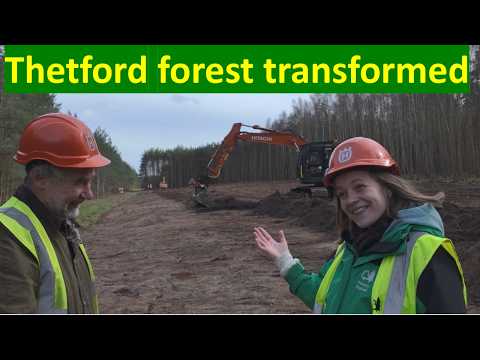
This video explains the ecological rationale and field methods behind open habitat restoration in Breckland, East Anglia, with a focus on how Forestry England is using practical interventions to recreate and maintain conditions that support specialist wildlife. The core message is that many rare plants and animals depend on open, low-nutrient habitats, and that without active management, succession and nutrient enrichment can quickly convert these areas into denser, less suitable landscapes. The video highlights several concrete restoration techniques, including tree removal, soil stripping, mechanical disturbance, and the cutting and collection of vegetation. These actions are not presented as generic conservation ideas; they are used specifically to reduce nutrient levels, expose bare ground, and reset ecological conditions that favor open-habitat species. The summary connects these methods to Breckland’s broader conservation challenges, showing that restoration is not just about a single site but about rebuilding habitat connectivity across a larger landscape so species can move, colonize, and persist. A practitioner watching this would learn why disturbance is sometimes intentionally introduced, how nutrient-poor conditions are maintained, and why management has to be repeated rather than treated as a one-time intervention. The video also underscores the scientific logic behind site selection and intervention timing: restoration works best where it can recreate the historical or functional conditions that open habitat species require, while also linking isolated fragments into a more resilient network. In practical terms, the piece demonstrates how conservation managers balance ecological goals with operational methods such as selective clearance and material removal, making it useful for people involved in habitat management, restoration planning, or landscape ecology. It serves as a concise case of applied conservation science, showing how evidence-based field techniques are used to reverse habitat loss and support biodiversity at scale.
Source: youtube.com
Related Analysis
- Bavarian Trial Puts Keyline Water Design to a Real Test — A certified permaculture designer's 2023–2025 field trial applies Keyline plowing to 5ha in Bavaria. Initial signs sugge…
- Projects Pivot to Integrate Rainwater Harvesting with Energy — New evidence indicates a shift toward integrating rainwater cisterns with renewable energy systems in permaculture proje…
Related on PermaNews
- PRI Jordan: Arid Zone Permaculture Yields 5 Tons/Hectare (Case Study)
- Aboriginal Cool Burns: Permaculture's Ancient Fire Wisdom (Case Study)
- Crop Rotation Boosts Soil Biodiversity: Global Meta-analysis (Article)
- The Rewilders: Restoring the Ancient Pulse of the Aravallis (Video)
- The 10 Crops That Can Turn Arid Lands Into Biodiversity And Food Security Hotspots (Article)
- Insecticides Gravely Threaten Honey Bee Gut Microbiome, Study Findings Expand on Previous Research (Article)
Explore more in Water, Climate & Adaptation — the full hub for this knowledge area.