Lacto-fermented Kohlrabi Kraut Recipe
PermaNews Brief
Key Takeaways
Transform excess kohlrabi into a flavorsome fermented preserve with simple steps.
- Grate kohlrabi and onion for flavor
- Use sea salt to draw out juices
- Ensure brine covers vegetables completely
- Maintain optimal fermentation temperature
- Store in a cool place post-fermentation
Why It Matters
This method extends kohlrabi’s shelf life and enhances its flavor, making it valuable for gardeners and homesteaders alike.
What to Do Next
Gather kohlrabi and follow the fermentation recipe today.
Permaculture Context
Lacto-fermented vegetables like this kohlrabi kraut represent far more than a clever recipe — they are a foundational skill in any serious permaculture practitioner's toolkit, bridging the gap between seasonal abundance and year-round nutritional resilience. Kohlrabi is a notoriously productive brassica that often overwhelms gardeners precisely when other preservation windows are already crowded, making a reliable lacto-fermentation method genuinely strategic rather than merely thrifty. What distinguishes this approach within a regenerative living framework is that it demands no external energy inputs, no specialized equipment, and no industrial preservatives — just salt, time, and ambient temperature, all of which align cleanly with low-input design principles. Beyond preservation, the fermentation process itself builds gut microbiome diversity through live cultures, connecting food storage directly to long-term personal health — something a freezer or pressure canner cannot offer. For anyone designing a homestead food system toward genuine self-sufficiency, mastering this class of ferment means transforming a potential harvest bottleneck into a dependable, nutrient-dense food reserve that actually improves with patience.
Recommended for: Gardeners and homesteaders looking to preserve fresh produce.
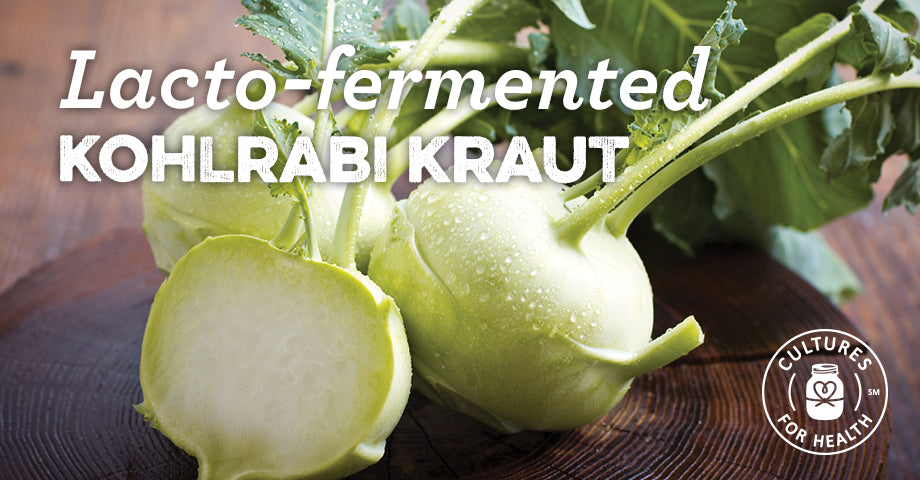
This recipe is a practical, hands-on guide for turning surplus kohlrabi into a fermented preserve with a kraut-like texture and flavor. It gives exact ingredient proportions and a clear workflow: grate four medium kohlrabi, add one medium onion and two tablespoons of sea salt, let the vegetables rest briefly to draw out juices, then pack the mixture tightly into a quart jar so the vegetables remain fully submerged. If the natural liquid does not create enough brine, the instructions advise adding water to maintain at least two inches of brine above the vegetables while leaving about one inch of headspace. The guide also explains how to manage the ferment safely by using a weight if needed and covering the jar with a tight lid, airlock lid, or coffee filter secured by a rubber band. The fermentation stage is described as a room-temperature process, with a preferred range of 60–70°F, until the flavor and texture are to taste. If a tight lid is used, the jar should be burped daily to release gas pressure. After fermentation is complete, the jar is moved to cold storage, where the flavor continues to develop.
As a preservation method, the piece is useful because it addresses the core operational steps needed to reliably ferment a root vegetable: salt level, brine coverage, headspace, temperature control, and post-fermentation storage. It is especially relevant for gardeners or homesteaders who need a way to extend the life of kohlrabi without freezing or canning. The recipe format makes it immediately actionable, and the inclusion of onion suggests a more complex flavor profile than plain fermented kohlrabi. The method is also adaptable: the same workflow can be used as a template for other shred-and-pack vegetable ferments when the producer wants a crunchy, probiotic preserve rather than a cooked product.
Source: culturesforhealth.com
Related Analysis
- Campbell's Corporate Grants Push Farmers Into Regenerative Trials — Campbell's Grower Grants are funding real-acre regenerative trials, offering a corporate-backed mechanism for on-farm ex…
- Global Water Bankruptcy Forces Agricultural Adaptation — UN report reveals water bankruptcy across surface waters, glaciers, and groundwater, forcing immediate agricultural adap…
Related on PermaNews
- Borneo's Rainforest Revival: Dr. Smits' Sugar Palm Village Hub (Case Study)
- Holmgren's 40 Yrs: Abundant Permaculture Design Webinar 3 (Video)
- A Decade After Leaving Normal: Their Homesteading Journey (Video)
- E60: Pete Strayer on Azure Standard's Vision for America's Food System (Podcast)
- How This Farmer's Garden Thrived During a Historic Drought (Video)
- Achieving Water Independence: Boreholes & Wells for Off-Grid Living (Video)
Explore more in Food Systems & Growing — the full hub for this knowledge area.