India: 3 Lakes Revitalize Aquifer, Fight Water Scarcity
By Andrew Millison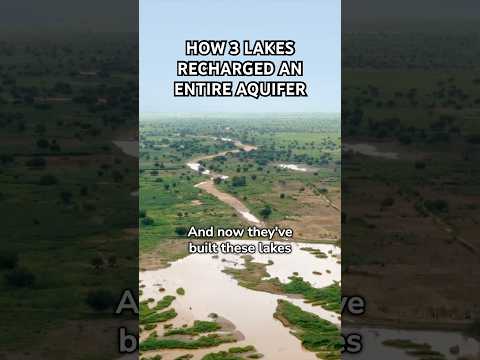
TL;DR: Community-led restoration of three lakes in India successfully recharged an entire aquifer, reversing severe water scarcity through permaculture principles.
- Community action restored lakes and recharged aquifer.
- Desilting and deepening increased water storage.
- Terracing and swales aided water retention.
- Permaculture principles guided the revitalization.
- Addresses severe water scarcity in semi-arid region.
Why it matters: This initiative demonstrates a powerful, replicable model for combating water scarcity and restoring ecological balance, proving that focused community effort can reverse environmental degradation and ensure water security for agriculture and daily life.
Do this next: Explore local initiatives focused on water conservation and community-led ecological restoration in your area.
Recommended for: Community leaders, environmental activists, permaculture practitioners, and anyone interested in sustainable water management and ecological restoration.
In a region of India facing severe water scarcity, a remarkable transformation has taken place, demonstrating the power of community-driven permaculture principles to restore vital water resources. This area, characterized by a semi-arid climate and a history of over-extraction of groundwater, had seen its water table plummet, leading to widespread agricultural failure and social hardship. The solution, spearheaded by a local organization and embraced by the community, involved the strategic revitalization of three interconnected lakes, effectively recharging the entire underlying aquifer.
Historically, the region relied heavily on monsoon rains, which, when they did arrive, often caused flash floods that rapidly drained away, contributing little to groundwater replenishment. The existing lakes, once vibrant ecosystems, had become silted up and dysfunctional, unable to hold significant amounts of water. The project began with a comprehensive understanding of the local hydrology and the historical water management practices of the area. It was recognized that the natural landscape, if properly managed, could act as a sponge, retaining rainwater and allowing it to slowly percolate into the ground.
The core of the intervention focused on desilting and deepening the three lakes. This was not a simple dredging operation; it involved a careful process of removing accumulated sediment, which was then used to build up the banks and create terraced areas for planting. The deepening of the lakes significantly increased their storage capacity, allowing them to capture and hold a much larger volume of monsoon runoff. Crucially, the design incorporated features that slowed down the water's movement, giving it more time to infiltrate the soil rather than rushing away. This included the creation of swales and contour trenches around the lake perimeters, which further aided in water retention and distribution.
Beyond the physical modifications, a key aspect of the project was the re-establishment of ecological balance. Native trees and vegetation were planted extensively around the lake areas and along the water channels. These plantings served multiple purposes: their root systems stabilized the soil, preventing future erosion and siltation; they created microclimates that reduced evaporation; and they enhanced biodiversity, attracting beneficial insects and wildlife. The increased vegetation cover also contributed to a healthier soil structure, improving its water-holding capacity.
The impact of these efforts was profound and multifaceted. As the lakes began to hold more water, the surrounding land became saturated, and the water table started to rise. Within a few years, wells that had been dry for decades began to flow again. This resurgence of groundwater had a direct and immediate positive effect on agriculture. Farmers, who had previously struggled with failed crops due to lack of irrigation, were now able to cultivate their land more reliably. This led to increased food security and economic stability for the community.
Furthermore, the revitalized lakes became centers of community life. They provided water for livestock, supported local fisheries, and offered recreational opportunities. The improved water availability also had a positive impact on public health and sanitation. The success of this project serves as a powerful illustration of how integrated water management, informed by permaculture principles and executed with community participation, can reverse environmental degradation and foster resilience in water-stressed regions. It highlights the importance of working with natural systems rather than against them, and the long-term benefits of investing in ecological restoration for sustainable water security.
Source: youtube.com
Related Analysis
- Projects Pivot to Integrate Rainwater Harvesting with Energy — New evidence indicates a shift toward integrating rainwater cisterns with renewable energy systems in permaculture proje…
- Farmers Pivot to Innovative Water Solutions Amid Drought — Decentralized water management systems are emerging among regenerative farms to enhance resilience against drought.
Related on PermaNews
- Ernst Götsch's Cacao Syntropy: Master Agroforestry Now (How-To Guide)
- Finnish Off-Grid: Rocket Mass Heater Performance in Greenhouse (Case Study)
- Berlins schwimmende Gärten: Permakultur auf dem Wasser (Case Study)
- Rodale Report 2025: Thermal Mass Boost in Solar Greenhouses (Case Study)
- AUTarcaMatricultura La Palma: Permakultur & Energieautarkie (How-To Guide)
- Earthaven Ecovillage: 30 Years Off-Grid with Hydro & Solar (Video)
Explore more in Water, Climate & Adaptation — the full hub for this knowledge area.