Waste to Harvest: Concrete, Wood & More for Permaculture Food
By MBOTR - Sustainable Permaculture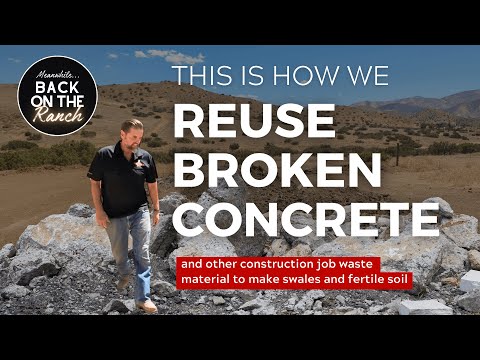
PermaNews Brief
Key Takeaways
Repurpose concrete, wood, and other waste materials to create sustainable and self-sufficient food production systems in a permaculture setting.
- Transform waste into resources, reducing landfill contributions.
- Utilize broken concrete for thermal mass in passive solar designs.
- Incorporate concrete rubble into swales or terracing to slow water runoff.
- Use smaller concrete fragments as a base for paths or raised beds.
- Employ wood waste in hugelkultur beds for nutrient release and moisture retention.
- Chip wood for mulch to suppress weeds and conserve soil moisture.
Why It Matters
Repurposing waste materials in permaculture reduces environmental impact and fosters self-sufficiency by transforming discarded items into valuable assets for food production and land management.
What to Do Next
Explore local sources for reclaimed concrete and wood to begin building permaculture infrastructure.
Recommended for: Homeowners, gardeners, and small-scale farmers interested in sustainable resource management and permaculture design.
The article discusses various methods for repurposing common waste materials, such as concrete, wood, and other discarded items, into functional components for sustainable food production systems within a permaculture framework. The core principle emphasized is the transformation of what is typically considered waste into valuable resources, thereby reducing landfill contributions and fostering self-sufficiency.
One significant area of focus is the reuse of concrete. Instead of being sent to landfills, broken concrete pieces can be effectively utilized in several ways. For instance, they can serve as excellent thermal mass in passive solar designs for greenhouses or chicken coops, absorbing solar energy during the day and radiating it slowly at night, thus moderating temperature fluctuations. This contributes to a more stable environment for plants and animals, reducing the need for external heating or cooling. Concrete rubble can also be incorporated into the construction of swales or terracing on sloped land. When strategically placed, these pieces can help slow down water runoff, prevent soil erosion, and create microclimates conducive to plant growth. Furthermore, smaller concrete fragments can be used as a base layer for paths or as infill for raised garden beds, improving drainage and reducing the amount of new material needed for construction.
Wood waste, from fallen trees, construction scraps, or discarded pallets, is another valuable resource. A primary application is in hugelkultur beds, a permaculture technique where logs and branches are buried beneath soil to create raised garden beds. This method offers several benefits: the decaying wood slowly releases nutrients into the soil, acts as a sponge to retain moisture, and creates air pockets that improve soil structure and aeration. Over time, these beds become highly fertile and require less watering. Wood can also be chipped and used as mulch, suppressing weeds, conserving soil moisture, and gradually breaking down to enrich the soil with organic matter. Larger pieces of wood can be repurposed for building fences, trellises, or even small structures like sheds or compost bins, reducing the reliance on new lumber.
Beyond concrete and wood, the article touches upon the broader concept of repurposing other waste materials. For example, old tires can be stacked and filled with soil to create raised garden beds, especially useful in areas with poor soil quality or for growing heat-loving plants due to the tires' ability to absorb and retain heat. Glass bottles can be integrated into cob or earthbag construction for light transmission or as decorative elements. Metal scraps, such as old corrugated iron, can be used for roofing small structures, creating compost bins, or even as edging for garden beds. Even seemingly insignificant items like plastic bottles can be cut and used as seedling protectors or mini-greenhouses.
The overarching message is that a permaculture approach encourages a shift in perspective regarding waste. Instead of viewing discarded items as liabilities, they are seen as potential assets waiting to be integrated into productive systems. This not only minimizes environmental impact by diverting materials from landfills but also reduces the financial outlay for new materials, making sustainable food production more accessible and resilient. By creatively reusing and repurposing these materials, individuals can build robust, self-sustaining food systems that are both environmentally friendly and economically viable. The emphasis is on thoughtful design and practical application to transform waste into valuable components of a thriving permaculture landscape.
Source: youtube.com
Related Analysis
- Food Forest Courses Shift From Theory to Build-Ready Skills — Several food forest courses now open with site assessment and guild-building rather than design theory, suggesting a dev…
- Practitioners Build Silvopasture Playbook Before Researchers Catch Up — A small but consistent set of signals from the Northeast U.S. shows farmers actively piloting silvopasture while formal …
Related on PermaNews
- Ernst Götsch's Cacao Syntropy: Master Agroforestry Now (How-To Guide)
- Finnish Off-Grid: Rocket Mass Heater Performance in Greenhouse (Case Study)
- Berlins schwimmende Gärten: Permakultur auf dem Wasser (Case Study)
- Rodale Report 2025: Thermal Mass Boost in Solar Greenhouses (Case Study)
- AUTarcaMatricultura La Palma: Permakultur & Energieautarkie (How-To Guide)
- Earthaven Ecovillage: 30 Years Off-Grid with Hydro & Solar (Video)
Explore more in Food Systems & Growing — the full hub for this knowledge area.