From SUV Trunk to Homestead Queen: Daisy's Calf Journey
By Farmer Jo Homesteading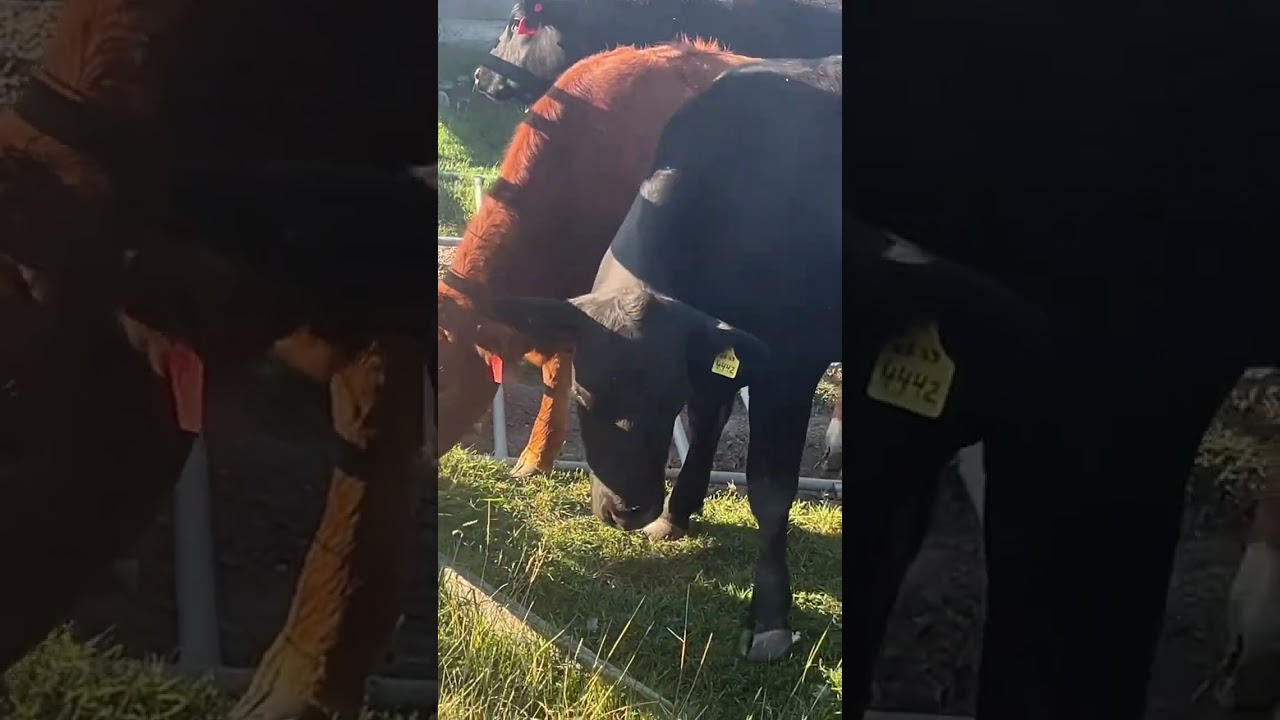
PermaNews Brief
Key Takeaways
A calf named Daisy, initially transported in an SUV, transitioned from a spirited pet to a productive dairy cow, showcasing adaptive homesteading practices.
- Bottle-fed calves form strong human bonds.
- Homesteading requires creative problem-solving.
- Pets can become productive farm members.
- Dairy cows are central to self-sufficiency.
- Breeding marks a milestone for homesteads.
Why It Matters
Integrating livestock, even unconventionally, can lead to a thriving and self-sufficient homestead ecosystem, providing valuable resources and companionship.
What to Do Next
Consider how initial challenges with livestock can lead to deeper integration and productivity within your own homestead.
Recommended for: Homesteaders and aspiring farmers interested in the journey of integrating livestock from unusual beginnings to productive farm life.
The article from Farmer Jo Homesteading recounts the journey of a calf named Daisy, from her unexpected arrival to her current role within the homestead's ecosystem. The narrative begins with the somewhat unconventional acquisition of Daisy. She was a bottle-fed calf, a common scenario when a mother cow rejects her offspring or is unable to nurse. The homesteaders, upon deciding to take her in, faced the immediate logistical challenge of transporting a young calf. This led to the memorable image of Daisy being brought home in the trunk of an SUV, highlighting the improvisational nature often found in homesteading life.
Daisy's early days were characterized by her spirited personality. As a bottle-fed calf, she required frequent attention and feeding, which often fosters a strong bond between the animal and its human caregivers. This hands-on approach meant she was accustomed to human interaction from a very young age, contributing to her "spunky" demeanor. The article implies that this early bond and her playful nature made her a cherished member of the homestead, rather than just livestock.
As Daisy matured, her role on the homestead evolved beyond that of a pet. The article details her transition into a productive member of the farm. This typically involves breeding and milk production, which are central to many homesteading operations. The author likely describes her first calving experiences, the challenges and triumphs associated with bringing new life into the world on a farm. This stage often marks a significant milestone for both the animal and the homesteaders, as it signifies the success of their efforts in raising and breeding livestock.
The narrative also touches upon the practical benefits Daisy provides. Dairy cows are a cornerstone of many self-sufficient homesteads, offering a consistent supply of milk, which can then be processed into various dairy products like cheese, butter, and yogurt. Beyond direct consumption, the milk can also be used to feed other animals on the farm, creating a closed-loop system. The article likely emphasizes how Daisy contributes to the overall sustainability and food security of the homestead.
Furthermore, the article probably explores the emotional connection the homesteaders maintain with Daisy. Despite her transition into a working animal, the initial bond formed during her calfhood remains. This highlights a common theme in homesteading: while animals serve practical purposes, they are often viewed as individuals with distinct personalities and are deeply integrated into the family's life. The author's continued perception of Daisy as the "spunky little calf" underscores this enduring affection and the personal history shared.
The story of Daisy serves as a microcosm of the homesteading experience, illustrating the blend of practical farming, animal husbandry, and personal connection. It showcases the dedication required to raise livestock, the unexpected joys and challenges, and the deep satisfaction derived from nurturing animals that contribute to a self-sufficient lifestyle. The article likely concludes by reflecting on Daisy's continued presence and importance, not just as a dairy cow, but as a beloved and integral part of the Farmer Jo Homestead.
Source: youtube.com
Related Analysis
- Does Growing Your Own Food Actually Save Money? The Real Numbers — Most home gardens save money by year two — but only if the right crops are planted. Herbs and salad greens deliver 5–10x…
Related on PermaNews
- Ernst Götsch's Cacao Syntropy: Master Agroforestry Now (How-To Guide)
- Finnish Off-Grid: Rocket Mass Heater Performance in Greenhouse (Case Study)
- Berlins schwimmende Gärten: Permakultur auf dem Wasser (Case Study)
- Rodale Report 2025: Thermal Mass Boost in Solar Greenhouses (Case Study)
- AUTarcaMatricultura La Palma: Permakultur & Energieautarkie (How-To Guide)
- Earthaven Ecovillage: 30 Years Off-Grid with Hydro & Solar (Video)
Explore more in Food Systems & Growing — the full hub for this knowledge area.