White Stag Farms: Livestock, Cover Crops, Soil Restoration
PermaNews Brief
Key Takeaways
Holistic regenerative farming integrates livestock and diverse cover crops to rebuild soil health, increase organic matter, and boost farm resilience by mimicking natural ecosystems.
- Integrate livestock with cover crops to restore soil.
- Manure and hoof action naturally fertilize and aerate.
- Offset cover crop costs and transition challenges.
- Improve water quality by reducing nutrient runoff.
- Enhance plant and animal nutrition from healthier soils.
- Boost farm economics and reduce synthetic inputs.
Why It Matters
This approach offers a practical path to farming that not only sustains but actively regenerates land, promoting long-term environmental and economic viability for farms.
What to Do Next
Start by selecting diverse cover crop mixes suitable for grazing, such as rye and clover, to plant after your main cash crop harvest.
Recommended for: Farmers and land managers interested in transitioning to regenerative practices that integrate livestock for soil and ecosystem health.
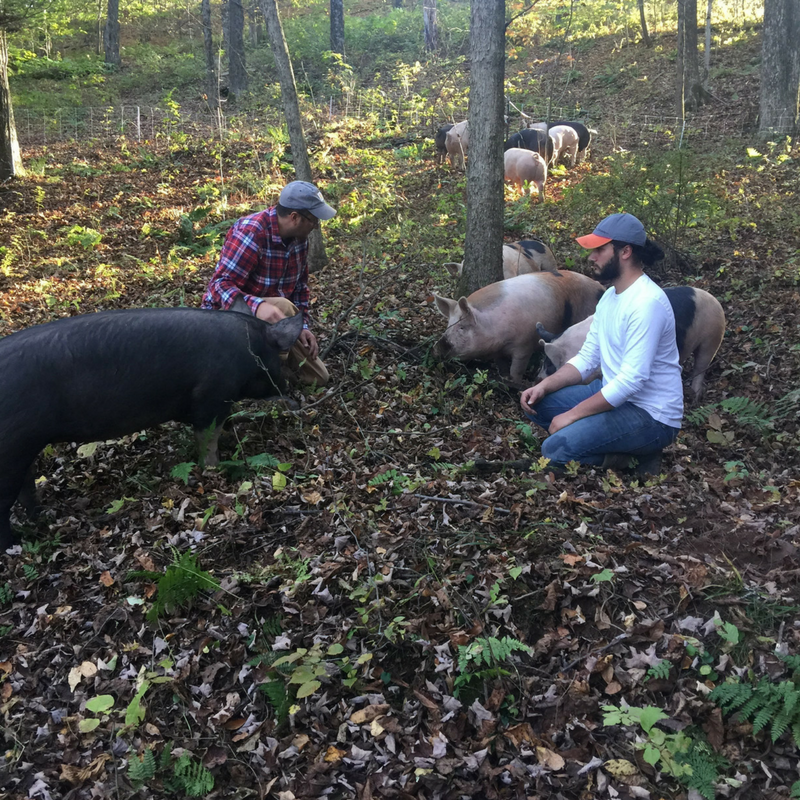
White Stag Farms details field-tested regenerative practices integrating livestock with cover crops to restore soils and achieve self-reliance. Livestock graze cover crops and grass protecting soil, returning manure to naturally nourish and build health, substantially increasing organic matter for long-term sustainability. This offsets cover crop costs, market barriers, and yield dips common in transitions. Strategic animal-crop rotation enhances downstream water quality by reducing pollution, critical near waterways like the Delaware River. Nutrient-dense plants from healthier soils yield superior animal food, improving human nutrition. Implementation: plant diverse covers post-main crop, introduce managed livestock to graze and trample, allowing hooves to incorporate manure lightly without compaction. Benefits extend to farm economics via self-fertilization, cutting synthetic inputs, and resilience against weather extremes. The farm's proximity to sensitive ecosystems underscores pollution prevention via closed loops. Practitioners gain concrete steps: select covers for grazeability (rye, clover mixes), time rotations for regrowth (21-30 days rest), monitor soil organic matter gains (target 1-3% increase), and scale for viability. This system mimics natural processes, fostering biodiversity and profitability while contributing to regional environmental health.
Source: whitestagfarms.com
Related Analysis
- Composting Advice Shifts From Chemistry to Microbial Biology — Several sources suggest composting guidance is pivoting from nutrient ratios toward microbial ecology—reframing what "go…
- Does Growing Your Own Food Actually Save Money? The Real Numbers — Most home gardens save money by year two — but only if the right crops are planted. Herbs and salad greens deliver 5–10x…
Related on PermaNews
- Regenerative Farming: Cultivating Healthy Soil & Biodiversity (How-To Guide)
- Rodale Institute: Soil Health Principles for Regenerative Ag (How-To Guide)
- Boost Soil Health: Permaculture's Regenerative Methods (How-To Guide)
- Episode 180: Shifting Management Logistics to Build a Better Lifestyle with Tom Cotter (Podcast)
- Boost Crop Yields: Free Soil Health Academy Methods (How-To Guide)
- Regenerative Farming: Grow Food, Heal Earth with Pitaya Foods (How-To Guide)
Explore more in Food Systems & Growing — the full hub for this knowledge area.